
Lilac Bedding Sets: How to Choose, Style, and Care
You've found a lilac bedding set that looks lovely on your phone, but you're not quite ready to order. Will it look pinker beside your cream walls, fit over the mattress topper, or come out of the wash looking different from the pillowcases? Those are the right questions to ask before choosing a color you'll see and use every day.
Why Lilac Works in a Bedroom Right Now
Lilac offers a way to introduce color without committing to a saturated purple. You can make it the main feature of the bed or keep it to a folded quilt against neutral sheets. The useful question isn't whether lilac is fashionable. It's whether the particular shade, fabric, and construction work in your home.
There's nothing newly invented about the color itself. Lilac has been documented as an English color name since 1775, and generally describes a light purple with pink or reddish undertones, unlike lavender's typically bluer undertones, according to Art in Context's history of lilac. That distinction helps explain why bedding sold under similar purple color names can create different impressions.
Start with the room you already have
Before comparing product pages, look at the surfaces that won't change: your flooring, headboard, walls, and curtains. Decide whether you want the bedding to blend into that background or provide a visible contrast. A guide to calming bedroom colors can help you consider the whole palette rather than choosing sheets in isolation.
Different households also need different things from the same shade:
- Renters: Use bedding to introduce color when painting or replacing flooring isn't practical.
- Gift buyers: Confirm the recipient's mattress setup and preferred fabric before making a color-led purchase.
- Hospitality hosts: Put repeatable laundering and replacement matching ahead of a photograph.
- Design enthusiasts: Consider whether a complete matching set or a smaller accent layer better suits the room.
Practical rule: Choose lilac as a color, but buy the bedding as a working household textile.
That means making separate decisions about shade, fabric, fit, and care. An attractive photograph can help with the first decision, but it can't settle the others. A useful product description should let you evaluate each independently, including what any certification covers and whether oversized dimensions suit your particular bed.
Understanding the Lilac Color Family
A color name is a starting point, not a precise promise. One seller's lilac might look dusty and muted, while another's appears distinctly pink. Even a technically defined digital color won't guarantee an identical result on woven fabric.
The concept map below connects lilac's history with the decisions a bedding buyer makes today.
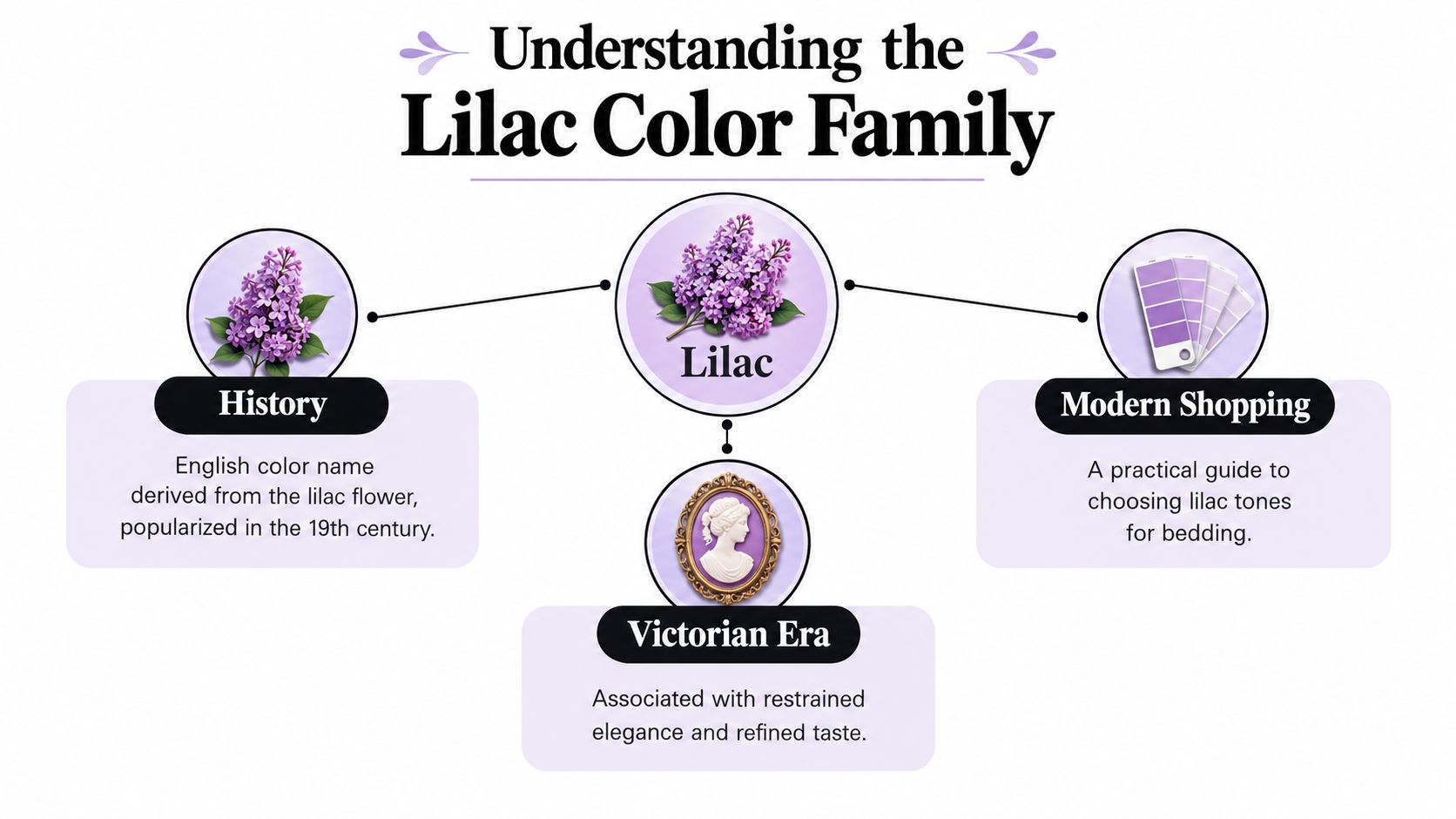
Use color codes as references, not guarantees
A commonly cited lilac is hexadecimal #C8A2C8, or RGB 200, 162, 200, approximately 78.4% red, 63.5% green, and 78.4% blue. Its commonly listed print equivalent is CMYK 0% cyan, 19% magenta, 0% yellow, and 22% black, as described in Skylum's lilac color reference, which also discusses its historical association with the lighter stages of Victorian and Edwardian mourning.
Those associations give lilac more depth than a seasonal pastel. Its history includes restrained dress and formal conventions, not just spring flowers. For a contemporary bedroom, you can draw on that quieter character without recreating a historical interior.
The practical limitation is that screens and cloth aren't interchangeable. Lighting, fiber content, finishing, and dye lots can all change the perceived result. Don't use a color code as proof that separately purchased sheets and pillowcases will match.
Read the undertone in context
Use this sequence when comparing lilac bedding sets:
- Compare against a neutral: Place a physical swatch beside your existing white or cream bedding, rather than assessing it alone.
- Check more than one photograph: Look for close-ups, folded fabric, and full-bed views. Treat differences between images as a reason to ask questions.
- Inspect it where you'll use it: Compare the fabric in daylight and under your bedside lighting before deciding.
- Keep matching expectations realistic: If an exact match matters, ask whether coordinated pieces belong to the same color program and whether replacements may vary.
A phone photograph can help record combinations, but it shouldn't be your final color judge. Keep the actual fabric or a retained swatch available when choosing coordinating pieces.
Choosing the Right Fabric and Weave
Lilac doesn't tell you how warm the bedding will feel. Fiber structure, fabric weight, construction, and layering matter more than the color. Research on bedding fibers and sleep-related thermal conditions supports evaluating the textile and bedroom environment rather than expecting a particular shade to change sleeping comfort.
Start with your experience of the bed you already own. If you regularly push the covers away, don't choose a heavier complete set just because every piece matches. If you feel cold, distinguish between needing a different sheet surface and needing more insulation above it.
Lilac Bedding Fabric Comparison
The table below is a shopping framework, not a performance guarantee. These fabric names alone don't establish how a finished product will behave.
| Fabric | Breathability | Hand-Feel | Wrinkle Tendency | Best For |
|---|---|---|---|---|
| Cotton percale | Check weight and finished construction | Sample if you prefer a crisp surface | Inspect washed fabric | Buyers comparing lighter sheet options |
| Cotton sateen | Evaluate the specific fabric, not just the fiber | Sample if you want a smoother surface | Check care requirements and finish | Shoppers prioritizing surface feel |
| Long-staple cotton | Don't treat staple length as a thermal rating | Compare the finished weave | Assess separately from fiber claims | Buyers willing to examine detailed specifications |
| Linen | Ask about weight and construction | Handle a sample before committing | Decide whether a relaxed appearance suits you | Shoppers comfortable assessing texture in person |
| Microfiber | Look for product-specific information | Check whether the finish suits your preference | Verify after washing | Buyers comparing easy-care options |
| Blends | Read the full fiber composition | Don't infer feel from one named fiber | Check the finished product | Households balancing several care priorities |
Separate comfort from certification
A guide to choosing material for sheets can help narrow the candidates, but keep your shortlist tied to bedroom temperature, preferred feel, and laundry routine. Ask how a sample feels after washing, not just straight from its packaging.
For durability, neither a fiber name nor a luxurious description replaces evidence about the finished fabric. Cotton, linen, microfiber, and blends still need product-specific evaluation for seams, surface changes, and shade retention.
A certification answers a particular question. It doesn't answer every question about quality.
OEKO-TEX STANDARD 100 indicates testing for harmful substances in the certified textile article. It doesn't independently establish softness, durability, colorfastness, or thermal performance. Check the certification details for the item you're buying, then assess those other qualities separately.
For flexible comfort, consider breathable sheets and a removable quilt or comforter rather than expecting a single heavy layer to suit every season.
Getting the Fit Right for Real Mattresses
A fitted sheet can be the correct bed size and still be wrong for the mattress. Length, width, and pocket depth are separate measurements. Your topper and any other layers beneath the sheet belong in the fit calculation.
Measure the bed as you sleep on it, not as it appeared before you added accessories. For a visual reference while measuring, Protect-A-Bed's measure mattress depth guide provides a useful companion.
Use the process below to organize the measurements before ordering.
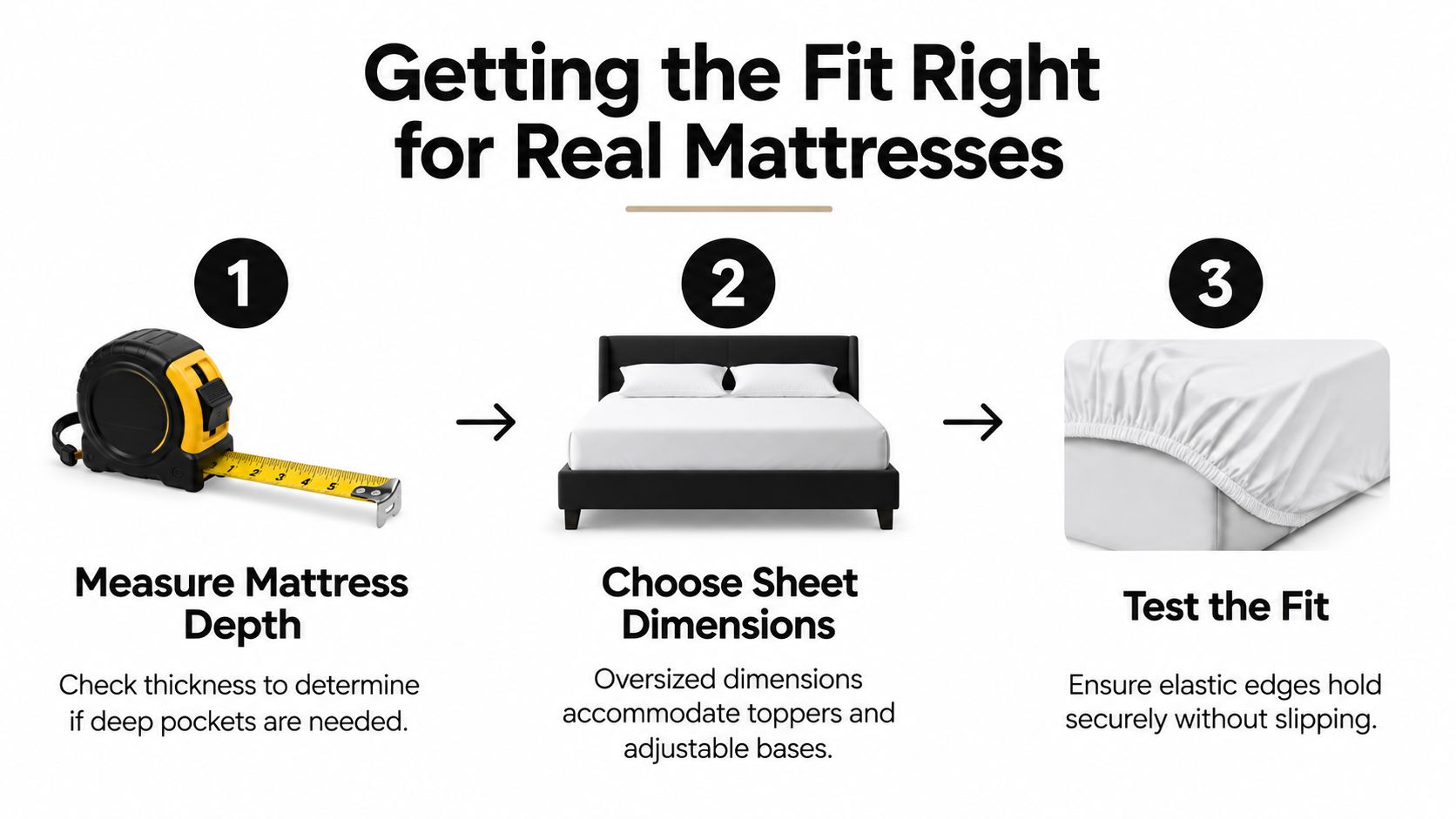
Measure the complete sleeping setup
- Record the actual depth: Measure from the bottom edge of the mattress to the top of the layers that will sit inside the fitted sheet.
- Confirm length and width: Don't assume the size label supplies every dimension you need.
- Read the pocket specification: Look for a stated mattress-depth range, not just the phrase “deep pocket.”
- Check moving sections: For an adjustable or split setup, confirm that the fitted-sheet arrangement matches the independently moving mattress sections.
A separate mattress-depth measuring guide can help you organize these details before comparing listings. If the listing doesn't explain how its pocket measurement relates to mattress depth, ask the seller rather than guessing.
Plan the visible drop separately
Oversized describes a different fit question from deep pockets. For a quilt or comforter, compare the listed width and length with the amount of coverage you want at the sides and foot of the bed. Decide whether you want to reveal the frame, conceal the mattress edges, or fold the top layer back.
For a duvet, compare the cover's dimensions directly with the insert you own. For pillows, check both the case dimensions and whether the closure accommodates your pillow's fullness.
When the bedding arrives, inspect the fit before proceeding with laundering, following the retailer's return conditions. Check whether corners seat properly and whether the intended drape looks balanced. For an adjustable bed, follow the bedding and base instructions when assessing movement. A color match can't compensate for an unsuitable fit.
Care That Keeps Lilac Vibrant
Pale purple isn't automatically low-maintenance. With a large, uninterrupted surface such as a duvet cover, small differences in shade can be easy to notice. The useful purchasing question is how the finished fabric holds its color, not whether the original shade looks delicate.
Research on repeated washing found that color loss could remain acceptable through roughly 20 wash cycles, with more noticeable changes after about 30 cycles, depending on dye chemistry, as discussed in this textile study of laundering and color change. Those findings aren't a lifespan promise for any particular lilac set. They show why dye chemistry and testing conditions matter.
Know which problem you're trying to prevent
Fading means the fabric loses or changes color. Bleeding means dye transfers into the wash or onto another textile. Crocking refers to color transfer through rubbing. A product can perform differently across those conditions, so “long-lasting color” isn't a complete specification.
Ask a supplier for results covering laundering, perspiration, rubbing, and light exposure. Request the test method and result together, plus any explanation of what counts as acceptable change. Hospitality buyers should also ask whether the testing resembles their intended laundering routine.
Keep these care reminders beside the product's own instructions.
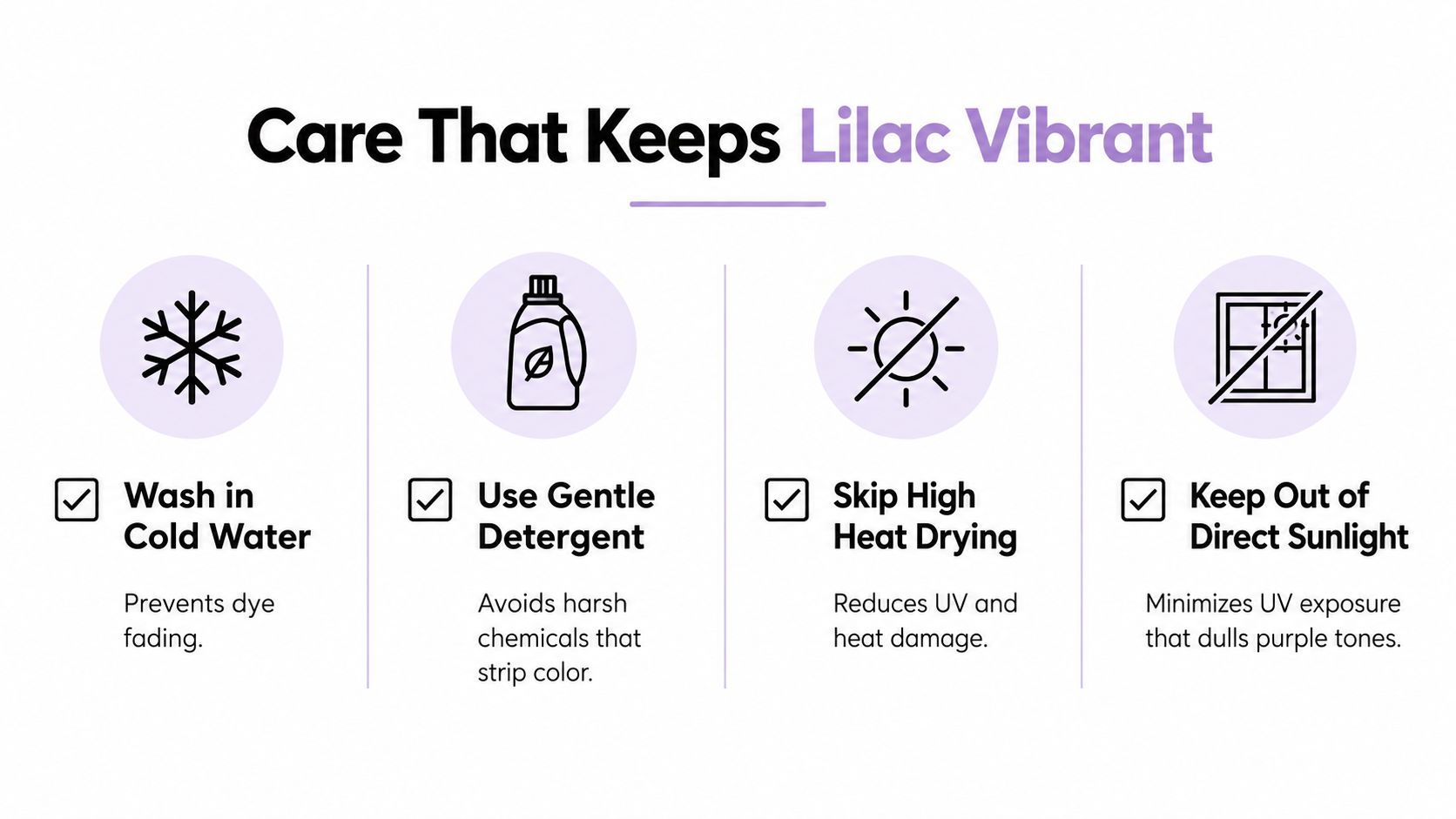
Build a repeatable laundry routine
- Follow the care label: Let the manufacturer's instructions determine the permitted washing and drying conditions. Cold water isn't a universal guarantee against fading.
- Separate new lilac pieces initially: Avoid making the first wash a test of whether dye will transfer onto your white bedding.
- Choose mild detergent: Use a product compatible with the care instructions rather than assuming a stronger cleaning formula is better.
- Limit unnecessary exposure: Use the permitted drying setting and reduce prolonged direct sunlight.
- Compare consistently: Assess washed fabric beside a retained swatch under the same lighting, not from memory.
Before you buy: Ask for documented colorfastness, not an assurance that the color “should last.”
If pieces begin to look different, record which items were washed together and how they were dried. That information gives the supplier something concrete to investigate. It's more useful than comparing photographs taken in different rooms.
Styling Lilac in Real Rooms
You don't need a purple-themed bedroom to use lilac successfully. Treat it as one deliberate element within a palette, then decide how much of the bed should carry that color.
These room examples show different levels of commitment.
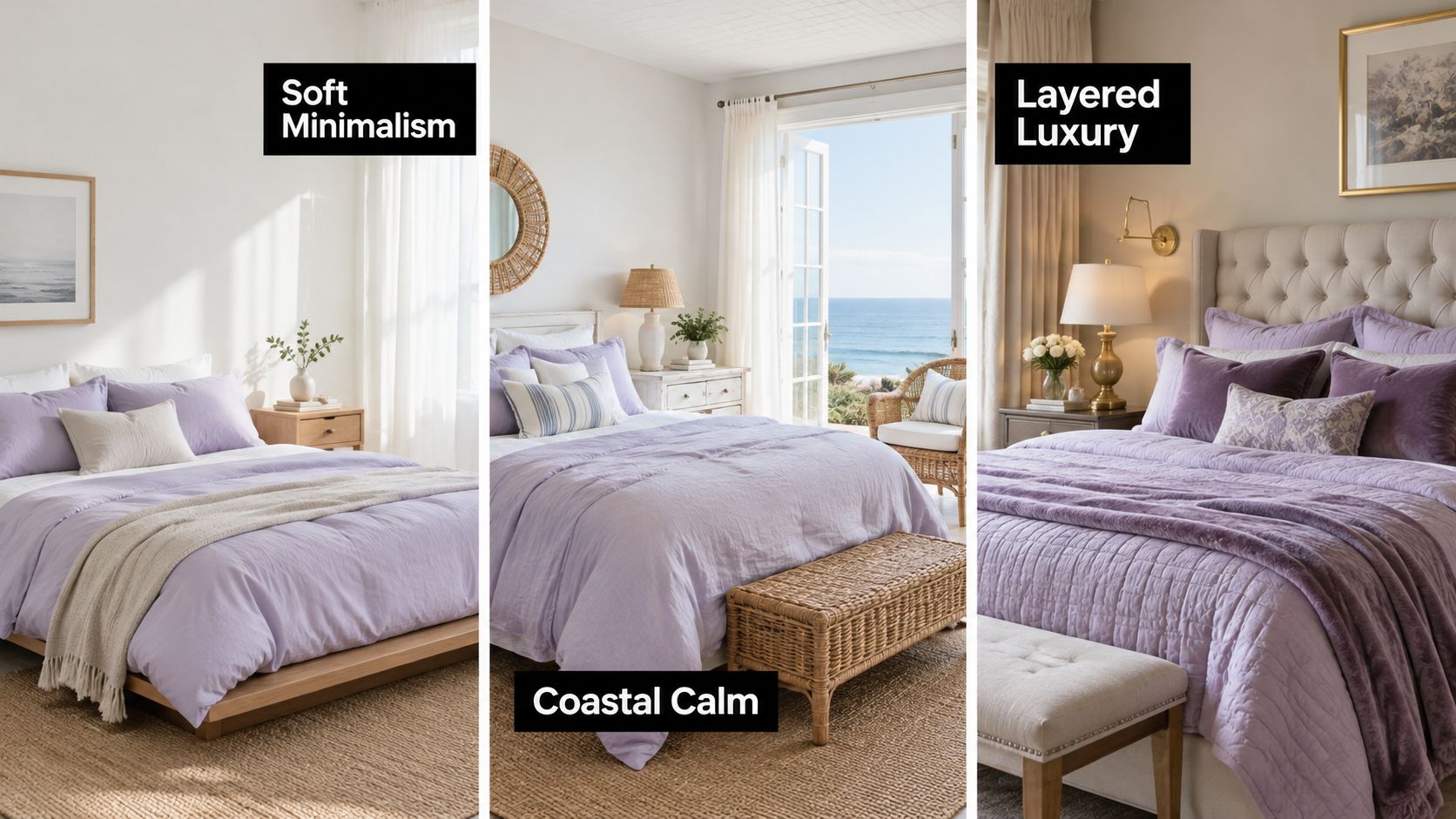
A quiet minimalist room
For a room with plain walls and light wood, try a lilac sheet set beneath a neutral coverlet. Keep the visible color at the turned-back edge and pillows rather than adding several competing accents. This is a styling suggestion, not a requirement to match every accessory.
Bedroom color coverage from 2025 paired powder lilac with white trim and light wood. The practical lesson is to test that combination against your own finishes instead of assuming the photographed room predicts yours.
A relaxed coastal room
Start with the neutral foundation you already like, then introduce lilac through a quilt or coverlet. I'd keep the surrounding textiles simple and let texture provide variety. That gives you a coastal direction without requiring blue bedding or decorative seaside motifs.
If the room feels cool or receives limited daylight, test a dusty or mauve-leaning sample alongside a bluer option. The aim isn't to label one universally better. It's to choose the version you enjoy under the room's normal lighting.
Use the video as another visual reference while considering the proportions and combinations you prefer.
A layered room with deeper contrasts
For a more substantial look, I'd combine restrained lilac with walnut, taupe, cream, or charcoal. Choose a clear hierarchy: a neutral foundation, lilac as the principal color, and a limited darker accent. A neatly planned drop and intentional fold can make the arrangement feel composed rather than crowded.
- For a cautious trial: Choose an accent layer you can remove.
- For a stronger commitment: Let the sheets or main cover carry lilac, without requiring every accessory to match.
- For changing preferences: Consider a reversible quilt or neutral foundation that remains useful when you switch accents.
Your Lilac Bedding Buying Checklist
The most useful product page is one that lets you connect an attractive photograph with a clear specification. Before ordering, make a short purchase note containing your room requirements and the seller's answers. Keep it with your order confirmation so you can check the delivered set against what you expected.
Check the purchase as a whole
- Shade evidence: Have you assessed the available images critically, and can you inspect a swatch or use a suitable return policy if color is uncertain?
- Fabric choice: Does the material suit your preferred feel, bedroom conditions, and actual laundry habits?
- Complete dimensions: Have you recorded the mattress setup, compared pocket specifications, and checked the dimensions of covers and pillowcases?
- Colorfastness information: Can the supplier explain the finished product's testing rather than relying on a general durability phrase?
- Certification scope: Does any certification apply to the item you're considering, and are you keeping its purpose separate from comfort and performance claims?
- Room compatibility: Have you chosen the amount of lilac you want to see, rather than automatically ordering every matching piece?
- Replacement plan: If you need additional pillowcases or another set later, have you asked how the seller handles color availability and matching?
Decide what would stop the purchase
An unanswered question isn't always a reason to reject a set, but it should be a conscious trade-off. You might accept some shade uncertainty for an accent quilt while refusing to compromise on pocket depth. A rental host might make documented wash performance the deciding factor.
Buy the set whose limitations you understand, not the one whose description promises everything.
The same benchmark applies across brands: look for explicit oversized dimensions, item-specific certification information, and evidence behind wash-durability claims. Don't treat any of those as interchangeable signs of quality.
Before checkout, resolve the question most likely to cause a return. After delivery, check the label, contents, color, and fit against your purchase note. That simple habit turns lilac bedding sets from an uncertain decorative purchase into a considered choice for the bed you really use.
SouthShore Fine Linens offers lilac sheet options alongside oversized bedding and extra-deep-pocket essentials, with many textiles carrying OEKO-TEX certification. Visit SouthShore Fine Linens to compare the listed dimensions, fabric details, certification information, and care instructions with your mattress measurements and room palette before choosing a set.


