
Jersey Material Comforter Guide
You're standing in a bedding aisle, rubbing two comforters between your fingers. One feels smooth and structured. The other feels like your favorite broken-in T-shirt, soft, flexible, and immediately inviting. The label says jersey, but that single word doesn't tell you whether the comforter will sleep cool, feel warm, wash well, or keep its shape.
A jersey material comforter can be wonderfully relaxed, but its performance depends on more than softness. Knit structure, fiber blend, fabric weight, fill, quilting, and care instructions all influence the final experience. Understanding those details helps you choose bedding that matches your sleep temperature instead of relying on a familiar marketing phrase.
The Appeal of Jersey Knit Bedding
The attraction often starts with a simple sensation. You pull on a well-loved cotton T-shirt, and the fabric follows your shoulders instead of resisting them. It feels soft without feeling delicate, and its slight stretch creates a close, comfortable drape. A jersey material comforter brings that same general character to the bed, although the finished product also includes insulation and quilting that strongly affect warmth.
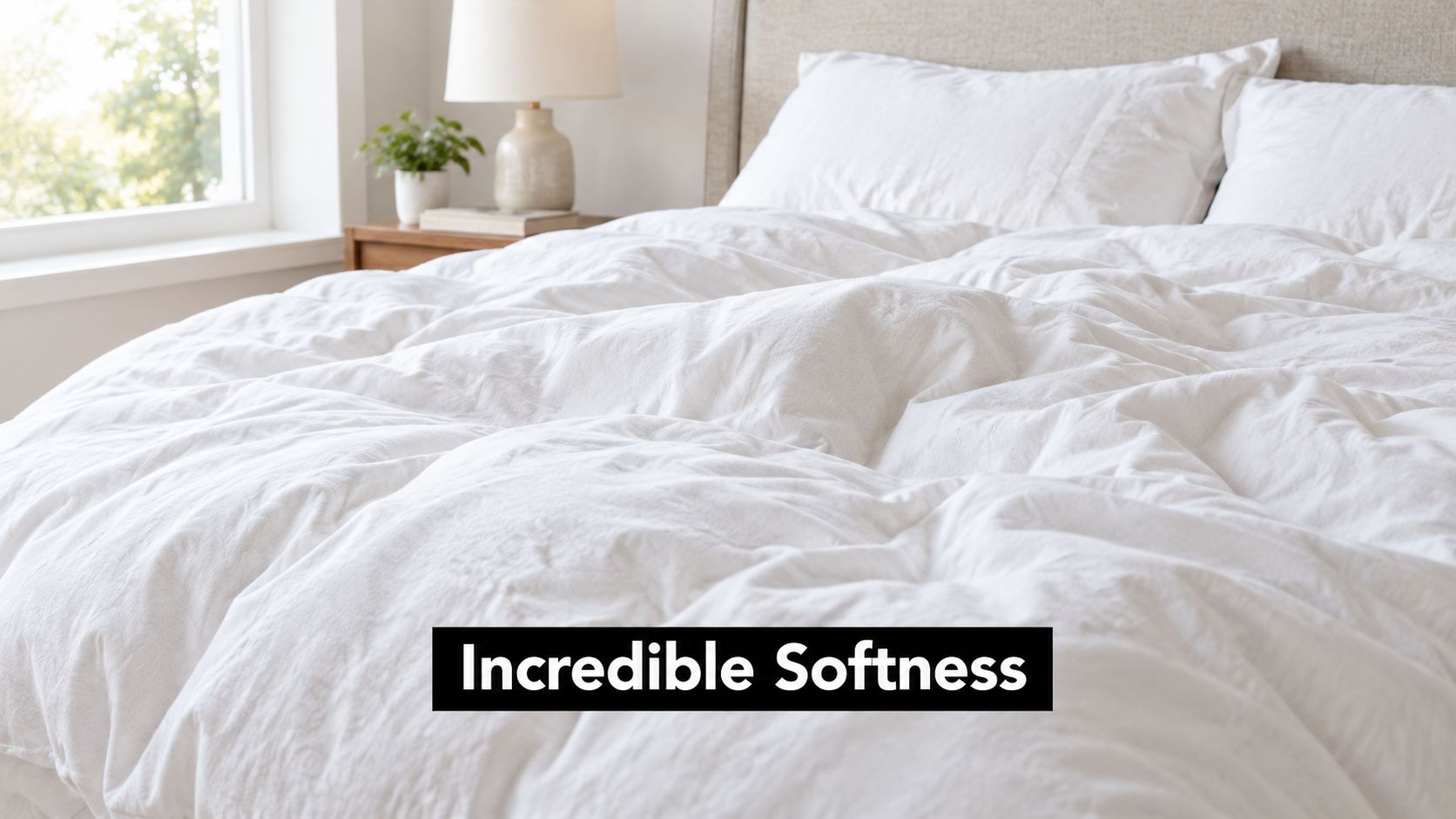
Why the surface feels different
Jersey describes a knitted construction, not a specific fiber. Knitting forms yarn into connected loops. Those loops can flex and recover, which gives the fabric its familiar stretch and soft, T-shirt-like hand feel. A woven fabric uses yarns crossing over and under one another in a grid, so it generally holds a more stable, structured shape.
That distinction matters during sleep. As you turn, pull the comforter up, or tuck your feet underneath it, a knitted shell can conform more easily to movement than a rigid woven cover. The result is a relaxed, enveloping feel rather than the crisp sensation associated with percale or the smoother drape associated with sateen.
The effect also suits casual bedrooms. A matte jersey surface looks less formal than a tightly woven shell, and its softness can make a neatly made bed feel approachable rather than staged. Hospitality teams may appreciate the familiar touch, while homeowners often choose it for guest rooms, children's rooms, or a layered bed designed for everyday use.
Practical rule: Treat “jersey” as the beginning of your evaluation, not the conclusion. The label identifies the knit family, but it doesn't identify the fiber content, warmth, or durability.
A useful comparison is the difference between a jersey fitted sheet and a jersey comforter. A fitted sheet mainly delivers stretch and surface contact. A comforter adds batting, quilting, seams, and loft, so its outer shell may feel T-shirt-soft while the interior provides substantial insulation. For a closer look at how jersey performs in another bedding layer, see this guide to jersey fitted sheets.
Understanding Knit Architecture and Fiber Blends
The easiest way to understand jersey is to compare it with a shoelace and a basket. A woven textile resembles a tightly organized basket, with crossing yarns creating a stable plane. A knitted textile resembles a chain of interlocking loops. Pull one area of the looped structure, and nearby loops can rearrange themselves, creating flexibility without requiring elastic fibers.
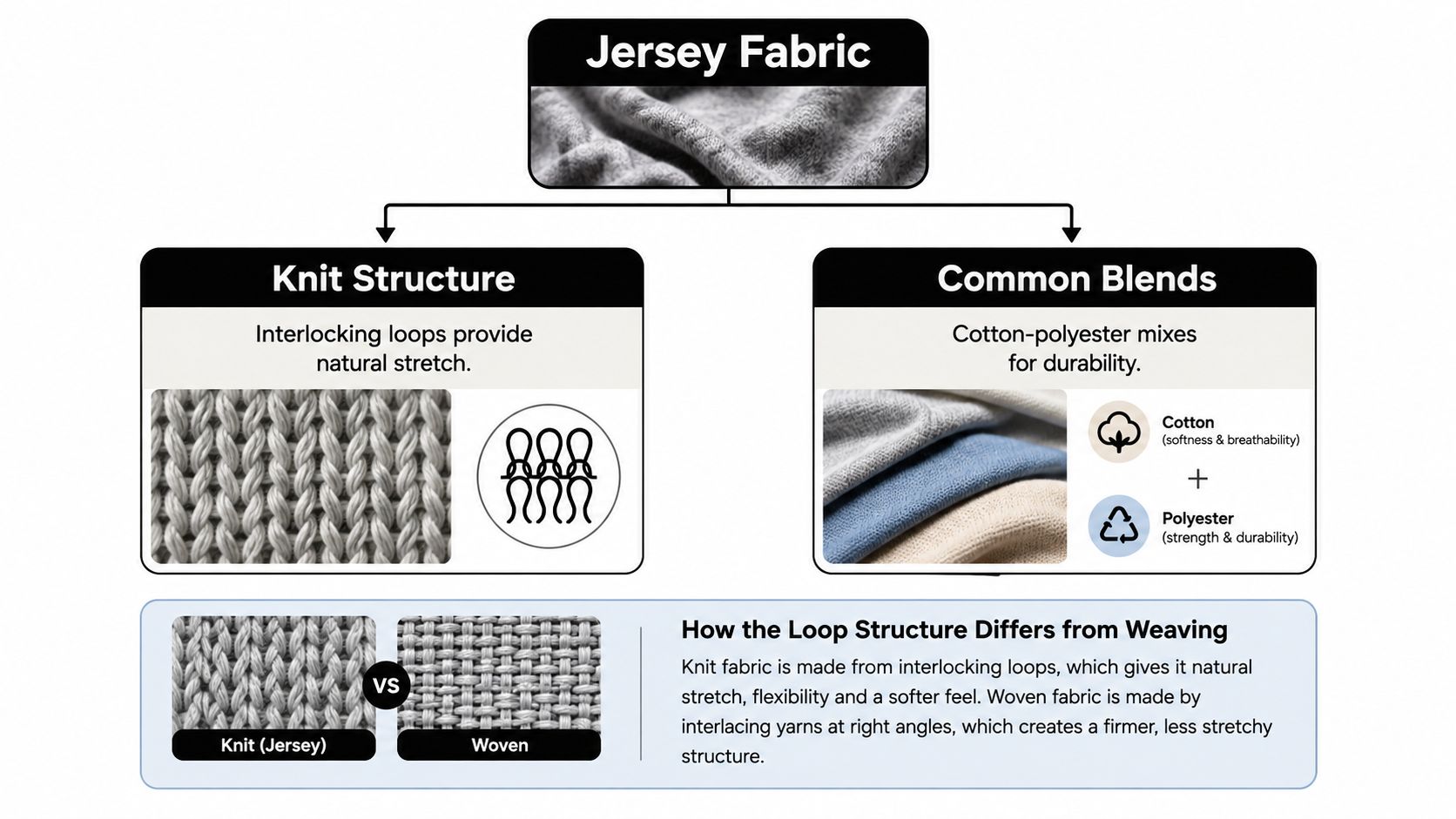
What changes the hand feel
Yarn linear density, fabric mass, thickness, and knit tightness all influence the shell. A finer yarn may create a smoother, lighter surface. More fabric mass and thickness can add body and insulation. A tighter knit usually restricts airflow compared with a more open construction, while a looser knit can feel more ventilated but may require careful finishing to maintain stability.
The fiber blend changes the way those loops behave. Cotton can contribute absorbency and a familiar soft hand. Polyester may improve drying speed, resilience, and resistance to some forms of deformation, but the result depends on the ratio, yarn design, finishing, and fabric density. A cotton-rich jersey and a cotton-polyester jersey can both carry the word “jersey” while feeling and performing differently.
Cotton remains a globally scaled raw material for apparel and home textiles. The USDA 2024/25 world cotton production projection estimated 116.6 million bales, with global harvested area projected at 31.2 million hectares, or about 77.0 million acres. The report forecast average yield at 815 kilograms per hectare, or 727 pounds per acre, and projected output to be 2.6% higher than the previous season. Those figures show why cotton appears so widely in bedding, but they don't guarantee that any individual comforter will be breathable or long-lasting.
Read the specification panel
Look for the fiber ratio, shell weight if provided, fill composition, quilting method, and care instructions. A label that says “cotton jersey” tells you more than a generic “soft comforter,” but it still leaves important questions unanswered.
For shoppers comparing natural-fiber sleepwear and bedding, the organic cotton PJ guide from Get Spliced offers useful context about how fiber choice affects everyday comfort. Within bedding, also pay attention to pre-shrinking and dimensional stability. Knitted fabrics can change shape if the manufacturer hasn't controlled relaxation, finishing, and laundering conditions.
A jersey shell is therefore a system of choices. Loop geometry creates flexibility, fiber content shapes moisture behavior, and fabric mass influences warmth and body. You can use the same analytical approach when comparing jersey with other textured bedding, including a waffle-knit comforter.
Comparing Jersey to Woven Comforter Shells
Jersey and woven shells solve different comfort problems. If you like the sensation of a freshly pressed hotel bed, percale may appeal to you because its plain weave feels crisp and stable. If you prefer a smoother surface with a more fluid appearance, sateen offers a different woven experience. Jersey sits apart from both, with a softer, more flexible hand and a less formal visual character.
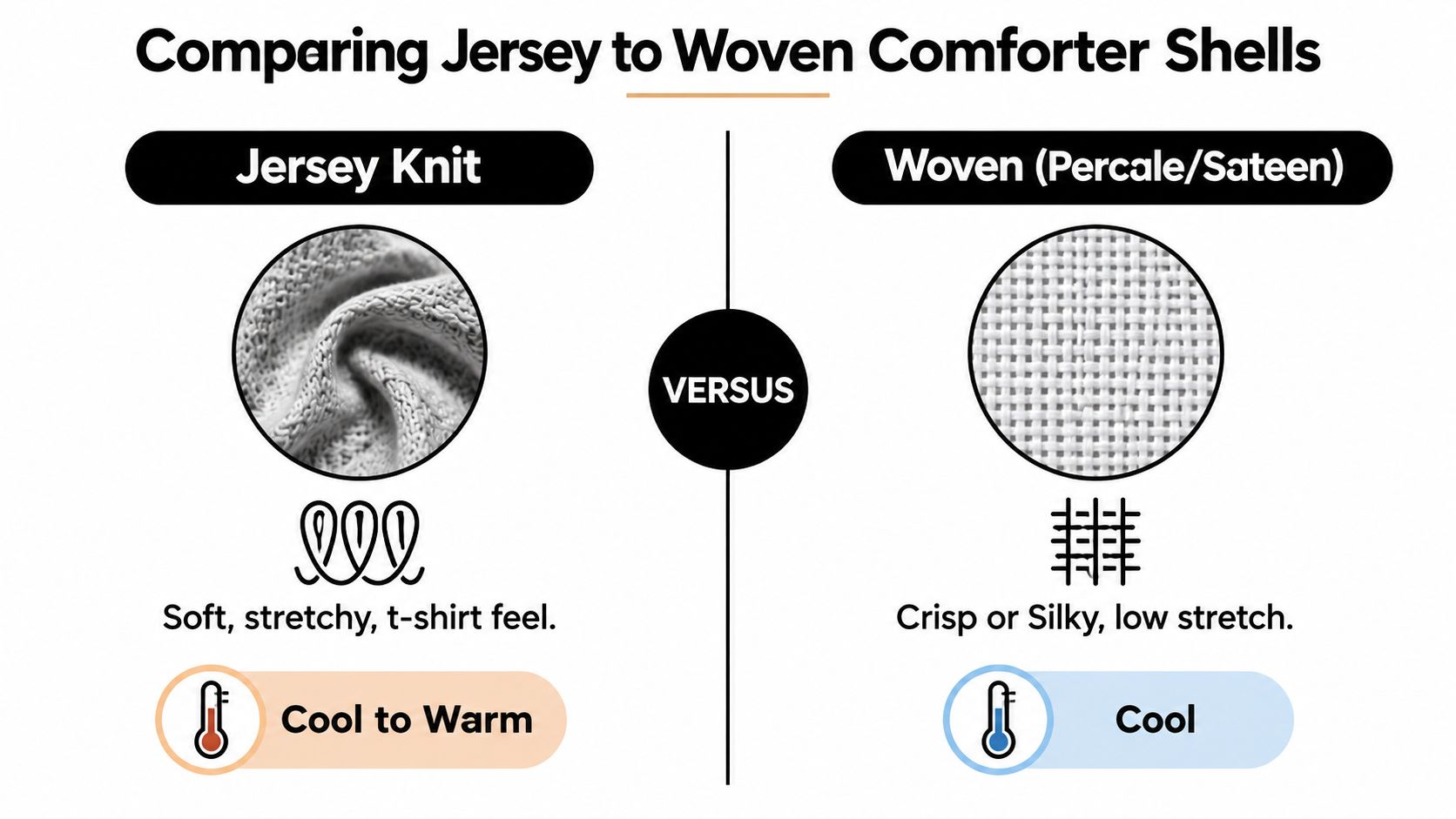
| Feature | Jersey knit | Woven percale or sateen |
|---|---|---|
| Surface character | Soft, matte, and T-shirt-like | Crisp in percale, smoother and silkier in sateen |
| Stretch | Natural flexibility from knitted loops | Generally low stretch from the woven grid |
| Drape | Relaxed and body-conforming | More structured and controlled |
| Warmth potential | Depends heavily on knit density and fill | Depends heavily on weave, weight, and fill |
| Best match | Casual comfort and flexible movement | Crisp structure or polished drape |
How movement changes the experience
An active sleeper may notice the difference quickly. A woven comforter can shift as a single structured layer, while a jersey shell can flex around the body and follow movement more readily. That doesn't mean jersey will stay perfectly in place, and it doesn't mean woven bedding feels uncomfortable. It changes the relationship between the sleeper and the cover.
Jersey also creates a different visual mood. Its surface tends to look relaxed and softly textured rather than sharp and formal. Percale can support a clean, airy bedroom with a crisp outline. Sateen can bring a smoother, more decorative drape. Jersey works well when you want the bed to feel inviting, informal, and easy to live with.
Temperature comparisons require care. A woven percale shell may feel cooler at first touch, but the complete comforter's warmth depends on its fill and construction. A jersey shell may feel cozy because it conforms closely, yet an open knit with lightweight insulation can still allow substantial airflow. The fabric name alone can't settle the question.
A shell provides the contact sensation. The fill supplies much of the insulation. Quilting connects the two.
Before choosing a comforter, decide whether you want crispness, fluidity, or flexibility. A practical explanation of the layers that make up bedding is available in Groen's Fine Furniture bedding tips, especially if you're comparing a comforter with a duvet cover and insert.
For a visual introduction to the tactile differences between knitted and woven shells, watch this short reference:
Matching Breathability and Warmth to Your Sleep Style
A jersey comforter doesn't have one fixed temperature profile. Single jersey, interlock, fiber ratio, loft, and quilting density can produce noticeably different results. Research on knitted fabrics identifies yarn linear density, fabric mass, thickness, and tightness as important influences on heat resistance and air permeability. Thicker constructions generally insulate more, while greater porosity supports more air movement. Research on knitted fabric thermal behavior supports evaluating the construction rather than assuming that every jersey product sleeps alike.
Hot sleepers
A hot sleeper should look beyond “cotton jersey” and ask how much insulation sits behind the shell. A relatively open single-jersey surface paired with lightweight batting may offer a more ventilated combination than a dense knit paired with thick fill. Cotton can absorb moisture, but it may dry more slowly than some synthetic blends, so the full fiber and fill specification matters.
Quilting can change the outcome again. Closely spaced quilting compresses the batting and may limit movement through the assembly. Dense materials and thicker insulation can increase thermal resistance even when the shell feels soft and breathable in your hands.
Cold sleepers
A cold sleeper may prefer a denser jersey shell, greater fabric mass, or more substantial loft. Interlock structures generally provide more insulation than single jersey, while tighter construction can reduce air permeability. That can create a warmer, more cocooning comforter, especially in a cool bedroom.
Couples with different sleep temperatures should avoid judging a comforter by one person's preference. A compromise may involve a moderate shell and adjustable layers, such as a lighter comforter with a separate blanket available for the colder sleeper. The right solution depends on bedroom conditions, mattress heat retention, personal clothing, and whether either sleeper uses a heated mattress.
Match the whole assembly
A useful product specification should distinguish shell behavior from finished-product behavior. Ideally, manufacturers assess thermal resistance, water-vapor resistance, air permeability, thickness, and mass per unit area on the completed quilted assembly, not only on a fabric swatch.
Moisture management research reports that certain finishes can increase water-vapor permeability and thermal conductivity while reducing wet thermal resistance, which may help vapor move away from the body. The textile moisture-management research%20177-180.pdf) also reinforces why fiber absorbency, knit porosity, insulation thickness, and quilting should be considered together.
Buying test: If the listing gives only a color, size, and “jersey” label, it doesn't provide enough information to predict warmth confidently.
Care Protocols for Longevity and Reduced Shedding
Jersey needs gentle handling because its looped structure can stretch, relax, and abrade during washing. A comforter adds another concern: the shell, batting, thread, and quilting must move through the wash together. Poor care can affect softness, shape, seam integrity, and loft at the same time.
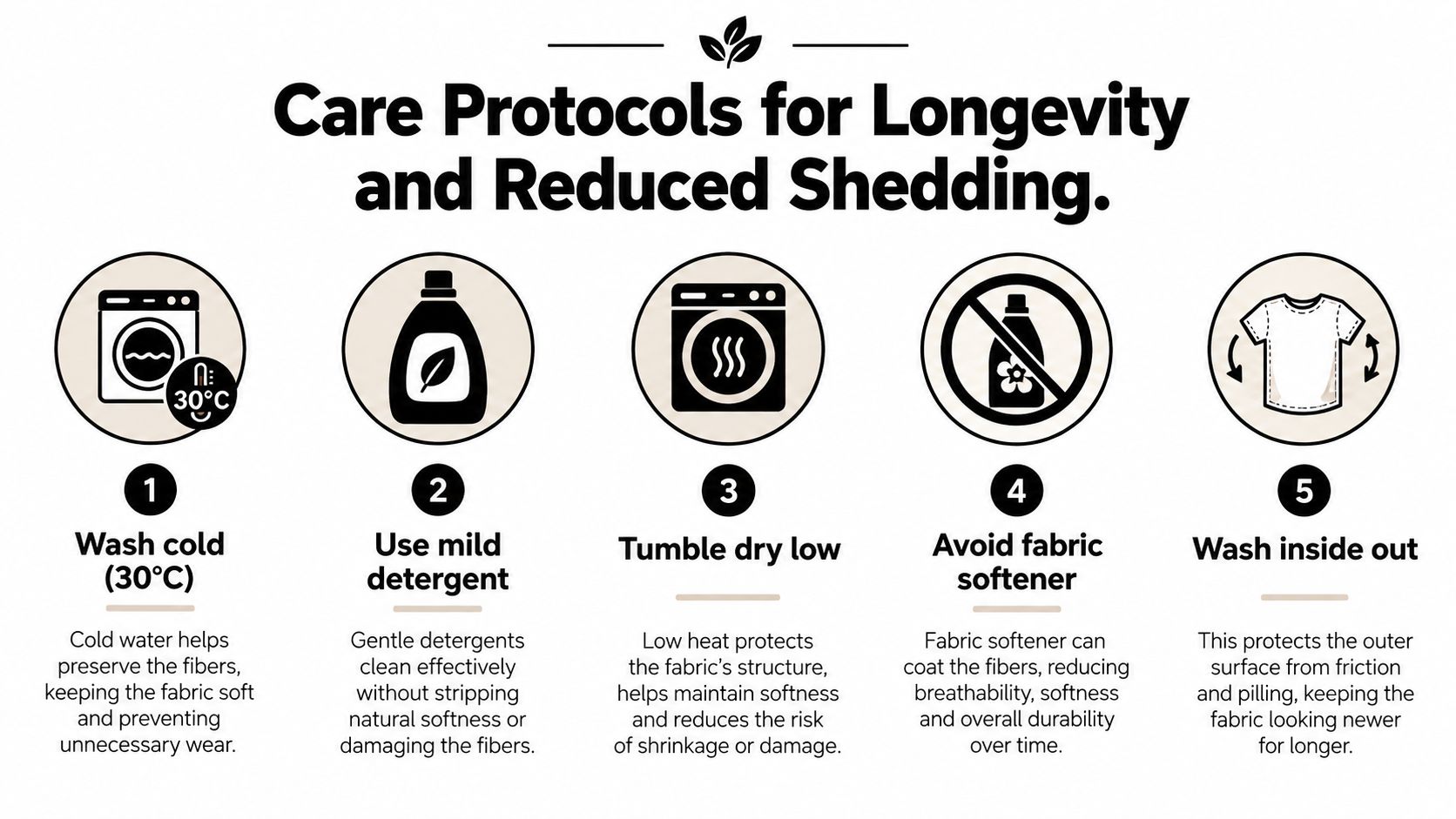
Use a lower-stress wash routine
Start with the manufacturer's care label. If the product allows machine washing, use a cold or cool, gentle cycle, a liquid mild detergent, and enough drum space for the comforter to move without being compressed. Avoid overloading the machine, since friction and twisting increase mechanical stress on the knit and can prevent the fill from rinsing evenly.
A 2025 household study detected nanofibers and reported an average release of 5,849,943 microfibers per liter across three wash trials. The household laundering study also noted that lower temperatures and shorter cycles can reduce shedding in some conditions. This figure describes the study's tested washing context, not a prediction for every jersey comforter.
Follow a simple sequence:
- Check the label first. Manufacturer instructions take priority because fills and finishes vary.
- Choose a gentle cycle. Shorter, lower-agitation washing can reduce mechanical wear.
- Use mild liquid detergent. Excess detergent can leave residue and may encourage additional rinsing.
- Skip fabric softener unless the manufacturer allows it. Coatings can alter absorbency and surface feel.
- Wash separately when practical. Zippers, hooks, and rough fabrics can abrade knitted loops.
Dry with the fill in mind
Drying affects more than the shell. High heat can encourage shrinkage or dimensional change, while uneven drying can leave batting damp in the center. Use a low-heat setting only when the care label permits it, pause to redistribute the comforter, and make sure the interior is completely dry before storing or putting it on the bed.
Looser knitted structures and high-surface-area textiles can release more fibers during laundering than compact woven structures. Cotton can also release fibers because absorbed water causes swelling and mechanical stress. Visible lint isn't the same thing as measured microfiber release, so don't judge shedding by the lint screen alone.
Laundry principle: Reduce heat, friction, overloading, and unnecessary agitation. That protects both the comforter's shape and the amount of fiber that leaves the textile during washing.
Choosing Quality and Certified Bedding
A premium jersey material comforter should feel good at first touch, but softness is only one checkpoint. Look closely at the shell, too. Even stitching, secure edge binding, consistent quilting, and well-distributed fill indicate that the manufacturer has addressed the comforter as a complete assembly rather than only adding a soft fabric to generic batting.
Inspect construction before comfort
Run your hand across the surface and look for uneven loft, loose threads, puckering, or thin areas. Quilting should hold the fill in place without creating excessively compressed channels. Edge binding should lie flat and remain secure when you gently flex the perimeter.
Ask for information that connects directly to use:
- Fiber composition: Is the shell 100% cotton, or does it contain polyester?
- Knit type: Is it single jersey, interlock, or another construction?
- Fill composition: What creates the insulation and loft?
- Care instructions: Can the complete comforter be machine washed?
- Dimensional stability: Has the finished product been checked after laundering?
- Warmth description: Does the rating apply to the complete comforter rather than the shell alone?
A product can use high-quality cotton and still disappoint if the batting compresses, the seams fail, or the shell changes shape. Cotton's global availability supports broad product choice, but it doesn't establish performance for a particular item.
Understand what certification means
OEKO-TEX STANDARD 100 is a chemical-safety designation. It indicates that the labeled textile and its components were tested for harmful substances according to the product's intended use. It does not prove that a comforter is especially breathable, durable, lightweight, or warm.
That distinction makes certification valuable but limited. Families, sensitive-skin shoppers, and hospitality operators may want chemical-safety information alongside construction details. You can learn more about the meaning and role of OEKO-TEX certified bedding, then evaluate the product's fill, quilting, laundering instructions, and fit separately.
The strongest purchase decision combines both sides of the assessment. Choose a shell whose knit and fiber blend suit your preferred feel, then confirm that the fill and quilting match your climate. Finally, look for clear care guidance and credible safety documentation rather than treating a soft hand or a familiar label as proof of quality.
SouthShore Fine Linens offers thoughtfully made bedding with a focus on comfortable fabrics, reliable fit, practical care, and many OEKO-TEX certified textiles. Browse the collection at SouthShore Fine Linens to find comforters, quilts, and bedding essentials designed for everyday use.


