
How Often Do Hotels Wash Comforters? Schedules Explained
That bright white hotel bed signals a cover change, not a laundry receipt. Housekeeping swaps the duvet cover or the top sheet, the fabric guests touch, then smooths the insert and remakes the bed. The room looks new. The bulky comforter underneath often stays on a slower clock.
Copy that split at home and the routine gets simpler. Wash the cover weekly. Wash the insert only when the calendar or a real mess says so. How often hotels wash that insert depends on the property and the laundry it can run, and no universal rule covers every stay.
Hotel Comforter Washing Schedules by Property Tier
A neat bed does not prove the comforter itself went through the wash. Frequency follows the property tier, the laundry the building can run, and whether the bed has a removable cover. TripJaunt's look at hotel laundry teams describes that spread: luxury hotels and resorts may launder the comforter or duvet insert after every checkout, some mid-range properties wash it weekly, and budget hotels may clean it monthly or only when it is visibly soiled. Read those as industry patterns. They are not a promise for the hotel you booked last month.
| Property tier | Comforter insert washed | Duvet cover or top sheet | Extra washing trigger |
|---|---|---|---|
| Luxury hotels and resorts | After every checkout | Often changed between guests | Any visible stain or spill |
| Mid-range hotels | About weekly | Often changed between guests | Visible soiling |
| Budget hotels | About monthly, or only when visibly soiled | Often changed between guests | Visible soiling |
Match the hotel you actually stayed in
Fresh bedding often means the guest-touching layer was replaced. Comforters are not always washed between guests, and no single rule says they must be. A housekeeper can strip the sheets, put on a clean cover, and leave an insert that still holds the previous stay. The room looks new. The bulky fill may not be.
Say you stayed at a resort with a duvet system. Expect the cover to move between guests, and treat an every-checkout insert wash as the hopeful end of the range, not a guarantee. A mid-range chain sits closer to a weekly insert wash. A budget room sits closer to monthly, unless a stain forced an earlier pull. Older properties and small inns can sit even further apart, because on-site machines and spare inserts decide what is possible. If you like comparing stays, the heritage hotel picks from Count Kálnoky's Estates show a different kind of property from a full-service resort, so the tier row is a starting expectation, not a brand promise.
Practical rule: If you need certainty, ask whether the team washes the duvet insert or only changes the cover.
Find the row closest to your last stay and use it as the question to check, not as a fact already proven by a neatly folded bed.
Why Hotels Wash the Cover More Than the Comforter
The cover is the washable barrier. The insert is the heavy, long-life asset. Think of the cover as a pillowcase, changed often because it meets skin, oils, and hair. Think of the comforter as closer to the mattress: staff check it, spot-treat it, and rarely take the whole thing apart.
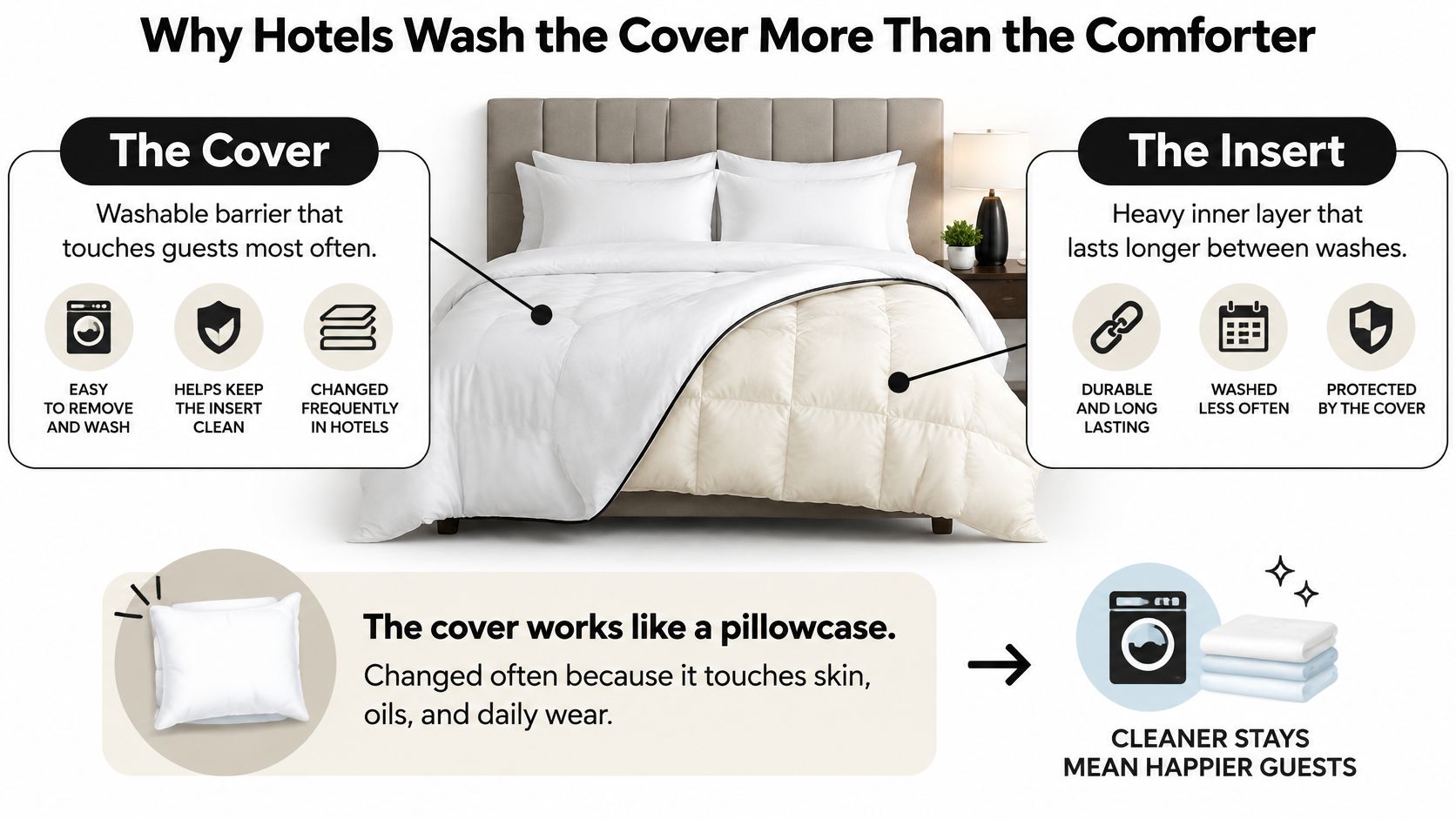
A lightweight cover can run with the sheets between guests. The insert needs drum space, a long dry, and a spare piece so the room isn't stuck empty. That split is why a bed can look hotel-fresh while the fill inside has a much longer gap between full washes. Keeping a spare clean duvet cover ready is the same idea in a home closet.
What the bed card actually tells you
View from the Wing traces the shift. Marriott reportedly began changing duvet covers in 2005. Hampton Inns introduced bed cards or sticky notes in 2012 stating that bedding had been changed. Those cards are a guest-facing signal that the cover and sheets moved, not a receipt that the insert was laundered.
Older reporting described mid-priced and lower-priced hotels deep-cleaning duvets about four times per year, about once every three months, with compliance differing by property. Decorative blankets and throws often sit on a still longer cycle. One hospitality expert cited a customary interval of 60 to 90 days, depending on service level. Cover replacement is the every-stay habit. Full comforter laundering runs anywhere from each checkout to several times a year.
The question worth asking at the desk is specific: does your team wash the insert, or only the cover?
Why Comforters Take Longer to Wash and Dry
A comforter behaves like a thick sponge. It drinks wash water, then holds it long after a sheet would already be dry. That is why the insert cannot share the sheet schedule even when a hotel wants it to.
HuffPost's reporting on hotel textiles ties the limit to three physical facts.
- Drum room: Bulky inserts need space to tumble. An overfilled machine presses soil into the fill instead of flushing it out.
- A finished dry: Residual moisture promotes odor and microbial growth. A comforter that feels dry on the shell can still be damp in the core.
- Heat limits: Excessive heat damages down, synthetic fills, shell fabrics, and quilting. Low and slow protects the fill, and it also ties up the dryer.
How those limits set the interval
Publicly reported hotel practice therefore runs from every few days or weekly in higher-service settings to about monthly in some budget properties, unless visible soil forces an immediate wash. Staff inspect the insert at every room turnover, pull it after any spill or bodily-fluid exposure, and book a full wash around occupancy, the care label, and dryers that can finish the job.
Independent consumer guidance commonly places a daily-use comforter around every one to three months, sooner when it acts as the top sheet or when pets sleep on it. That home interval is not a hotel standard. It shows why a removable cover lets you keep the sleep surface clean while the insert stays intact. Wash the barrier often. Wash the sponge when it has earned a full cycle, and only when you can dry it all the way through.
How Hotels Run Comforter Laundry at Scale
Hotels rarely wash every comforter after every stay because hygiene, fabric life, water, and energy pull in different directions. A cover or a layered sheet system gives a clean guest surface without sending a water-heavy insert through commercial dryers all day.
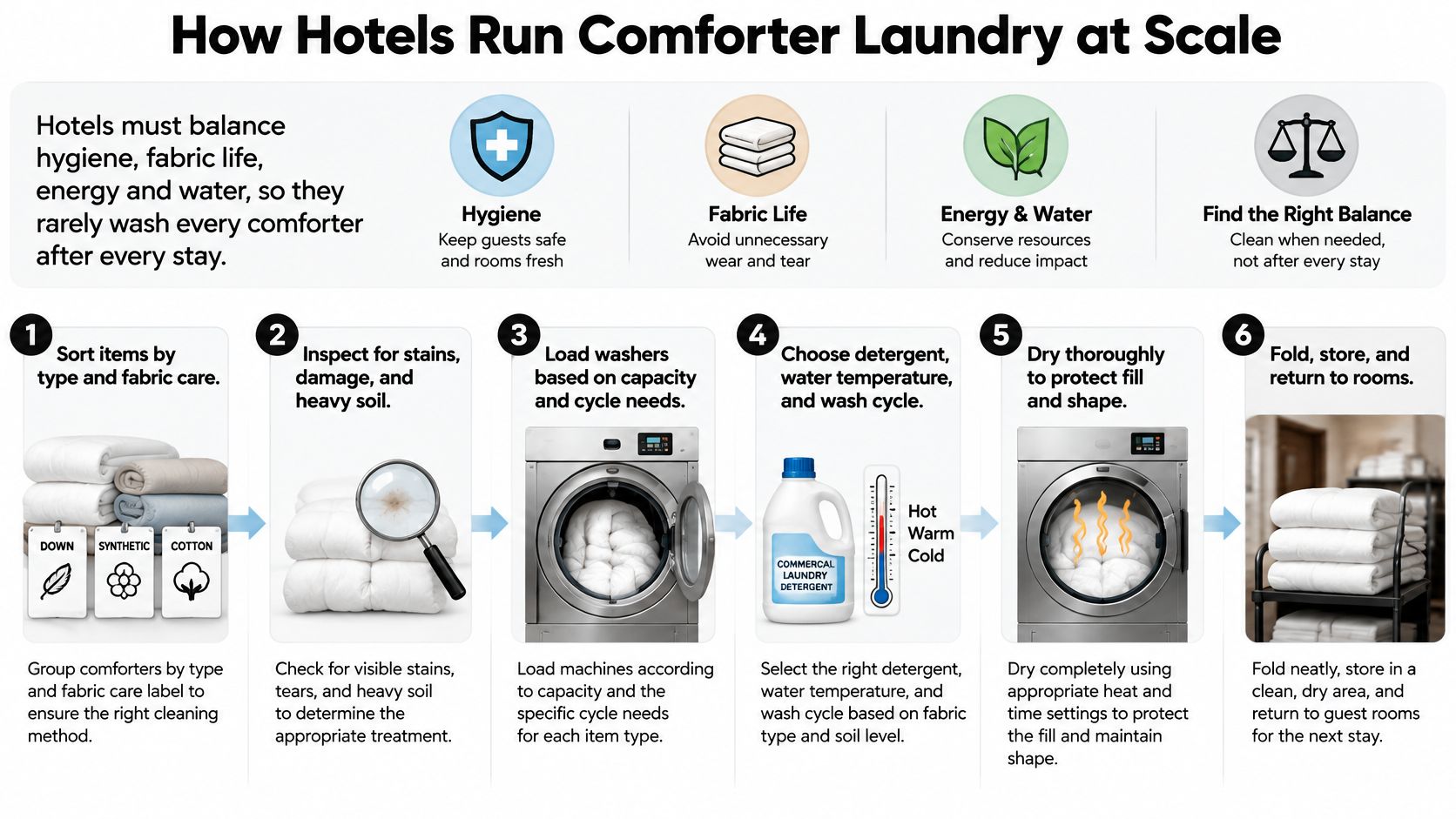
Picture a 200-room property on a sold-out Friday. Sheets and covers fill the first waves. Inserts join the line only when inspection, a stain, or the property's calendar says they should.
- Sort by type and soil. Down, synthetic fill, and cotton shells don't share one recipe. Mixing a lightly used insert with a stained one wastes a harsh cycle on the clean piece and under-washes the dirty one.
- Pre-treat what you can see. Protein stains set if they hit hot water first. A same-day spot treatment beats hoping the main wash will find a dried spill buried in baffles.
- Load to the drum, not past it. Overfilling is the common slip. The insert needs room to flex, or detergent never reaches the center.
- Pick water and chemistry for the cloth. Warm or cold water plus an enzymatic detergent is where a lot of hospitality laundry is heading, because hot water on every bulky load burns energy and shortens fill life.
- Dry until the core is done. Skipping this step sends moisture back into the room. Odor shows up a day later and the piece gets blamed as "never washed."
- Inspect, then fold. Tears, clumped fill, and lost loft fail the piece even when it smells clean. A failing insert goes to repair or replacement, not back on the bed.
Bulky comforters need substantially more drying capacity than sheets, which is why removable covers win at scale. DataIntelo's hospitality cleaning services market estimate projects a 4.9% CAGR for those services through 2034 and claims energy-efficient practices can reduce operating costs by 16.8%. Those are market-research estimates, not a rule posted in every laundry room. They do show the tension: maximum washing is not automatically the most sustainable or the kindest schedule for the cloth.
If you want to see how a commercial wash line moves bulky bedding, this walk-through shows the machine time a home washer never has.
The better question is which schedule keeps the barrier clean without wearing the insert out early.
How Often to Wash Your Own Comforter at Home
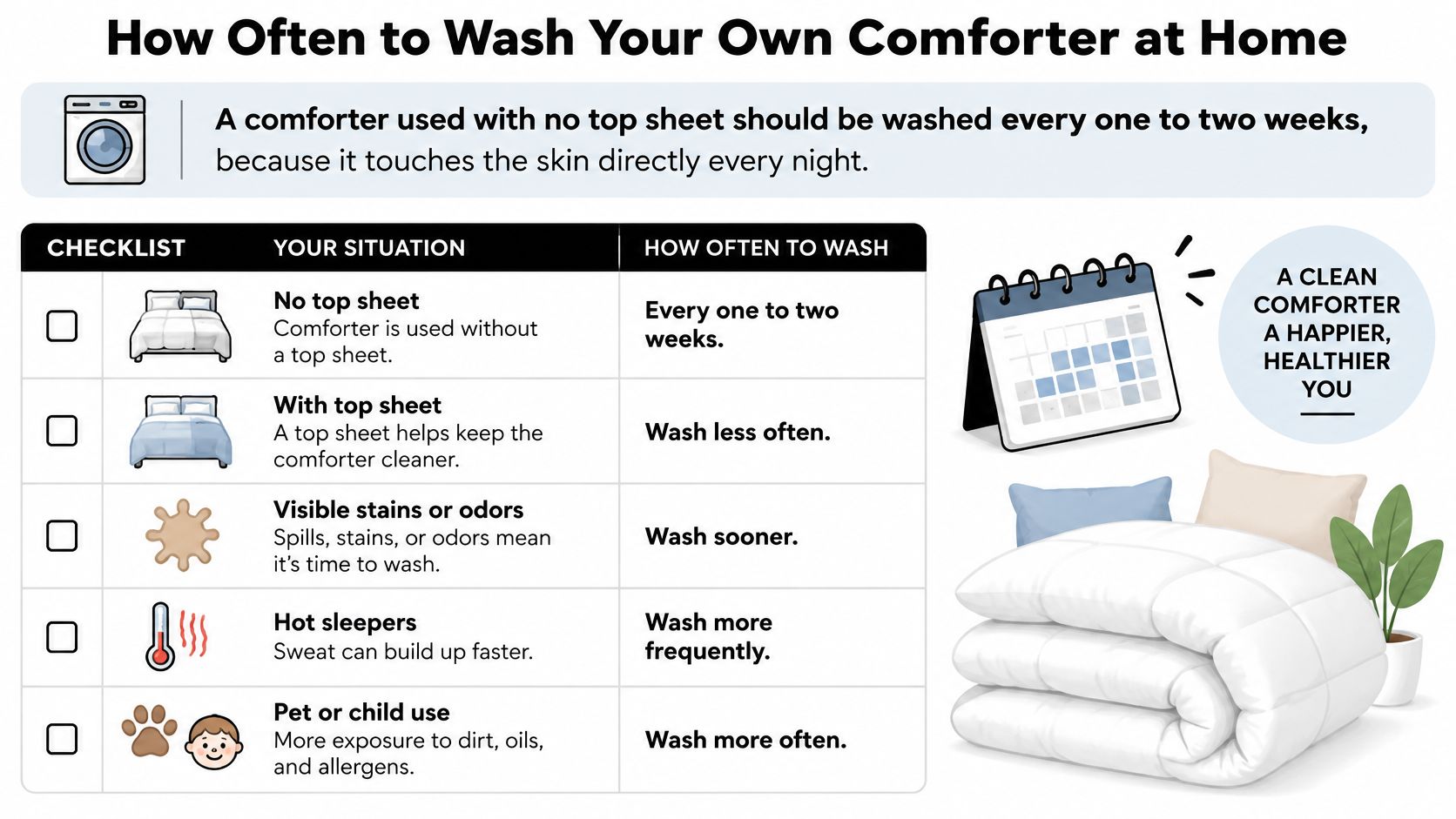
In 2024, Forbes recommended washing a comforter every one to two weeks when no top sheet is used, because it directly contacts the sleeper's skin. That is the fast clock. A cover or a top sheet moves you onto the slow one.
| Home situation | Duvet cover or sheet | Comforter insert |
|---|---|---|
| Comforter used with no top sheet | Not applicable | Every 1 to 2 weeks |
| Comforter inside a washable duvet cover | Every 1 to 2 weeks | Every 1 to 3 months |
| Pets sleep on the bed | Every 1 to 2 weeks | Monthly or sooner |
Pick the row that matches the bed
No top sheet. The shell is the sheet. Skin oils land on it every night, so the one-to-two-week wash is the right default, not a deep clean you save for spring.
Cover on, insert inside. The cover takes the nightly contact, so it joins the weekly sheet load. The insert can sit on the one-to-three-month pattern unless something spills. Our guide on how to wash bedding walks through load size and dry time so that slower wash finishes.
Pets on the bed. Hair, dander, and odor collect faster than a calendar assumes. Keep the cover on the weekly wash and pull the insert monthly, or sooner if the room smells like the dog by morning. People who react to dust and dander often wash bedding weekly at 54°C for the pieces that touch skin. A bulky insert still has to survive a full dry, so don't jump it into that hot weekly load unless the care label allows it.
Before the first wash, read the insert's care label for maximum dryer heat and whether a full machine cycle is allowed. If the label forbids the machine, spot-clean and air it, and still keep the table's interval as your inspection date. The insert goes back on the bed only when the core is fully dry. A damp middle invites odor within a day or two.
Find your row, set a weekly reminder for the cover or sheet, and put the insert on the calendar that row gives you.
Signs a Comforter Needs Washing Before the Schedule Says So
A schedule sets the floor, not the ceiling. The calendar keeps ordinary buildup in check. A real incident overrides it the same day.
- Visible stains and spills: Blot, don't rub, and spot-clean while the mark is fresh. A dried ring in the baffle is much harder to lift later.
- Bodily fluids: Strip the cover and wash the insert soon. Airing is not a substitute.
- Pet accidents: Same rule as bodily fluids, plus a full dry so the smell doesn't lock into the fill.
- Odor after airing: Hang the comforter outdoors or near an open window for a day. If the smell is still there, wash it.
- Sweat-soaked nights: A string of hot nights loads the shell the way a missing top sheet does. Move the wash up.
- Allergy symptoms that ease when the bedding changes: Treat that as a wash trigger for the layer you sleep against, then check whether the insert is due too.
Dirty cloth versus a worn-out fill
Washing fixes soil. It doesn't rebuild loft. Clumped fill, a shell worn thin, or quilting that has let go are replacement signs, not laundry problems. A simple test: after a full dry cycle, press the center. If the loft stays flat, the fill is failing and another wash won't bring it back.
Wash on the trigger, not only on the calendar, and write the date down so the next routine wash starts from a real day, not a guess.
Choose a Washable Cover to Keep Your Schedule Simple
The cover-first schedule only works if the cover is easy to wash every week. If it needs a dry cleaner, a special bag, or a trip to a laundromat, it will sit on the bed the way hotel inserts sit between deep cleans.
Use three tests before you buy.
A machine-washable tag. Products that are tagged as machine washable remove the guesswork. Most cotton bedding is machine washable and can be tumble dried, which is what a weekly habit needs.
A home washer and dryer, not a commercial one. If the cover fits your machine with room to move, you'll run it with the sheets. Oversized covers that must be split across two loads tend to get postponed.
Cloth that tolerates repeat cleaning. For best results, cotton bedding should be washed in cold water and tumble dried on low heat. Wash with like colors. Skip bleach and fabric softener on delicate fabrics, including bamboo, which prefers a gentle cold cycle and low or air drying. Our notes on machine-washable bedding spell out which fabrics can live in that weekly rotation.
Then run the routine, not a one-time reset.
- Choose a cover you can wash weekly without special handling.
- Wash it cold and dry it on low heat, with similar colors.
- Keep the insert dry, and wash it on the interval from your bed's row.
- After the first month, check odor, stains, and whether the cover still looks worth putting back on. Adjust only if a trigger showed up, not because the bed looks slightly lived-in.
A washable cover does the hotel's job at home. It takes the skin contact, it dries fast, and it lets the comforter stay on the slower clock without leaving you under last month's oils.
SouthShore Fine Linens makes machine-washable duvet covers, sheets, and comforters built for a weekly cover wash and a slower insert schedule, so a hotel-style bed stays realistic in a home laundry. If you want cloth that fits a deep mattress and still goes through your own washer, visit SouthShore Fine Linens and start with a cover you'll wash.


