
Washable Duvet Cover: What It Is and How to Choose One
You're standing in a bedding aisle, comparing soft cotton, textured linen, smooth microfiber, and oversized labels that seem to promise the same thing. The real question isn't only which cover looks good today. It's whether the washable duvet cover will fit your insert, work with your home washer, and still look polished after repeated laundering.
The central tradeoff is simple: more frequent washing supports easier hygiene management, but every wash also stresses fabric, seams, closures, and color. The right choice depends on your sleep setup, material, bed depth, washer capacity, and willingness to follow a careful care routine.
What a Washable Duvet Cover Actually Is
A washable duvet cover is a removable fabric sleeve that surrounds a duvet insert. Think of it as an oversized pillowcase for your bed. The insert provides warmth, while the cover creates the surface you see, touch, and clean. Most covers close with buttons, snaps, or a zipper, and many include interior ties that connect to loops on the insert.
The cover sits between your body and the bulkier filling. It catches skin oils, sweat, dust, and everyday spills, so you can remove and launder that outer layer without handling the entire insert every time. Care guidance from Martha Stewart on washing duvet covers recommends routine washing, with a general interval of every one to two weeks. The same guidance distinguishes between warmer-season and colder-season routines, showing that washing frequency can change with use and conditions.
Practical rule: Treat the cover as the bed's washable work layer, not as a decorative shell that only comes off during seasonal cleaning.
This setup differs from a comforter. A duvet cover has a removable insert, while a comforter is generally one finished piece with its outer fabric sewn around the filling. With a duvet system, you can change the bedroom's color or texture without replacing the insert. You can also use different covers for warmer and colder seasons while keeping the same underlying bedding.
Dry-clean-only covers follow a different maintenance path. They may use delicate fibers, decorative trim, or construction that can't tolerate routine machine agitation. If your priority is easy home care, check the label before buying and look for clear instructions that permit machine washing.
For a fuller explanation of the components and how a cover works with an insert, see this guide to what a duvet cover is. The practical benefit is straightforward: wash the layer closest to you, protect the insert, and refresh the room without buying an entirely new bed covering.
Choosing the Right Material for Easy Washing
Material affects three daily experiences at once: how the cover feels, how it behaves in the washer, and how it ages. A fabric that feels wonderfully soft in a showroom may wrinkle, trap warmth, or lose its shape if it doesn't match your laundering habits.
The most useful comparison is less about finding one universally superior fiber and more about choosing the compromise you can live with.
A side-by-side material comparison
| Material | Wash Feel | Durability | Best For |
|---|---|---|---|
| Cotton | Breathable, cool, and increasingly soft with use. Percale feels crisp, while sateen feels smoother. | Stronger constructions hold up well, but cotton can wrinkle and may shrink if exposed to excessive heat. | Warm sleepers, natural-fiber shoppers, and people who prefer a fresh, classic bed feel. |
| Linen | Textured and relaxed, with a draped appearance that becomes more comfortable over time. | Linen is breathable and resilient, but its natural creasing is part of the look rather than a flaw. | People who like an informal, layered bedroom and don't need a perfectly smooth surface. |
| Microfiber | Smooth, soft, lightweight, and quick to dry. | It resists some everyday staining and is often inexpensive, though it can feel warmer and may show wear differently than natural fibers. | Budget-conscious shoppers and households that value low-fuss care. |
| Cotton-poly blend | Familiar cotton comfort with improved wrinkle resistance. | Blended construction can handle regular use well, though it may feel less airy than pure cotton or linen. | Busy homes that want a tidy appearance with less ironing. |
Cotton is usually the safest starting point for shoppers who want a breathable washable duvet cover. Percale, with its crisp hand, suits people who like the feel of a freshly made hotel bed. Sateen has a smoother surface and a softer visual sheen. Guidance from Sleep Foundation's duvet cover overview notes that fiber type and construction strongly influence lifespan. Average covers commonly last about two to three years, while better cotton and linen covers can last longer with appropriate care.
Linen deserves a closer look for oversized beds. Its relaxed drape can make a generous cover look intentional rather than stiff, especially when the bed has a tall mattress. It may feel rougher at first, and it won't stay perfectly smooth after washing, but that texture is part of its appeal. If you want a pressed, crisp finish, cotton sateen or a blend may be easier.
Microfiber often wins on price and drying speed. The compromise is breathability. A hot sleeper may prefer cotton or linen, while someone in a cool room may appreciate microfiber's soft, cozy hand.
Cotton-poly blends occupy the middle ground. They're useful for guest rooms, active households, and short-term rentals where the cover needs frequent laundering and a relatively neat appearance. They don't provide the same airy feel as linen or percale, but they can reduce the amount of post-wash smoothing.
For repeated washing, the weave matters as much as the fiber label. Mattress Clarity's duvet cover guidance identifies long-staple cotton and percale as more wear-resistant than microfiber, while also emphasizing low heat, mild detergent, and secure closures.
How to Pick the Right Size and Closure
A beautiful cover that fits poorly becomes a maintenance problem. The insert bunches, corners pull loose, and the fabric twists into a dense bundle that a household washer may struggle to clean evenly.
Start with the insert, not the mattress
Measure the duvet insert and compare its exact dimensions with the cover. Mattress labels such as queen or king are only starting points. Two products carrying the same size name can have different width, length, and depth specifications.
A cover that's too large may leave empty fabric around the insert. One that's too small can compress the fill, strain the seams, and make the corners difficult to secure. A close dimensional match usually gives the cover a smoother surface and helps the insert move through the wash with less uneven folding.
Your mattress still matters, but indirectly. A tall or pillow-top mattress needs enough drop from the filled cover to create the appearance you want. An oversized or extra-deep bed may require a cover designed for generous proportions, not merely a larger standard label. SouthShore's duvet cover sizing guide can help you compare the cover and insert measurements before ordering.
Inspect the closure system
- Zippers close the opening securely and can reduce shifting, but rough hardware may catch delicate fabric.
- Buttons are familiar and replaceable. They're gentler during handling, though a loose button can create a gap.
- Envelope closures tuck the insert inside overlapping fabric. They look clean and have no fastener to break, but refilling the cover can take longer.
- Interior corner ties are valuable with any closure. They anchor the insert and reduce bunching during sleep and washing.
Look at the weave and weight
A tighter weave generally holds its shape better through laundering than a loose, airy construction. Heavier fabric can create a more graceful drape on a tall bed, but it also occupies more room in the washer and may take longer to dry.
The best choice balances visual weight with practical capacity. A well-fitted cover doesn't just look better on the bed. It spreads more evenly in the drum, gives detergent and water better access, and places less strain on the closure line.
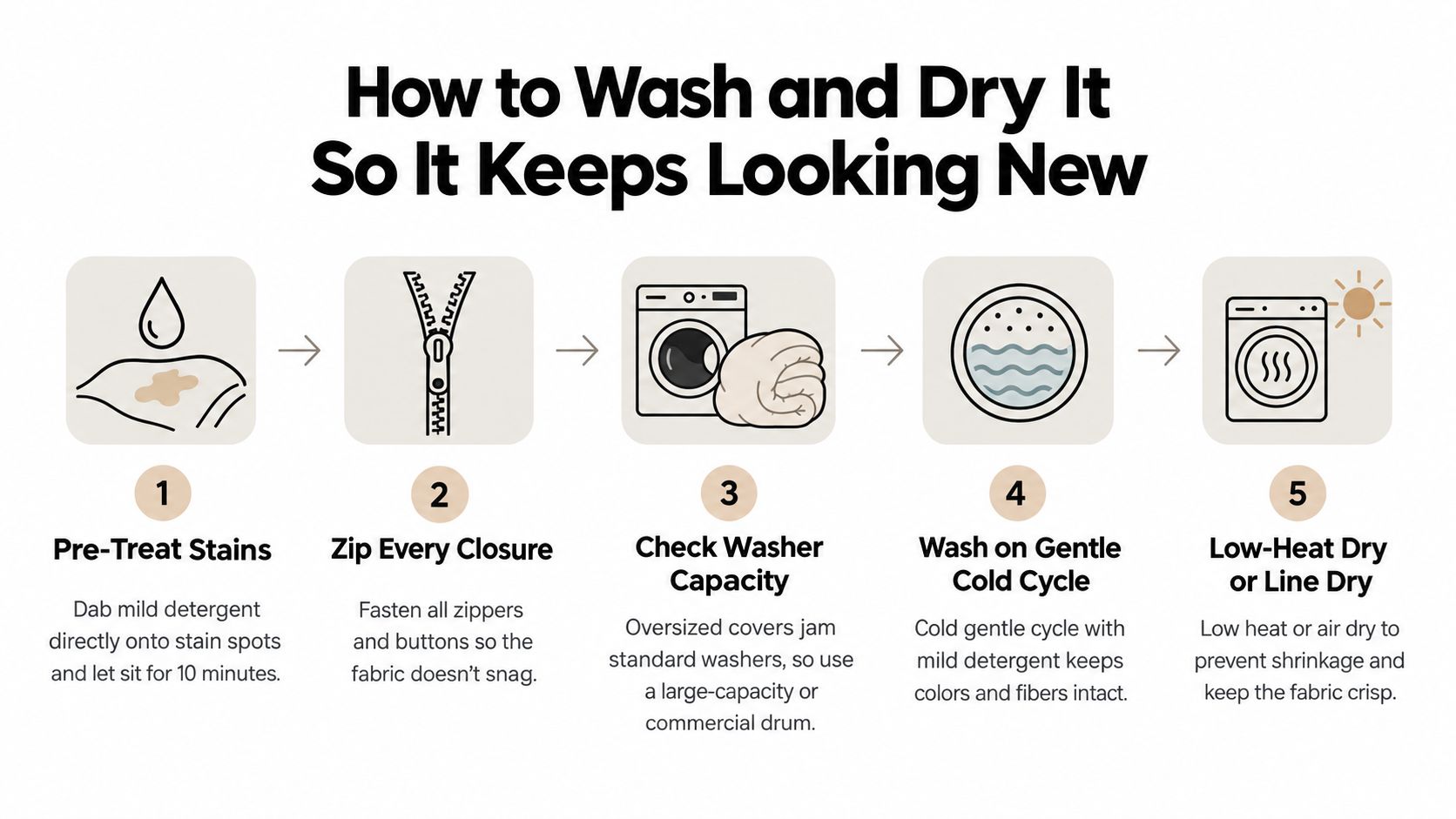
How to Wash and Dry It So It Keeps Looking New
A washable duvet cover still needs a deliberate routine. Large bedding fails in home laundry when people treat it like a regular shirt and ignore capacity, closure protection, or drying temperature.
Start by reading the care label. Washable construction doesn't make every fabric interchangeable. Cotton and linen may tolerate different temperatures from silk or other delicate materials, so the label takes priority.
Use this home laundering sequence
- Pre-treat visible marks. Dab a small amount of mild detergent onto stain spots and allow it to work briefly. Avoid bleach and fabric softener, both of which can weaken or coat fibers over time.
- Secure the cover. Zip every zipper and fasten buttons or snaps. Turn the cover inside out to protect the visible face from abrasion.
- Check the drum. An oversized cover needs room to move. A queen cover can already fill most residential washers, and a bulky king or extra-deep cover may need a large-capacity or commercial machine. If the bundle is packed tightly, water and detergent can't circulate effectively.
- Choose a gentle cycle. Use cool or warm water, a mild detergent, and a gentle or bulky setting. Care recommendations vary by material, but lower temperatures reduce shrinkage and heat stress. The verified guidance supports cool to warm washing, while the infographic below specifies a cold gentle cycle.
- Dry with restraint. Use low heat or air drying. Remove cotton or linen while slightly damp to reduce deep wrinkles and avoid unnecessary shrinkage. Fold or hang the cover promptly rather than leaving it compressed in the drum.
A mesh laundry bag can help protect king-size closures and delicate surfaces, provided the cover still has enough room to move. Don't overload the machine with towels or heavy items. Wash the cover alone or with similarly lightweight bedding, then check that it's fully dry before storing it.
For households managing allergy concerns, guidance on washing bedding weekly at 54°C offers a separate temperature-focused reference. That advice shouldn't override your cover's care label. Delicate fabrics may require a lower temperature.
You can find additional practical instructions in this guide to washing bedding. The aim is consistent, moderate treatment. Gentle agitation, mild detergent, low heat, and enough drum space do more for longevity than aggressive cleaning ever will.
How Often to Wash Without Wearing It Out
“Wash it weekly” is useful advice for some sleepers, but it isn't a complete rule. Your cover's workload depends on whether you use a top sheet, how much you sweat, whether pets sleep on the bed, and how tolerant the fabric is of repeated laundering.
A top sheet creates another washable barrier between your body and the duvet cover. Without one, the cover carries more of the nightly contact and may need more frequent cleaning. Fabric also changes the decision. Durable cotton or linen can suit regular washing, while a delicate or heavily finished surface may look better if you avoid unnecessary cycles.
| Fabric | With Top Sheet | Without Top Sheet |
|---|---|---|
| Cotton | Often every two to four weeks, adjusted for sweat, pets, and visible soil. | Often every one to two weeks, with weekly washing reasonable for heavier use. |
| Linen | Often every two to four weeks, since texture can disguise light creasing but not actual soil. | Often every one to two weeks, depending on contact and bedroom conditions. |
| Microfiber | Usually every two to four weeks when the sheet carries much of the contact. | Weekly laundering may be appropriate when the cover is the primary washable layer. |
| Cotton-poly blend | Often every two to four weeks with a top sheet and modest use. | Every one to two weeks when the cover receives direct, frequent contact. |
These intervals reflect the tradeoff described in The Spruce's bedding-wash guidance, where recommendations vary from weekly routines to longer intervals when a top sheet is used. The source also highlights that wash frequency should account for the sleep setup rather than follow one calendar rule.
Use three checks before starting a cycle:
- Smell: A stale or sweaty odor means the cover needs attention.
- Appearance: Look for visible marks, body-oil darkening, or pet hair.
- Sensitivity: If someone in the household reacts strongly to dust or allergens, choose a more frequent schedule.
Spot-cleaning a small spill can extend the interval without washing the whole cover. That approach reduces unnecessary agitation while keeping the surface presentable. Freshness matters, but so does preserving the fabric you paid for.
Putting It All Together for Your Bedroom
Choosing a washable duvet cover becomes much easier when you treat it as a system rather than a single pretty layer. First, measure the duvet insert. Then check your mattress depth and decide whether the finished bed needs an extra-deep or oversized proportion.
Next, choose the material according to your comfort and care preferences. Cotton or linen suit shoppers who value breathability and natural texture. Microfiber offers a soft, low-fuss option, while a cotton-poly blend can help a busy household maintain a smoother appearance with less effort.
Inspect the closure before buying. Corner ties help limit shifting, and the fastener should feel sturdy enough for repeated handling. A cover that fits the insert closely and leaves enough room in your washer will generally be easier to clean than one that is too shallow, too loose, or too bulky for the drum.
Set a realistic washing cadence based on your top-sheet use, sleep habits, pets, and fabric. Don't buy an attractive cover for an oversized bed without confirming its actual dimensions. A shallow cover can look disappointing from the first night and become harder to manage after laundering.
Today, measure your insert, record your mattress depth, and compare those figures with the product's specifications before choosing a material or color.
SouthShore Fine Linens offers machine-washable duvet cover sets, including options made with materials such as Tencel Lyocell and bamboo, for shoppers who want practical care with a refined bedroom look. Visit SouthShore Fine Linens to compare covers and choose a set that suits your bed's dimensions and laundering routine.


