
How to Spot Clean a Comforter: Stains by Fabric and Fill
You've just tipped coffee onto the comforter, and the brown patch is spreading toward a quilted seam. Before you reach for a wet sponge, check what's underneath that fabric. A cotton shell over polyester fill and a down-filled comforter can need very different amounts of water, even when the spill is identical.
Knowing how to spot clean a comforter means controlling where the stain, cleaner, and moisture go. Treat the shell without flooding the filling, use a cleaner suited to the mark, and leave enough time for the inside to dry.
Match the Stain Type to the Right Treatment
| Stain type | Treatment | Dwell time | Avoid |
|---|---|---|---|
| Oil, grease or body oil | Dab with grease-cutting dish soap or a fabric-approved solvent | Follow the cleaner's pretreatment directions; don't let it dry | Heat before removal, which can set the mark |
| Water-based spills, including juice, wine and soda | Cool water with a little mild detergent | Allow brief contact, then blot and reassess | Hot water and unapproved bleach, which can set stains or fade dyed shells |
| Coffee or tea | Cool water first, then mild detergent | Blot promptly; follow detergent directions for remaining discoloration | Heat before the brown mark is gone |
| Blood or other protein | Cold water with mild detergent | Follow the detergent's protein-stain directions | Hot water, which can set protein |
| Sweat or urine | Cool water and mild detergent; a fabric-compatible enzyme cleaner for urine | Follow the enzyme cleaner's stated contact time | Ammonia-based cleaners, which can worsen urine odor |
| Ink | Fabric-approved ink remover, or rubbing alcohol on a cotton swab after testing | Brief contact, then blot | Rubbing, which spreads ink into the weave |
| Unknown stain | Cool water and mild detergent after a hidden-spot test | Use a short test treatment and reassess | Bleach or guessing with a strong solvent |
Match the cleaner to the stain, not its darkness. Oil needs a grease-cutting treatment. Water-based spills usually justify starting with cool water and mild detergent, not a stronger chemical.
Dish soap is useful for a small greasy mark on washable fabric, but excess soap creates another job: removing the residue without soaking the comforter. Use a light application rather than coating the patch. A dedicated solvent must explicitly suit the shell, and solvent-treated bedding shouldn't go into a dryer unless the product's safety instructions permit it.
Treat mixed spills in stages
Coffee with cream isn't just a coffee stain. Blot away the liquid first, use cool water on the washable shell, then address any remaining greasy edge with a compatible detergent. Don't keep adding different cleaners while the first treatment is still present.
Urine needs a separate judgment. An enzyme cleaner can help with organic residue, but choose one approved for the fabric, particularly around wool or other animal fibers. Never mix cleaning products.
For stains that also reached your sheets, use our guide to removing stains from bed sheets to treat those separately.
Care-label priority: Delicate trim, decorative finishes, and dry-clean-only construction override any general stain-removal recommendation.
How to Spot Clean a Comforter Step by Step
Set the comforter on a clean, protected surface rather than treating it on the mattress. Gather white absorbent cloths, a spoon, a small bowl of cool water, and your selected cleaner so you won't need to carry a dripping comforter between rooms.
New Mexico State University's stain-removal guide recommends identifying the stain, removing excess material, testing the treatment, and using absorbent backing so the cleaner and stain transfer out of the fabric. The important distinction is controlled transfer, not scrubbing.
Prepare the stain and protect the filling
- Act as soon as you notice the spill. Start by absorbing free liquid rather than immediately applying cleaner. Leaving a puddle while you search for a stain remover gives it more opportunity to reach the filling.
- Lift off solids with the edge of a spoon or blunt knife. Approach from the edge and lift upward; pressing sauce, food, or mud flat forces more material into the shell.
- Identify what spilled. Decide whether you're dealing with oil, a water-based spill, a combination, or an unknown mark. Don't assume every brown stain is coffee, especially if you discovered it after the fact.
- Test your chosen treatment on a concealed area of the same fabric. Let the test patch dry and check both its color and feel; a wet patch can conceal a pale ring or altered finish.
Use this visual reminder to keep the process gentle.
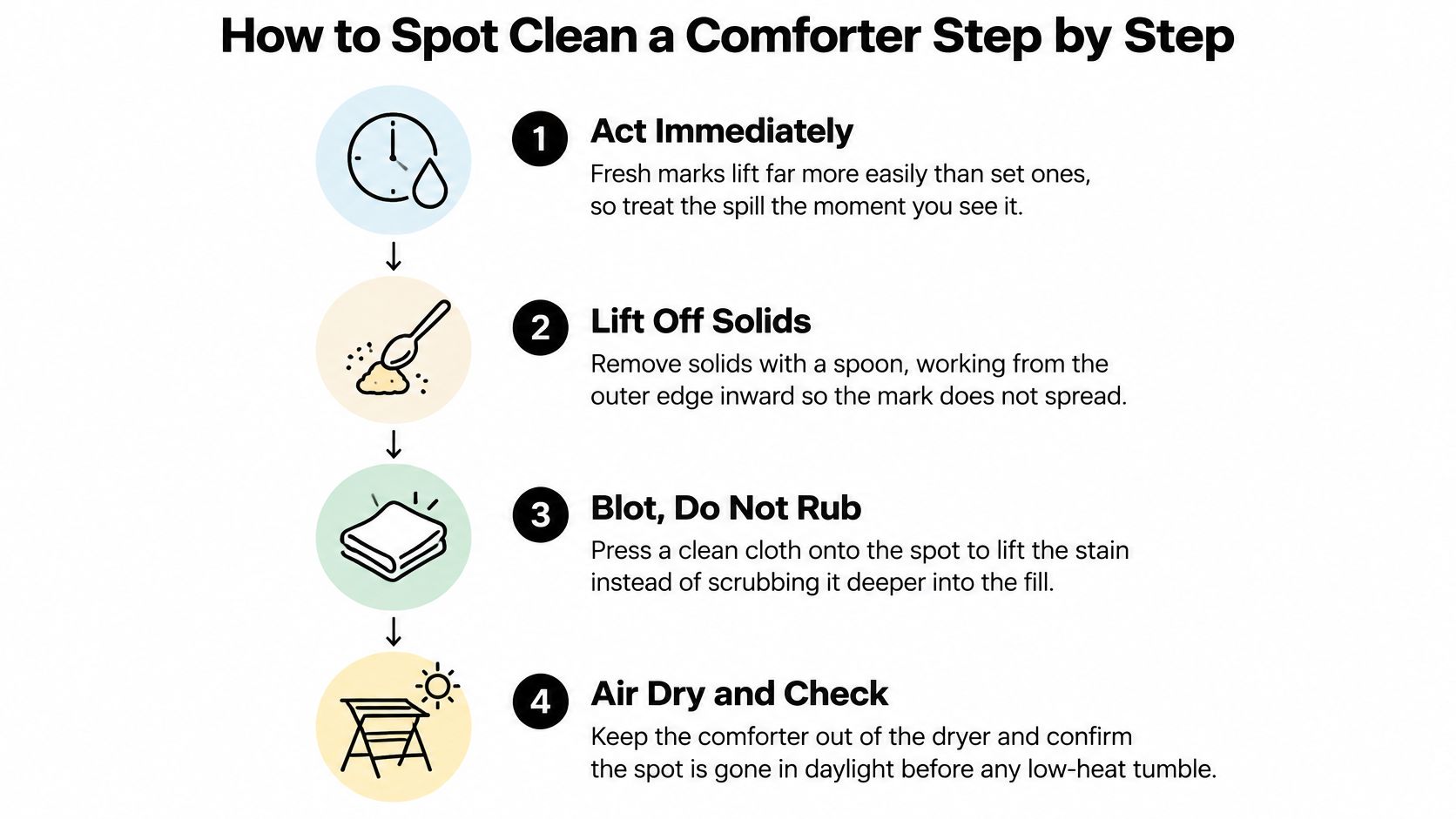
Lift the mark without flooding the core
- Place a white absorbent cloth beneath the stained fabric when accessible. Gently separate the shell from the fill without opening seams or pulling apart quilting. If you can't insert backing, pinch the shell away from the filling and use less liquid; laying a towel under the entire comforter won't stop moisture entering its core.
- Work from the underside when construction allows, blotting from the outside edge toward the center. Move to a clean part of your cloth as it picks up color, rather than pressing the dirty section back onto the shell.
- Apply a small amount of treatment and allow the label-directed contact time. Keep alcohol-based ink treatment brief, and use the detergent or enzyme product's instructions for other marks. Remove cleaner with a fresh, damp cloth, changing its contact surface until you're no longer lifting suds or residue.
- Press with a dry towel, then inspect the area in daylight. Don't scrub a remaining shadow or add heat to speed the inspection; allow the patch to dry so you can judge it accurately.
A clean blotting cloth and unchanged fabric texture are encouraging signs. The shell shouldn't feel sticky, stiff, fuzzy, or slick after treatment.
If the spill has penetrated too far for this method, Canes Cleaners' comforter washing steps for renters offer a useful starting point for planning a full wash when home laundry space is limited.
How Each Comforter Fabric Responds to Spot Cleaning
| Shell or fill | Safe spot method | Avoid | Fill risk |
|---|---|---|---|
| Cotton shell, polyester fill | Cool water and mild detergent, blotted | Hot water when the label specifies cold | Lower with surface-only treatment; saturation still needs thorough drying |
| Polyester microfiber | Cool water and a light blot | Hot dryer heat before inspecting the spot | Lower with controlled moisture |
| Bamboo blend | Cold water, gentle detergent, blotted | Bleach and fabric softener | Low to moderate, according to the actual filling |
| Down or feather fill | Dab the shell with minimal water; use a down-compatible cleaner if needed | Soaking a small spot | High when saturated; down can clump |
| Wool | Cold water and wool-safe detergent, if permitted | Agitation and abrupt temperature changes | Felting or distortion |
| Faux fur | Gently brush loose debris from the pile, then dab with cool water if permitted | Rubbing and high heat | Matted pile and trapped moisture in the backing or fill |
The shell determines what touches the cleaner. The fill determines how cautiously you use water. Check both materials rather than treating “cotton comforter” as a complete construction description.
Cotton and polyester microfiber generally offer a straightforward starting point: cool water, mild detergent, and gentle blotting on washable items. Still, a tightly quilted panel or thick filling can retain moisture even when the surface fabric seems easy to clean.
The same coffee spill needs different handling
On a cotton shell over polyester fill, you can usually use a damp cloth to lift coffee and then remove detergent residue with another clean cloth. On a down-filled comforter, hold the stained shell away from the filling and work with a barely damp cloth. If coffee has already entered the down, repeatedly wetting the shell won't clean the interior.
Bamboo blends deserve restraint even when they feel sturdy. Use cold water and a gentle cycle for permitted full washing, then air dry or tumble dry on low. Avoid bleach and fabric softeners, and check the blend's label rather than assuming every bamboo-derived textile has identical care requirements.
Wool can felt when moisture, agitation, and unsuitable temperatures act together. Dab with wool-safe detergent only when the label permits water cleaning; don't use a general enzyme cleaner unless it specifically allows wool.
A soft surface isn't an invitation to scrub. Wool can change shape, and faux-fur pile can become tangled or matted.
Faux fur also needs attention to direction. Lift loose debris with a suitable soft brush, then dab without grinding the pile against its backing. Let the area dry before gently grooming it again.
The hidden-test and low-moisture principles in J.G. Carpet Cleaning LLC's fabric-safe upholstery cleaning steps are useful for thinking about delicate surfaces, but upholstery products aren't automatically suitable for bedding.
The more absorbent the filling, the less water to introduce and the more carefully you must check the interior before returning it to bed.
Drying the Fill Without Setting the Stain
Keep the comforter out of the dryer until you've confirmed the stain is gone. Purdue University Extension's comforter-care guidance recommends checking stains before machine drying and drying bedding completely before use or storage to reduce mildew risk.
A supported rack keeps the treated area exposed to moving air.
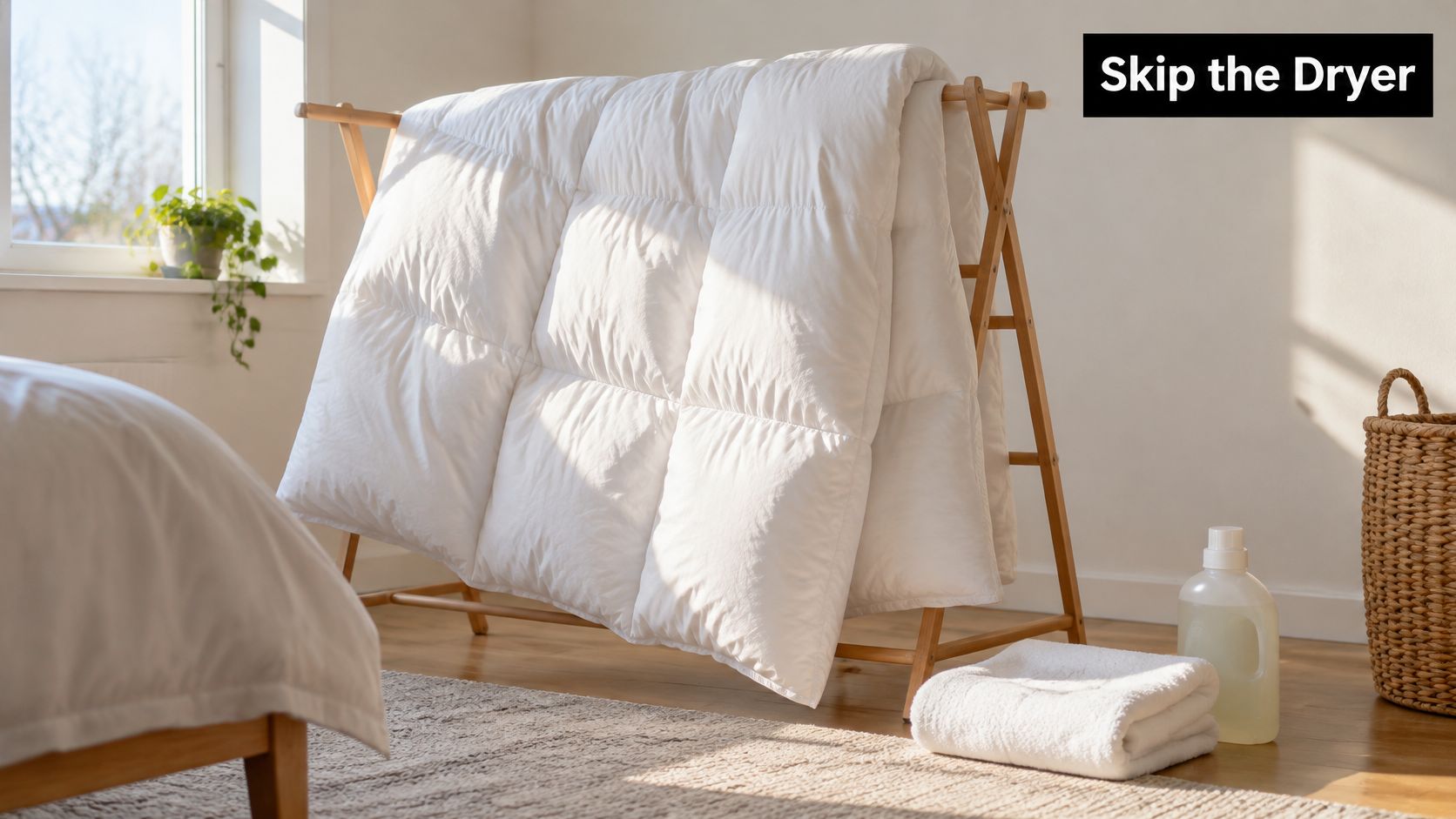
Work with damp cloths rather than pouring rinse water into the core. Then give moisture a way out:
- Support the comforter. Lay it over a clean rack or broad rail in a ventilated room.
- Move air across the patch. Use a fan and avoid strong direct sunlight on dyed fabric.
- Reposition it regularly. Expose folded areas and the underside rather than leaving a damp panel doubled over.
- Check through the thickness. Press the filling and inspect seams, not just the dry-feeling shell.
- Finish before storing. Don't fold away bedding that still feels damp or smells musty.
For a permitted tumble finish, choose the label-approved low setting. Down-compatible dryer balls can help redistribute filling; avoid tennis balls that might shed or transfer color.
This video provides an additional visual reference for comforter care.
When Spot Cleaning Is Not Enough
A clean-looking patch doesn't mean the entire comforter is clean. Removing coffee from the shell doesn't address dust, pet allergens, or body residue distributed elsewhere.
Medical literature indexed by PubMed reports that detergent washing at 25°C for at least five minutes extracted most mite and cat allergen from bedding dust, and related findings describe cold-water detergent washing removing about 95% of mite allergen from duvets, blankets, and sleeping bags. Those findings concern washing, not wiping a visible mark.
The practical distinction matters: allergen reduction doesn't always require hot water, but it does require more than local stain treatment. Removing allergens also isn't the same as proving that every mite has been killed. Choose a care-compatible full cleaning method rather than raising the temperature beyond what the comforter allows.
Choose full cleaning when contamination is broader
- Widespread bodily fluids: A small surface treatment won't reach residue spread across the bedding.
- Pet urine or accidents: Escalate when liquid has reached the fill or odor remains after surface treatment.
- Built-up sweat staining: Broad discoloration around the upper edge needs more than isolated dabbing.
- A soaked interior: A dry shell can conceal contaminated filling.
- Dust or allergy triggers: Treat the whole bedding item, not merely the place where a pet lay.
- Mustiness or visible mildew: Stop routine spot treatment and assess whether professional cleaning or replacement is appropriate.
Our guide to washing bedding helps you plan the wider laundry task. Make sure the permitted method also allows adequate rinsing and complete drying; squeezing a bulky comforter into an unsuitable machine isn't a useful shortcut.
Spot cleaning handles a localized visible mark. Full washing addresses residue throughout the bedding.
Check the Label and Know When to Call a Pro
Before choosing a solvent, answer these questions: What caused the stain? What are the shell and fill? What cleaning does the label permit? Our guide to symbols on wash tags can help decode the instructions.
Silk, decorative stitching, glued embellishments, special finishes, and dry-clean-only labels deserve particular caution. A washable-looking outer fabric doesn't prove the complete comforter can tolerate water treatment.
Stop when the fabric changes
Let the concealed test dry before judging it. If color transfers, the finish changes, or the pile distorts, don't proceed on the visible stain.
If a careful treatment leaves the mark unchanged, stop rather than layering on stronger chemicals. Take the comforter to a professional cleaner and identify the spill, shell, fill, and every product you've applied. A cleaner can assess whether the remaining contamination is treatable without promising that damaged dye or stained filling can always be restored.
SouthShore Fine Linens offers comforters, quilts, duvet covers, and sheets for practical, comfortable bedding layers. Visit SouthShore Fine Linens to explore options for your bed, and review each item's care instructions before choosing your next set.


