
Down Alternative Comforter vs Duvet: Which Is Better?
You're comparing two products that can look nearly identical in a product photo. Both may be white, fluffy, quilted, and filled with synthetic fibers. Yet the choice between a down alternative comforter vs duvet changes how you wash the bed, refresh the room, manage seasonal bedding, and replace worn components.
The practical question isn't only which one feels warmer on the first night. It's which setup creates less work over the next 2–5 years. A fixed-fill comforter is often simpler to buy and use immediately. A duvet system takes more thought at the start, but its removable cover can reduce laundry friction and make style changes much easier. Both formats belong to a substantial bedding category, with one industry report citing USD 9.4 billion in comforter and duvet revenue in 2025 and forecasting a 4.3% CAGR for the segment. The bedding market overview from Global Market Insights provides that market context.
Understanding the Down Alternative Comforter vs Duvet Confusion
You open a bedding page looking for something washable and allergy-friendly. The first product is labeled a down alternative comforter. The next is a down alternative duvet insert. Both promise soft loft, all-season comfort, and a neat finished bed. Then a third listing includes corner ties and says it can be used inside a duvet cover. The labels start to blur.
That confusion comes from overlapping fill terminology. “Down alternative” describes the insulation, usually a synthetic material designed to imitate the loft or softness of natural down. “Comforter” and “duvet” describe the format, not necessarily the fill. A down alternative can therefore appear as a finished, stitched comforter or as an insert intended for a separate cover.
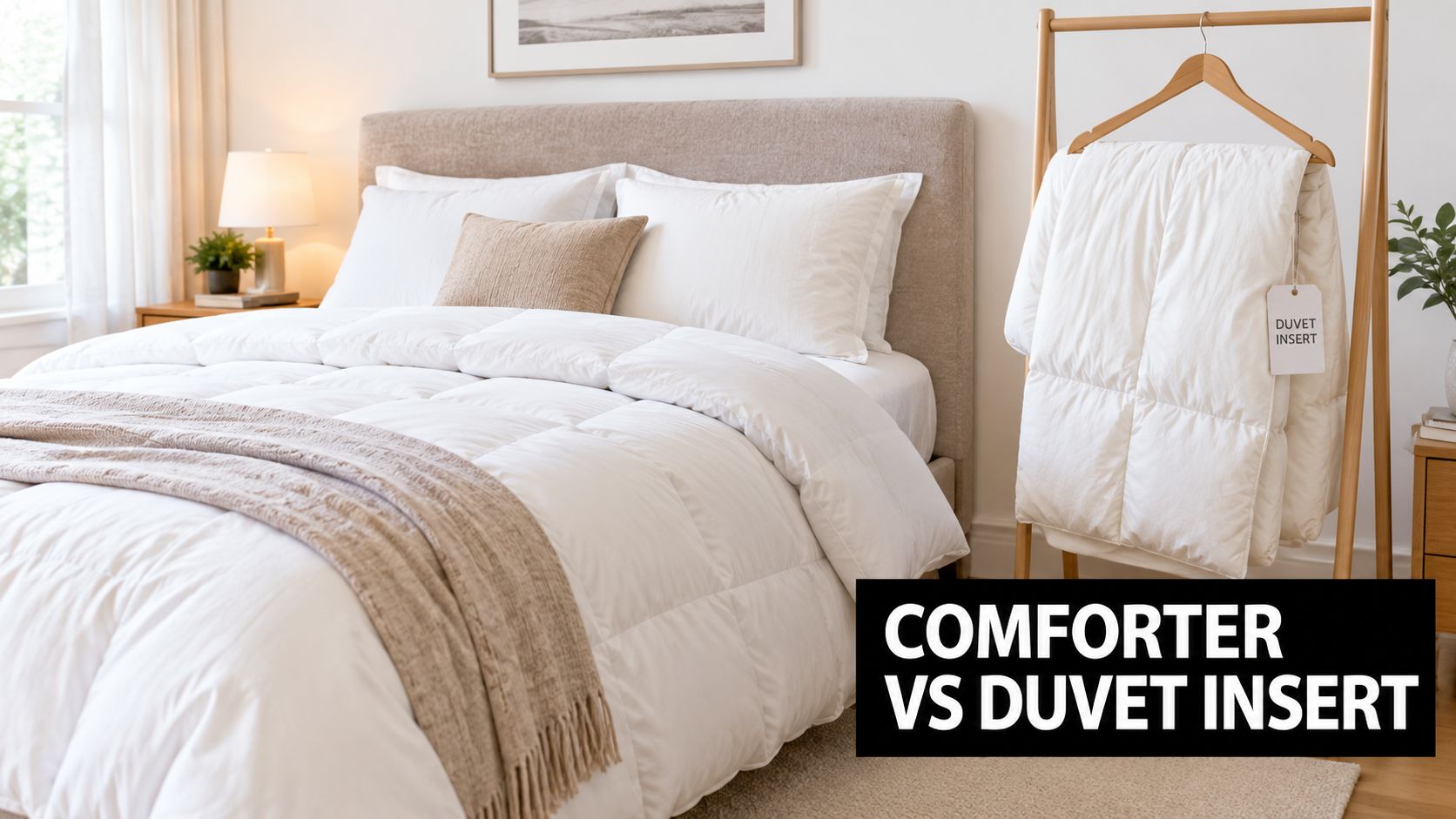
A comforter usually gives you a one-piece purchase. Put it on the bed, add sheets and perhaps a throw, and the room is finished. A duvet system separates the insulation from the visible outer layer. You buy an insert, then place it inside a removable cover that can be changed or washed independently.
For a useful terminology refresher, this guide to duvet, duvet cover, and comforter differences is a good starting point. But definitions alone won't answer the ownership question. Your decision should also account for the following:
- Laundry routine: Do you want to wash the whole blanket, or mainly wash a removable cover?
- Sleep feel: Do you prefer lightweight loft, structured weight, or a consistent synthetic feel?
- Allergen management: Can the bedding be washed and dried according to your household's needs?
- Room styling: Will you want to change colors and patterns without replacing the insulation?
- Replacement strategy: If the outer fabric wears out, can you replace only the cover?
The best choice depends less on the name printed on the package and more on how the bedding fits your actual bedroom routine.
Structural Differences Between Comforters and Duvets
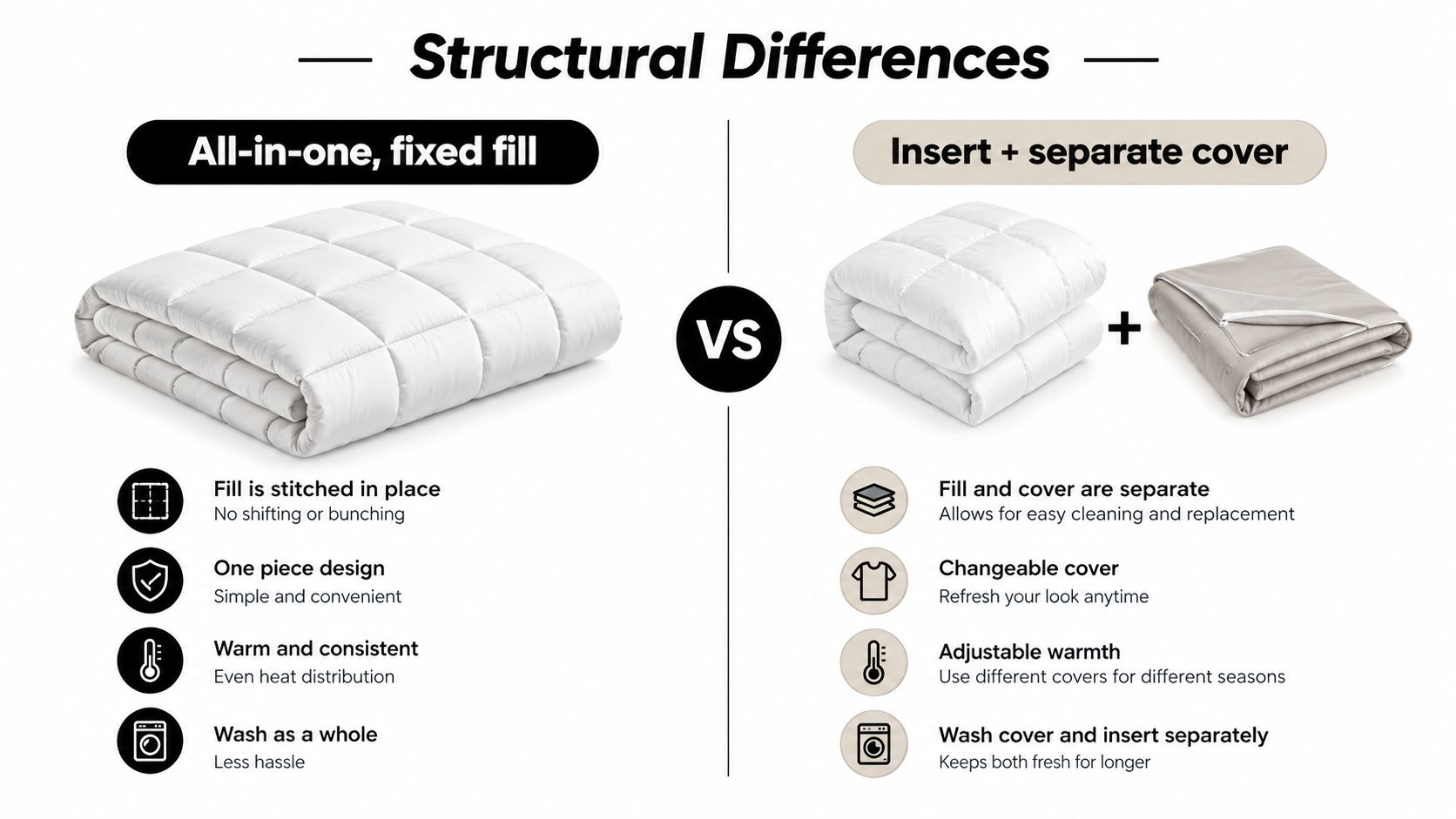
The cleanest distinction is construction. A comforter is generally a sewn-shut, all-in-one blanket. Its outer shell, fill, and quilting stay together, and it's designed to sit on the bed as a finished top layer. A duvet insert is the insulated inner layer of a bedding system, designed to fit inside a separate cover.
Down alternative products can be sold in either format, which creates much of the shopping confusion. A comforter may include loops so it can be tied to a cover, but that doesn't automatically turn it into a complete duvet system. The important question is whether the visible outer layer is permanently attached or intended to come off.
Construction and system design
| Feature | Comforter | Duvet |
|---|---|---|
| Construction | Stitched outer shell and fixed fill | Insulated insert plus separate cover |
| Cover use | Optional, depending on the product | Essential to the intended system |
| Style changes | Usually require another comforter or added layers | Usually require a different duvet cover |
| Laundry approach | The entire comforter must be cleaned when necessary | The cover can be washed separately from the insert |
| Replacement pattern | Replace the finished item if the fill or shell fails | Replace the cover or insert independently |
| Bed-making | Simple, with no insert alignment required | Requires placing and securing the insert inside the cover |
The duvet system has a longer documented history than the modern comforter category. Historical accounts place early duvet-like bedding in rural Europe and among Viking-age households, with eider down used in northern Norway for at least a thousand years. The duvet became more visible in Britain after Sir Terence Conran helped popularize it in the 1960s, and the documented history of the duvet notes that one was first sold in Britain in 1964.
That history matters because the duvet's major structural contribution is modularity. Insulation and the washable decorative layer are separate. You can keep an insert while changing the room's appearance, or replace a cover without discarding usable fill.
A comforter works better for shoppers who want one finished blanket with no extra component to manage. A duvet works better for households that see bedding as a system. The first is simpler at purchase. The second gives you more control after purchase.
Warmth, Weight, and Breathability Trade-offs
A warm bedroom can expose the practical difference between these formats quickly. A duvet is not automatically warmer than a comforter, and a down alternative comforter is not automatically cooler. Insulation depends more on fill amount, quilting, shell fabric, and the other layers on the bed. The format mainly affects handling, customization, and how easily you can adjust the setup over its useful life.
Natural down inserts are commonly compared by fill power. Roughly 550 fill power is midrange, around 700 fill power provides high loft and more warmth for its weight, and 700–800+ fill power is often associated with maximum warmth while maintaining a light feel. Synthetic down-alternative fills generally need more material to deliver comparable warmth, while premium options such as PrimaLoft can cost about 15% to 20% more than standard down-alternative fills, as noted in Business Insider's comforter guide.
That extra material can make a comforter or insert feel heavier and, in some constructions, less breathable. Some premium synthetic fills are designed to remain lightweight and breathable, but performance still depends on the fill structure and outer shell. Two products with similar insulation claims can feel very different against the body.
How the difference feels in a bedroom
A lightweight down alternative may feel pleasantly substantial rather than cloud-like. That grounded drape suits sleepers who dislike bedding that shifts easily. In a heated room, however, the added material may feel restrictive or too warm.
Natural down usually delivers lighter warmth for its weight. Product construction matters more than the down-alternative label alone. Tight quilting can hold fill evenly but create a flatter feel. A loftier insert can trap more air, though it may need more room inside its cover. Shell fabric changes comfort as well. Breathable cotton can feel less clammy than a dense synthetic shell, even when both products use similar fill.
For sleepers who wake hot, start with a lighter product and a breathable shell. The format is secondary to those specifications. This guide to the best comforters for hot sleepers provides a useful way to compare products by temperature comfort rather than marketing language.
The ownership trade-off becomes clearer over two to five years. A fixed-fill comforter gives consistent insulation with fewer components to assess, while a duvet lets you change the insert as warmth needs change and style the outer layer separately. Down alternative remains compelling when you want consistent insulation, animal-free fill, and straightforward product selection. Expect a synthetic blanket to feel heavier at a similar warmth level, and choose according to your response to pressure, heat, and loft.
Allergen Considerations and Sleeping Comfort
Allergy-sensitive shoppers often choose down alternative because synthetic fill can be easier to wash according to the product's care instructions. That advantage matters when dust, pet dander, or other household irritants are part of the bedroom environment. It doesn't mean synthetic bedding eliminates allergens. Sheets, pillow surfaces, mattress materials, room humidity, and the outer fabric all remain relevant.
A duvet adds a useful layer of separation. The cover sits between you and the insert, so you can remove and launder the surface that receives the most direct contact without washing the insulated inner layer every time. That can make the bedding feel fresher while reducing stress on the fill.
Practical rule: Choose the format that makes the cleaning routine realistic. Bedding that is technically washable but too cumbersome to handle may not be cleaned as consistently as bedding with a manageable cover.
A more reliable care routine
Start with the manufacturer's label. Check the recommended water temperature, cycle, detergent, drying method, and whether the item requires a large-capacity machine. A bulky comforter may fit poorly in a home washer even when its label says machine washable. Overcrowding can prevent proper rinsing and drying.
With a duvet, wash the cover according to its fabric requirements and inspect the insert separately. Air the insert when appropriate, spot-clean small marks, and avoid assuming that every insert should be washed on the same schedule as the cover. The cover is the washable working layer, but it still needs to dry completely before returning to the bed.
The SouthShore explanation of down-alternative bedding offers additional context on how this synthetic-fill category differs from natural down. The practical conclusion is straightforward: down alternative can be a sensible choice for allergy-conscious households because it supports a more frequent, predictable cleaning routine, but no fill type replaces regular laundering and sensible bedroom maintenance.
Maintenance, Cleaning, and Long-Term Upkeep
The ownership difference becomes clearest on laundry day. A fixed-fill comforter is one large object. When it needs a full wash, you must clean, rinse, dry, and fully redistribute the fill across the entire piece. Even a washable comforter can be awkward if your machine or dryer lacks enough room for thorough movement.
A duvet separates the high-contact cover from the insulated insert. The cover can be removed without handling the entire filled blanket, and the insert stays protected during ordinary use. Wirecutter's comparison of comforters and duvet inserts describes this distinction clearly, including how the cover changes maintenance and customization.

What works and what causes trouble
The easiest comforter to own is one that fits your washing and drying setup. Read the care label before buying, not after a spill. If the product needs a larger machine than you have, the advertised convenience may disappear into a trip to a cleaner or laundry service. For people with demanding schedules, a busy professionals laundry service can be a practical option for bulky bedding, provided the service accepts the item and follows its care requirements.
A duvet system introduces a different kind of work. You have to remove the cover, align the corners, secure the ties if provided, and put the cover back on after washing. Some people find that process annoying. Others prefer it to lifting and washing a filled blanket.
Use a simple ownership test:
- If spills are common, a removable cover limits the part of the system that needs immediate attention.
- If you dislike insert assembly, a finished comforter keeps bed-making faster.
- If you change rooms or guests often, extra covers can refresh the same insert.
- If drying is difficult, choose the format and fill size your equipment can handle safely.
For detailed handling instructions, consult this guide to laundering a down-alternative comforter. Whichever format you choose, incomplete drying is a serious maintenance mistake. Damp fill can develop an unpleasant odor and lose its comfortable loft, while repeated rough handling can encourage clumping or fabric wear.
Over time, the duvet's advantage is replaceability. You may replace a worn cover while keeping the insert, or replace an aging insert while keeping covers that still suit the room. A comforter keeps the system simpler, but its shell and fill age together.
Style Flexibility and Bedroom Layering Options
A comforter commits you to a finished visual statement. That can be a strength. If you want a bed that looks complete immediately, a quilted down alternative comforter may provide enough texture and structure without additional styling decisions.
The limitation appears when the room changes. A comforter's color, pattern, and surface finish remain attached to its insulation. You can add a blanket or throw, but that changes the layers rather than replacing the main look. For inspiration beyond the main bed covering, these versatile throw blanket ideas show how a smaller textile can add texture and color without changing the underlying sleep layer.
A duvet system gives you a different design rhythm. Keep one insert and rotate covers to shift from crisp neutrals to seasonal color, relaxed linen texture, or a more polished hotel-style appearance. The cover can also coordinate with shams, throws, and accent pillows without requiring a new insulated blanket.
Styling trade-offs in daily use
The cover must fit the insert properly. An oversized cover may allow the insert to move around, while a tight cover can make the bed look compressed and make assembly unpleasant. Corner ties or loops help, but they don't remove the need to match dimensions.
Duvet systems also suit layered beds because the insert can act as a flexible middle layer. You can fold it at the foot of the bed, add a coverlet, or place a throw across the lower portion. A comforter can achieve a similar look, but you'll usually work around its fixed proportions and surface design.
Choose a comforter if your priority is one coordinated piece with minimal styling effort. Choose a duvet if you expect to update the room, operate a guest space, or want several looks from the same insulated foundation. The duvet demands more attention during setup, but it gives you more options after the bed is made.
Which Setup Fits Your Sleep Habits and Lifestyle
A shopper who wants the fastest path to a finished bed will often prefer a down alternative comforter. It arrives as one piece, doesn't require an insert-and-cover assembly, and can be a good fit for a primary bedroom where the same look will stay in place. It also suits people who dislike loose covers or don't want another item to fold and store.
A duvet becomes more persuasive when the household values flexibility. A renter can change the room's style without replacing the insulated layer. A short-term rental host can keep spare covers ready for turnover. A family may prefer washing the cover rather than repeatedly laundering the entire filled blanket. The right choice depends on which inconvenience you're more willing to accept.

Match the setup to the household
Choose a down alternative comforter when:
- You want one ready-to-use blanket with no cover assembly.
- You prefer a fixed look and don't expect frequent bedroom updates.
- You want a synthetic-fill option that can be selected by warmth and weight.
- Your washing and drying equipment can handle the complete comforter.
- You value a straightforward purchase over a modular system.
Choose a duvet system when:
- You want to change color, pattern, or texture without replacing the insert.
- You prefer laundering the outer cover separately from the insulation.
- You manage a guest room, rental, or frequently refreshed bedroom.
- You're willing to spend a little more time securing and removing the cover.
- You're comparing ownership effort rather than only the initial price.
The strongest comparison isn't really down alternative comforter vs duvet. It's fixed-fill convenience versus modular laundering and styling. HGTV's duvet insert guidance supports that practical distinction, especially for shoppers weighing a single finished comforter against one insert paired with multiple covers.
Before buying, decide how often you realistically want to wash the bedding, whether your machines can manage the product, and whether your room style is likely to change. Then check the shell fabric, fill construction, corner attachments, dimensions, and care label. If your answers point toward easy ownership with no extra components, choose the comforter. If they point toward reduced cover-washing friction and long-term flexibility, choose the duvet system.
SouthShore Fine Linens offers down alternative comforters, duvet cover sets, and oversized bedding options suited to shoppers comparing a finished comforter with a more modular setup. Visit SouthShore Fine Linens to compare the pieces and choose the combination that fits your sleep habits, laundry routine, and bedroom style.


