
Best Fabric for Bedding: 8 Options Compared for Better Sleep
Why do two sheets that look almost identical in the bedding aisle feel completely different after a week of sleep? The difference often comes down to weave, fiber length, and finish, not just how soft they feel through the packaging. A crisp cotton sheet, a silky cotton sheet, and a brushed cotton sheet can share the same basic fiber yet suit very different sleepers.
The best fabric for bedding is the one that works with your body temperature, bedroom climate, and laundry habits. If you wake up warm, you'll want a different surface than someone who climbs into a cold bed and struggles to get comfortable. If you're washing guest bedding between stays, drying time and wrinkle resistance may matter more than a glossy finish.
A useful distinction before shopping:
- Fiber tells you what the material is made from, such as cotton, flax, polyester, or lyocell.
- Weave describes how yarns interlace, which helps explain the difference between percale and sateen.
- Finish changes the surface, from flannel's brushed nap to the relaxed feel of washed linen.
These options aren't all competing on the same terms. Long-staple cotton can be woven into percale or sateen, while plush faux fur belongs mainly on top of the bed rather than against your skin. Choose by comfort, durability, care, and intended use, and you'll leave with a practical match rather than a generic winner.
1. Percale Cotton
Best for warm sleepers who like crisp sheets and straightforward laundry.
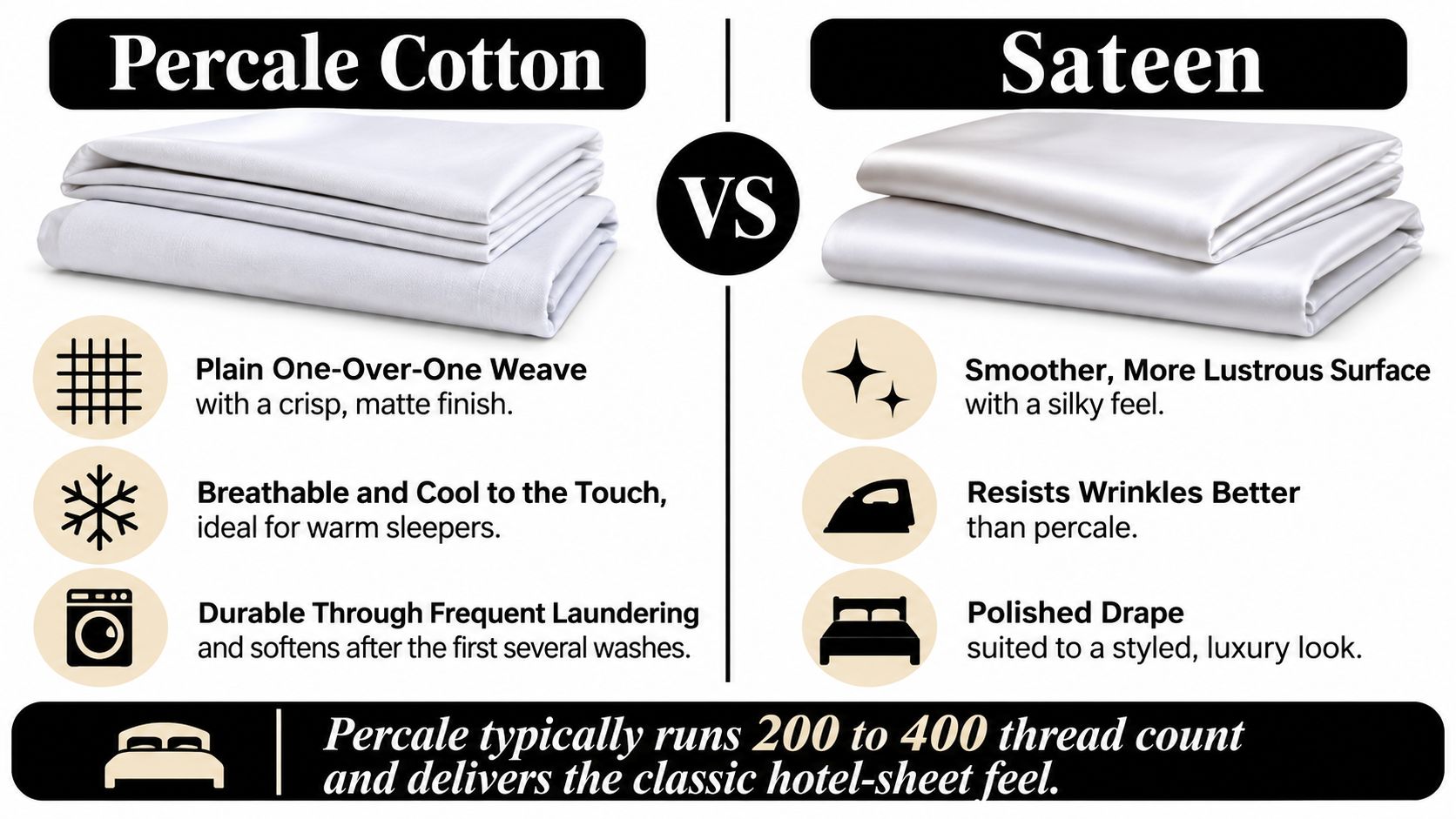
Percale has a plain weave with alternating over-and-under yarns, creating a matte surface rather than a glossy one. It feels fresh and structured, making it a sensible starting point if your ideal bed resembles a neatly made hotel bed.
Cotton can absorb and release perspiration quickly, according to this peer-reviewed textile-properties table, although it also wrinkles readily. In a lightweight percale construction, that combination suits someone who wants breathable everyday bedding and doesn't mind a few creases.
The visual difference between percale and sateen helps explain their contrasting feel.
Keep the Crispness Without Overdrying
For routine home laundering, wash cotton percale in cold water and tumble dry on low. Use a measured amount of detergent, give the sheets room to circulate, and remove them promptly instead of leaving them compressed in the dryer.
- Choose by feel: Look for a light, crisp hand rather than assuming a higher thread count will feel cooler.
- Expect creasing: Smooth the sheet across the mattress while it's still slightly damp if a neat finish matters.
- Check the whole bed: A heavy comforter or substantial mattress protector can make even lightweight sheets feel warm.
For a rental bedroom, white percale offers a clean, familiar presentation, but it won't deliver a perfectly pressed appearance without extra work. For your own summer bed, pair it with a light quilt you can fold back easily.
Skip percale if you dislike crispness. Washing can soften the surface, but it won't turn the fabric into silky sateen.
2. Sateen Cotton
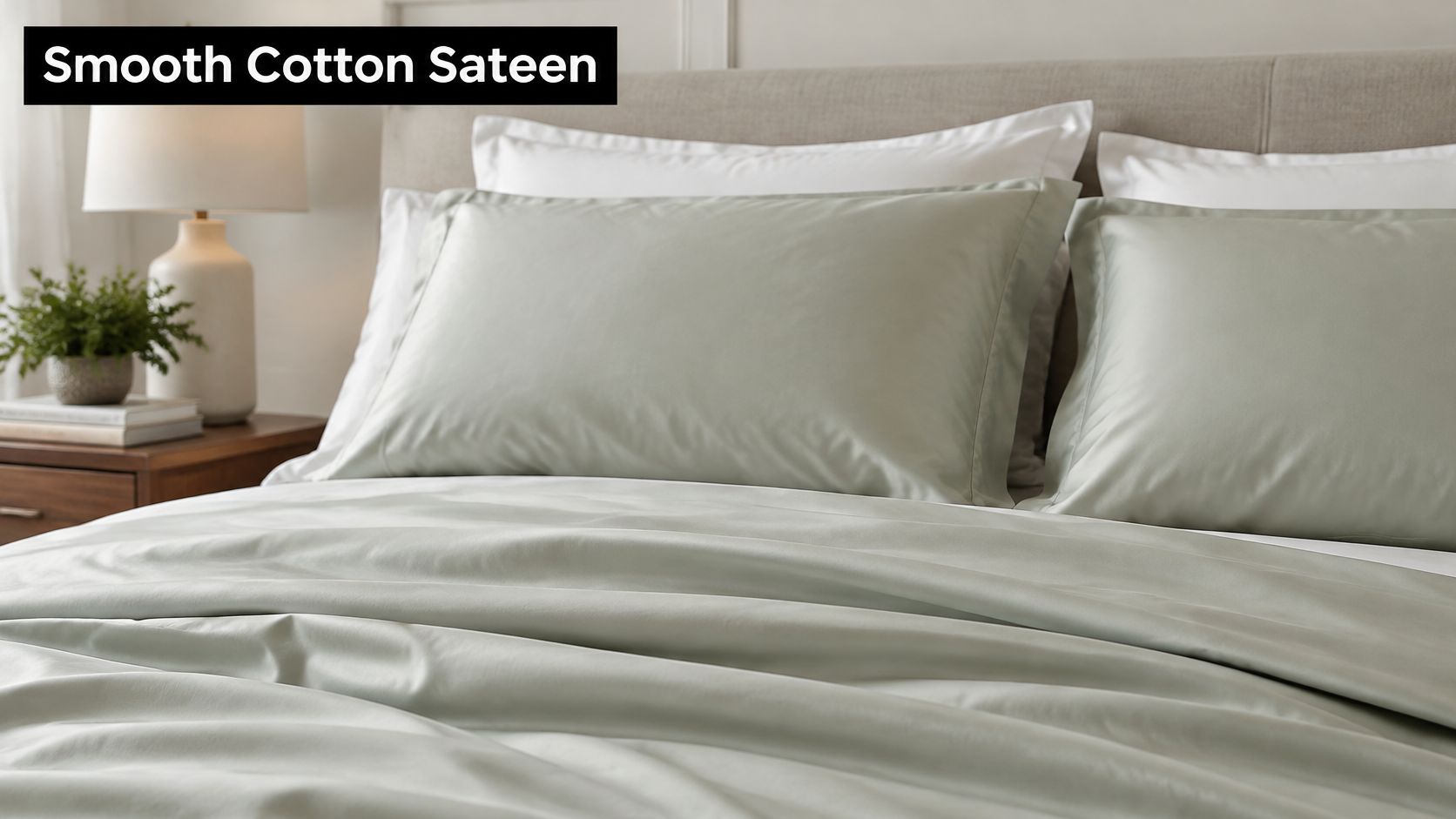
If you want sheets that drape smoothly over the mattress rather than standing away from it, cotton sateen is the more natural fit. Its satin-style weave exposes longer yarn floats at the surface, producing a silky hand and gentle sheen.
That makes sateen appealing for sleepers who prioritize smoothness, particularly in a cooler bedroom. It also works well in a styled primary bedroom, where a lustrous sheet can contrast with a textured quilt or knitted throw.
This softly reflective surface is part of sateen's appeal.
The trade-off is surface exposure. Those smooth floats can catch on rough nails, jewelry, or items sharing the wash, so a silky sheet deserves a little more separation in the laundry room.
Wash for Smoothness, Not Added Coating
Wash sateen separately from towels and zippered clothing, using cold water and mild detergent. Turn matching pillowcases and duvet covers inside out, then tumble dry on low and remove promptly.
Skip routine fabric softener. If sheets feel stiff or coated, first check whether you're using too much detergent or overloading the washer rather than adding another laundry product.
Practical rule: Choose sateen because you enjoy a smooth, draping surface, not because sheen proves better quality.
For a couple choosing between crisp and silky sheets, our sateen versus percale comparison helps separate surface preference from fiber choice. Both can be cotton, and neither is automatically the right answer for every season.
A polished guest room is a good use case, provided its laundry routine allows gentle handling. If you sleep hot, compare the actual fabric weight and construction before choosing a dense sateen because it feels luxurious in your hand.
3. Long-Staple Cotton (Pima and Egyptian)
Long-staple cotton is for the shopper who wants a lasting everyday upgrade and is willing to inspect the label. Unlike percale or sateen, it describes the cotton fiber rather than the weave.
Longer fibers can be spun into smoother yarns with fewer exposed ends. That can support a refined feel and better resistance to surface fuzz, but the finished sheet still depends on yarn quality, construction, and laundering.
Pima and Egyptian cotton are familiar premium labels, yet neither should replace a clear product description. An origin claim alone doesn't tell you how the sheet will feel or whether the fabric suits your bedroom.
Read Beyond the Premium Name
Before paying more, examine what the seller discloses:
- Fiber content: Distinguish an all-cotton fabric from a blend containing cotton.
- Weave: Choose percale for crispness or sateen for a smoother drape.
- Origin evidence: Prefer traceable sourcing or independent verification over decorative wording.
- Construction: Inspect seams, elastic, and pocket depth alongside the fabric itself.
Cotton's care limitations still apply to expensive sheets. The Canadian Conservation Institute's textile guidance notes that cotton can shrink, wrinkle, and yellow over time.
Wash in cold water with mild detergent and dry on low. Don't try to accelerate softness with repeated hot washes or excessive softener, and avoid packing sheets tightly into the washer.
A practical use case is a wedding-registry sheet set intended for regular use rather than occasional display. Long-staple cotton makes sense when you'll maintain it consistently, but it isn't a guarantee of the longest lifespan.
For hospitality buyers, well-finished seams and dependable laundering performance deserve as much attention as a prestigious cotton name. A premium fiber can't compensate for weak construction or poor fit.
4. Linen
A warm bedroom, a preference for texture, and little interest in ironing make linen an appealing match. Made from flax, it feels more tactile than smooth cotton and suits relaxed coastal bedrooms, washed duvet covers, and loosely layered beds.
Linen isn't the right purchase if you expect a permanently pressed surface. Its wrinkles are part of how the fabric behaves, not evidence that you've washed it incorrectly.
A systematic review of fiber materials and sleep reports that linen sheets and pillowcases were associated with fewer awakenings and less light-stage sleep than cotton in a warm-condition study. That's a conditional finding, not a promise that linen will improve everyone's sleep.
Give Linen Room to Move
Use cool or warm water as the care label permits, a gentle cycle, and a modest amount of detergent. Avoid cramming a duvet cover and a full sheet set into a drum where neither can move freely.
Air-dry when practical, or tumble dry on low and remove before the fabric becomes excessively dry. Shake out the pieces and smooth seams by hand; our guide to washing linen sheets explains the care routine in more detail.
For a visual look at linen bedding, watch this demonstration.
Buy for the mattress you have, including its topper and protector. Don't automatically size up the fitted sheet to create a relaxed look, because loose corners can bunch beneath you.
For a humid-climate bedroom, linen sheets with a lightweight top layer are a useful combination. For a formal guest room where sharp creases are expected, the extra finishing work may outweigh linen's appeal.
5. Microfiber Polyester
For a busy household, student room, or frequently changed guest bed, microfiber polyester offers a practical proposition: softness with relatively little fuss. Fine synthetic yarns produce a smooth or brushed surface, and the fabric generally needs less ironing than cotton.
Choose it when easy care matters more than a crisp natural-fiber feel. It can also be useful for keeping spare bedding ready without committing to a demanding wash-and-press routine.
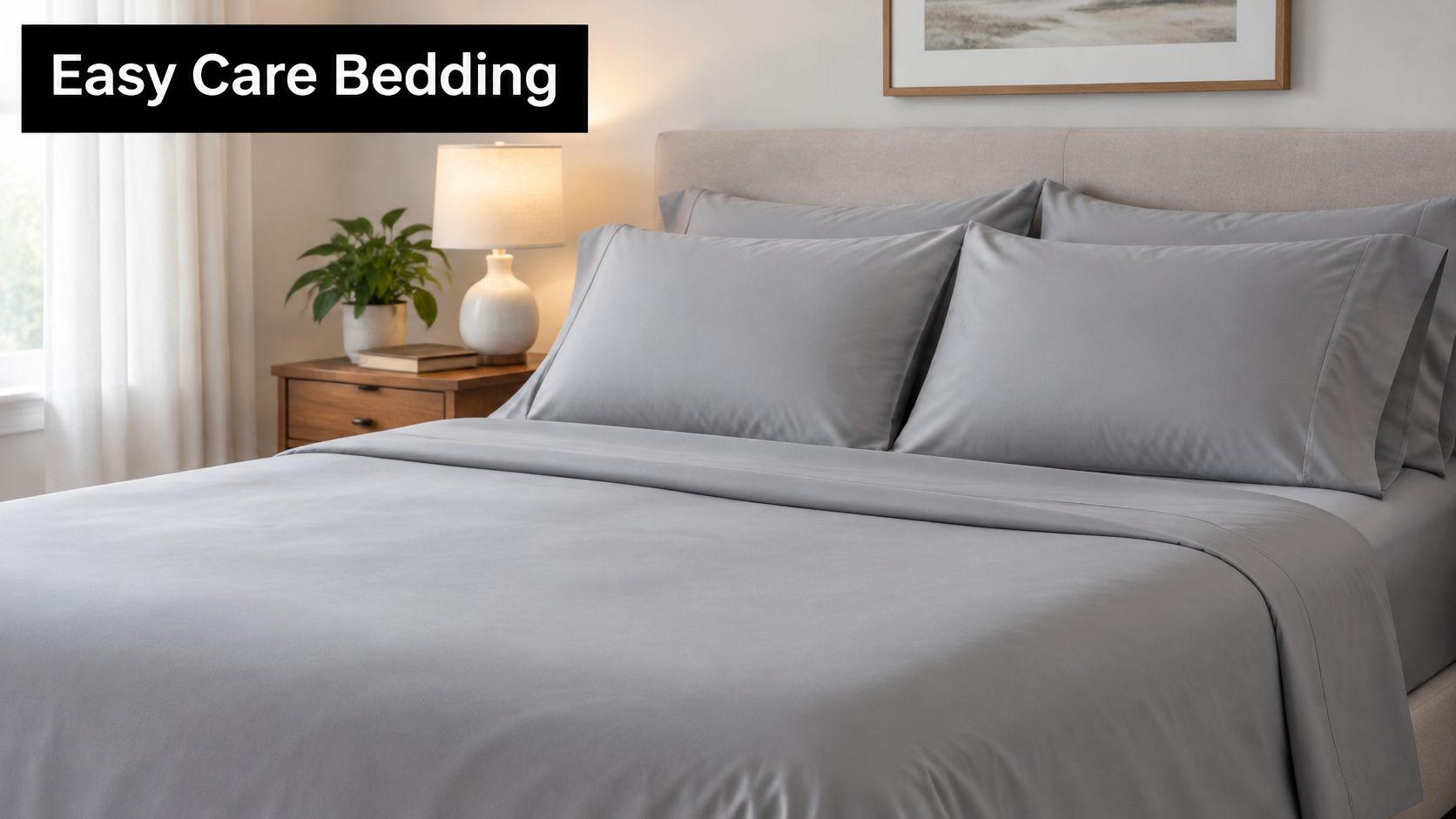
A simple microfiber bed can still look polished and inviting.
Moisture handling is the important compromise. Polyester's comparatively low moisture absorption may be less comfortable for someone who perspires heavily, even when the dry fabric feels exceptionally soft.
Polyester represented 57% of global fiber production in 2023, according to Textile Exchange's Materials Market Report announcement, but production scale isn't a measure of sleeping comfort.
Keep the Laundry Routine Simple
- Wash separately from lint producers: Towels can leave fibers across a smooth sheet surface.
- Skip fabric softener: Don't add a coating when the material already feels soft.
- Dry on low: Remove promptly rather than exposing the fabric to prolonged heat.
- Inspect before buying: Check seams, elastic recovery, and fabric consistency rather than relying on softness alone.
For a short-term rental, microfiber may be a useful option when fast turnover and a tidy appearance are priorities. Keep the rest of the bed moderate in weight instead of pairing soft synthetic sheets with unnecessarily heavy insulation.
If you're deciding between easy care and a more breathable natural hand, our cotton versus microfiber guide explains the practical differences. Choose for the sleeper, not just the laundry basket.
6. Lyocell (TENCEL™)
Lyocell suits sleepers who want a smooth, fluid surface without cotton percale's crispness. It's a regenerated cellulose fiber made from wood pulp, and TENCEL™ is a brand name you'll encounter on bedding labels.
The cool initial touch and silky drape make it a useful candidate for someone who dislikes rough or heavily textured sheets. Still, a cool hand when you first climb into bed doesn't guarantee that the complete bed will stay comfortable all night.
A controlled study of sleepwear and bedding found no significant bedding effect on measured sleep outcomes under its experimental conditions. The practical lesson is to assess the mattress protector, sheet, comforter, sleepwear, and room together rather than asking a fiber label to predict sleep quality.
Choose Smoothness, Then Verify Care
Wash lyocell on a gentle cycle with mild detergent, and avoid high heat. Separate it from abrasive towels and exposed fasteners, then use low-temperature drying or air-drying when the care label allows.
A silky sheet can't compensate for a heavily insulated bed that's too warm for you.
For a warm sleeper who dislikes linen's texture, lightweight lyocell sheets with a modest quilt are a sensible combination to try. If you need a protective encasement as well, HearSmart's Purecare encasement review discusses a lyocell-containing protector, a separate layer from the sheet itself.
Don't assume the fiber name proves sustainability. Check the specific product's sourcing, manufacturing disclosures, and certifications rather than treating every wood-derived textile as environmentally equivalent.
Lyocell is less appealing if your household washes every textile on a hot, heavy-duty cycle. A fabric that suits your skin but not your laundry habits is unlikely to remain a satisfying purchase.
7. Brushed Cotton Flannel
Climbing into a cold bed calls for a different surface than cooling down after a warm day. Brushed cotton flannel has a raised nap that feels cozy against the skin and provides warmth, making it a strong seasonal choice for cold sleepers.
The brushed surface is the point. If you want smooth, cool sheets, flannel won't become the right fabric because it's cotton.
A cabin bedroom with plaid sheets is the familiar example, but solid flannel works just as well beneath a simple quilt in a modern room. For someone who dislikes the weight of a substantial comforter, warmer sheets may make it easier to use a lighter top layer.
Manage the Nap Gently
Wash flannel in cold water, or warm water if the label permits, and tumble dry on low. Leave space in the washer, avoid abrasive wash companions, and clean the dryer's lint filter before each load.
- Expect some lint: A brushed surface can release loose fibers, especially early in its use.
- Avoid unnecessary heat: Don't keep drying after the sheets are already dry.
- Rotate with the season: Put flannel away when you begin waking warm rather than trying to make it a year-round solution.
Cotton isn't exempt from shedding: a PLOS ONE study of laundry microfiber release examined fiber loss from both natural and synthetic textiles. Choose a fabric you'll use and maintain, rather than assuming natural fiber automatically means impact-free laundry.
For partners with different temperature preferences, start with less insulation on top and add a separate blanket for the colder sleeper. Flannel sheets warm the shared sleeping surface, so they're harder to personalize than a removable throw.
Store them clean and completely dry when the weather changes.
8. Plush Faux Fur
Plush faux fur is a warming top layer, not a direct replacement for sheets. Its synthetic pile creates a soft, dramatic surface that works on throws and comforters, especially in bedrooms where texture is part of the design.
A throw across the foot of the bed is the easiest way to try it. You can pull it over your legs on a cold evening and remove it without changing the entire bedding arrangement.
For shared beds, that flexibility matters. A cold sleeper can use a localized plush layer while their partner keeps a lighter covering.
Treat the Pile Differently From Sheets
Faux fur needs enough room to wash and dry without compressing into a heavy bundle. Read the care label before buying, particularly for a comforter that may exceed your home machine's capacity.
- Use gentle agitation: Wash on a gentle cycle only when the item is machine washable.
- Avoid high heat: Air-dry or use the lowest permitted dryer setting to protect the pile.
- Skip aggressive finishing: Don't iron the surface or attack tangles with a stiff brush.
- Dry thoroughly: Make sure the backing and dense areas are dry before returning it to the bed.
Layering advice: Put the texture where you can remove it easily. Warmth is easier to manage with an optional throw than a fully insulated bedding stack.
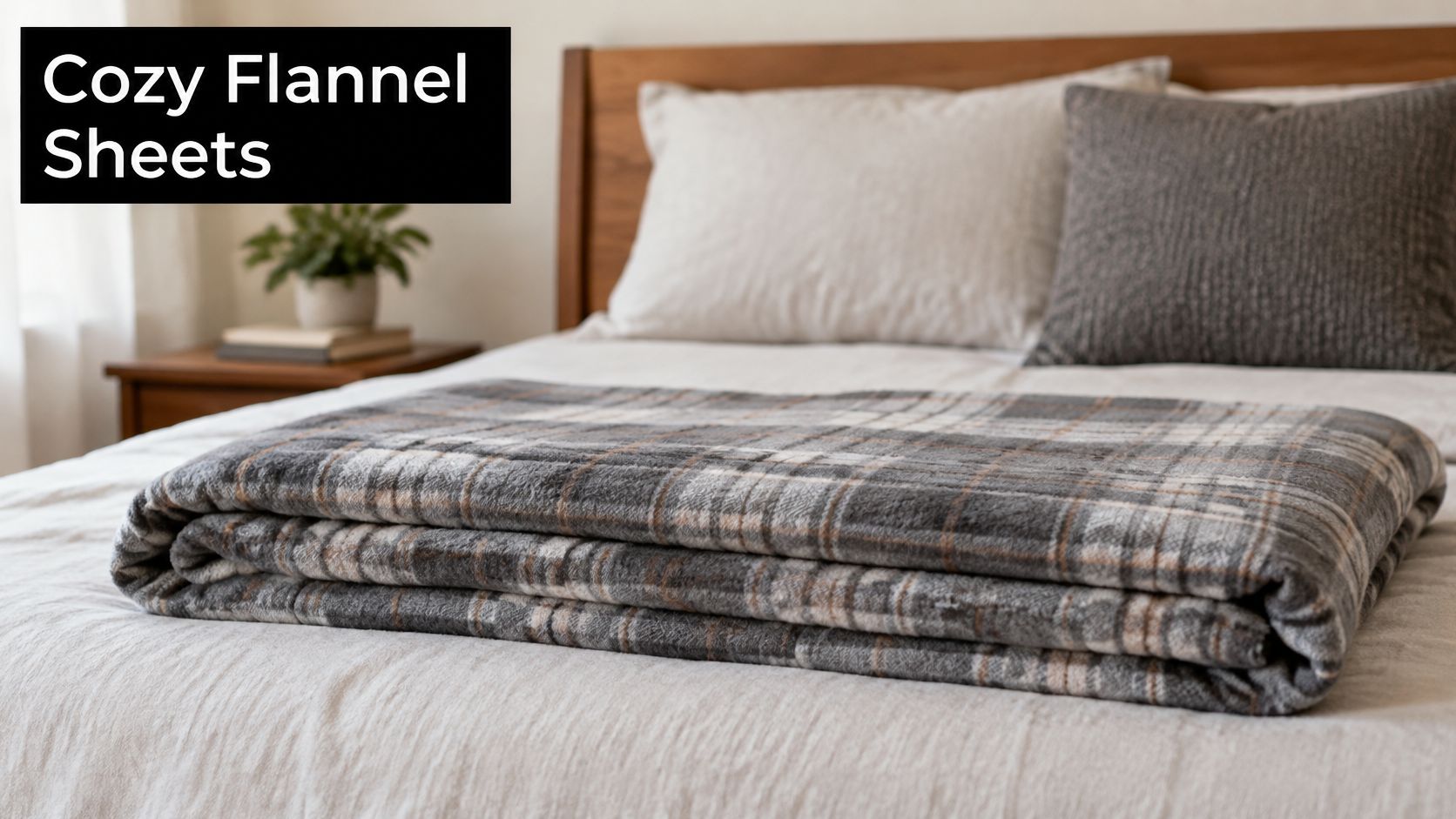
A folded blanket can create the same removable-layer arrangement, even when its fabric differs from faux fur.
Pair plush faux fur with crisp percale or smooth sateen underneath. For a hot sleeper, reserve it for decoration or occasional use rather than expecting the softness to make its added warmth comfortable.
Bedding Fabrics Compared
| Fabric | Feel and Hand | Best For | Care Level | Watch Out For |
|---|---|---|---|---|
| Percale Cotton | Crisp, matte, cool; softens with washing | Hot sleepers and classic hotel-style bedding | Easy; durable with frequent laundering | Wrinkles easily and may feel stiff at first |
| Sateen Cotton | Smooth, silky, lustrous, with a soft drape | A polished look and cooler seasons | Moderate; wash inside out and avoid high heat | Can retain heat and may pill or snag |
| Long-Staple Cotton (Pima and Egyptian) | Smooth, soft, and strong | Premium sheets built for lasting comfort | Moderate; use careful washing to protect fibers | Higher cost and inconsistent labeling |
| Linen | Textured, airy, and softer with use | Warm sleepers and relaxed, natural styles | Moderate; cool or warm wash and low-heat drying | Wrinkles naturally and may feel rough when new |
| Microfiber Polyester | Soft, smooth, and lightweight | Budget-friendly, quick-drying everyday bedding | Easy; dry on low and skip fabric softener | Less breathable and may pill |
| Lyocell (TENCEL™) | Silky, smooth, drapey, and cool | Hot sleepers and moisture-wicking comfort | Moderate; gentle cycle, mild detergent, low heat | Can be sensitive to harsh chemicals and high heat |
| Brushed Cotton Flannel | Soft, napped, warm, and cozy | Cold weather and winter bedding | Moderate; wash cool or warm and dry on low | Can overheat, pill, or shrink |
| Plush Faux Fur | Dense, plush, soft, and warm | Throws and accent layers for cold seasons | Delicate; gentle wash and low-heat drying | Can trap heat, shed, and collect dust or pet hair |
Build Your Bed Around the Right Fabric
Choose sleep temperature first, care routine second, and style third. That order helps prevent the common mistake of buying a beautiful fabric that feels wrong at night or requires laundering you won't realistically do.
If you wake warm, begin with lightweight percale, linen, or a smooth lyocell construction. If you're usually cold, consider brushed cotton flannel or a removable plush layer, but don't automatically replace every part of the bed with something warmer.
Match the Fabric to Your Actual Routine
A household that washes bedding frequently needs fabric, seams, and elastic that suit regular handling. A rental host may reasonably prioritize microfiber's care convenience, while someone willing to separate loads and dry gently may prefer sateen or lyocell.
- For crisp everyday comfort: Start with cotton percale and accept some wrinkles.
- For smoothness and drape: Compare cotton sateen with lyocell, paying attention to fabric weight.
- For relaxed texture: Choose linen if you enjoy its feel and don't expect a pressed finish.
- For winter warmth: Use flannel sheets or a removable faux-fur throw according to how much warmth you need.
Seasonal rotation is often more practical than searching for a universal fabric. Percale or lyocell can suit warmer months, while flannel or faux fur can supply winter comfort without forcing the same setup to work all year.
Fit deserves its own inspection. Measure the mattress with its protector and topper in place, then compare that depth with the fitted sheet's stated capacity.
Check the flat sheet and quilt dimensions too, especially if you want generous side coverage or share a bed with someone who pulls the covers. Oversized top bedding and correctly fitted bottom sheets solve different problems.
Keep Fabric Claims in Perspective
Softness doesn't establish durability, and a natural fiber label doesn't prove that a product is the lowest-impact choice. Consider construction, care requirements, credible certification, and whether you'll use the bedding long enough to justify the purchase.
Pillow selection is another separate decision. If jaw discomfort is part of your shopping concern, the Pain and Sleep Therapy Center's pillow guidance addresses that topic; changing sheet fabric isn't a substitute for addressing support or persistent discomfort.
The best fabric for bedding should make your nightly routine simpler, not more complicated. Choose the surface you enjoy, keep insulation adjustable, and buy a fit that stays comfortable when you move.
SouthShore Fine Linens offers bamboo, cotton, microfiber, and 500 Thread Count TENCEL™ collections, alongside quilts, comforters, and throws for adjustable layering. Many of our textiles are OEKO-TEX® certified, and our extra-deep-pocket sheet sets are designed to fit modern mattresses. Explore SouthShore Fine Linens to match your preferred fabric, mattress depth, and care routine with your next bedding set.


