
What Is a Matelasse Bedspread and How to Style It
A matelassé bedspread is a woven jacquard or dobby fabric engineered to look quilted without batting, giving raised texture with lighter warmth and cleaner drape. Its modern lineage reaches back to 18th-century European textile innovation, including decorative hand-quilted textiles in Marseille and early woven-quilting methods that became commercially available by the 1760s.
You may be standing in a bedding aisle, or scrolling through product photos, trying to decide between a matelassé bedspread, a quilt, and a coverlet. All three can show raised patterns and polished stitching details, yet they don't feel or perform the same way on a bed. One may offer a crisp decorative layer, another may provide more warmth, and a third may have the loft you associate with a padded comforter.
The name matters because the surface can be misleading. A matelassé often looks like a hand-stitched quilt, but its texture usually comes from the way the loom builds the fabric rather than from batting sandwiched between layers. That distinction affects weight, breathability, drape, washing, and sizing, especially on deep or oversized mattresses.
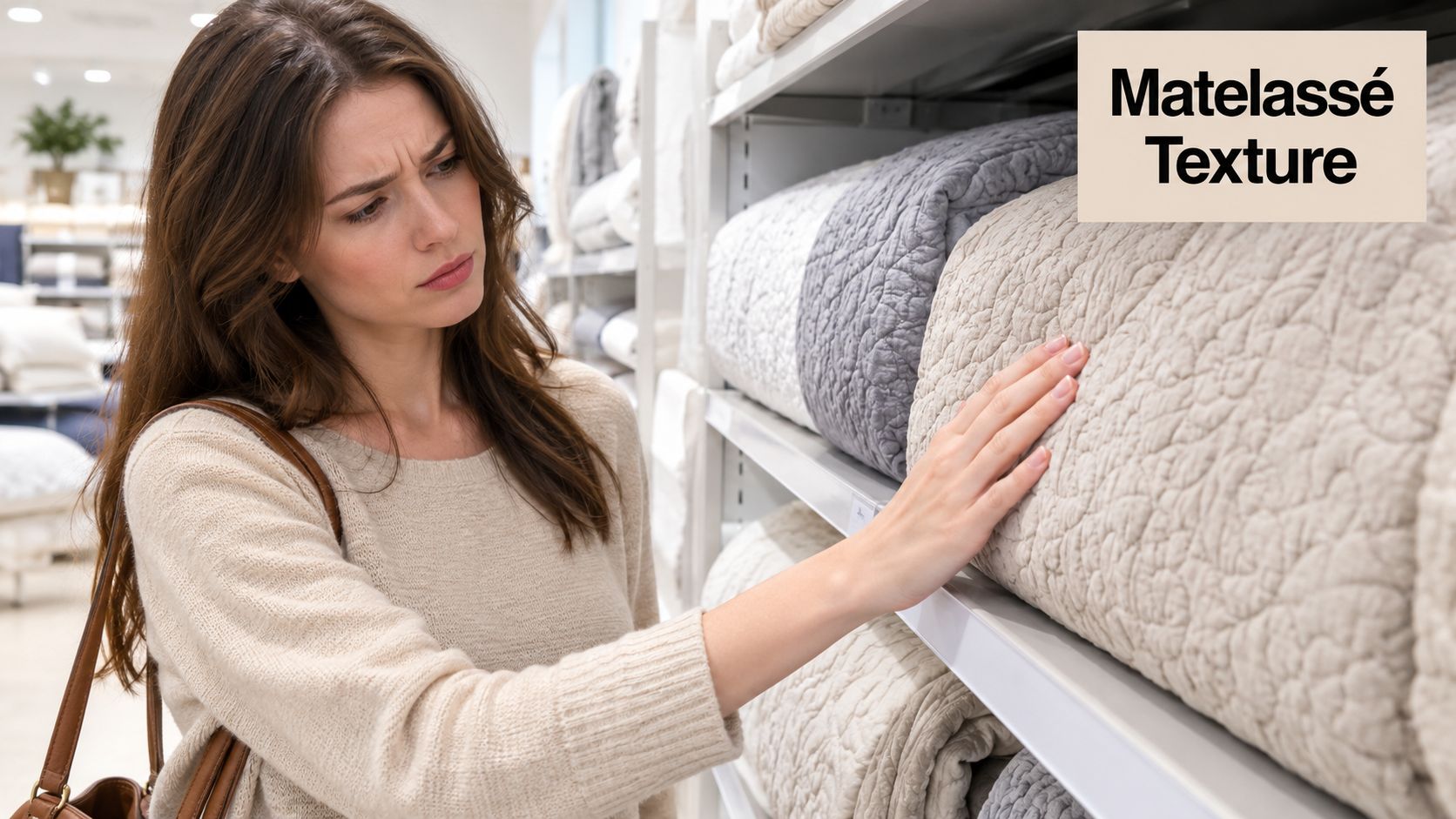
A useful definition: Matelassé is a soft, thick, embossed textile with a puckered or quilted appearance, commonly used for bedcovers, blankets, drapery, and upholstery, as described by the Museum of Fine Arts Boston textile reference.
This guide starts with the fabric itself, then connects construction to everyday comfort. You'll learn how matelassé differs from padded bedding, how to choose a size for a modern mattress, how to care for the raised texture, and how to style it for a minimal, coastal, or layered bedroom.
Introduction to the Matelassé Look and Feel
The easiest way to understand matelassé is to focus first on what your hand notices. Run your fingers over the surface and you'll feel a raised floral, geometric, pebble, or scroll pattern. The fabric may look softly padded, but the relief is part of the textile structure, not necessarily a separate layer of filling.
That makes a matelassé bedspread useful when you want a finished bed without the heaviness of a traditional quilt or comforter. It can sit neatly over sheets, add visual depth to a plain duvet, or create a composed guest-room look without making the bed feel overstuffed.
The name can hide an important difference
A quilt usually combines fabric layers with batting and stitching. A comforter generally relies on an insulated fill for loft and warmth. A matelassé, by contrast, is typically woven to create a quilted effect, although product labels can vary, so the construction description still deserves careful attention.
The history helps explain why the fabric carries a luxury association. In Marseille, hand-quilted decorative textiles called broderie de Marseille became popular in the 1700s, while English inventor Robert Elsden received a prize in 1745 for an early woven-quilting method, according to Schumacher's history of matelassé fabric. The technique became commercially available by the 1760s, and the Jacquard loom's introduction in France in 1801 made production faster and more scalable.
What you should expect on your bed
The feel sits between a flat coverlet and a padded quilt. You get surface character and moderate visual loft, but the bedspread generally keeps a cleaner outline than thick filled bedding. That makes it especially appealing for warm rooms, decorative layering, and sleepers who prefer bedding that doesn't dominate the bed.
For a first-time buyer, the practical questions are simple:
- Is it woven or stitched? Look for jacquard or dobby weaving, or read the construction details closely.
- Does it include batting? If it does, you're likely looking at a quilted product rather than classic woven matelassé.
- How should it fit? Check finished dimensions instead of relying only on the mattress size label.
- How will it wash? Follow the care instructions, because raised texture and fiber content influence shrinkage and shape.
What Makes a Matelassé Bedspread Different
Start with the visual effect. A matelassé bedspread has a puckered, embossed surface that resembles quilting from across the room. Up close, however, the pattern is created through woven structure, yarn arrangement, and finishing rather than through ordinary quilting stitches holding a padded sandwich together.
Think of a quilt as a layered sandwich. The outer fabrics form the bread, batting provides the filling, and stitches hold everything in place. Matelassé is closer to a woven relief map. The loom creates higher and lower areas within the cloth itself, so the design rises from the textile rather than sitting on top of a separate insulating core.
How the loom creates the relief
Manufacturers commonly use dobby or Jacquard looms. A dobby loom handles repeated geometric or structured patterns, while a Jacquard loom controls individual warp threads to form more complex motifs. You don't need to understand every loom setting to shop well. The key point is that the loom controls the yarns to build a figured surface.
Matelassé can use a single-ply structure or a double-cloth construction. Textile references describe multiple warp and weft series that create a figured, double-layer effect. The interlaced yarn systems form areas that appear fuller, while finishing can encourage parts of the cloth to contract differently and intensify the puckering.
Practical rule: If the pattern comes from the cloth's woven architecture, the bedspread can look quilted without carrying the same thermal bulk as padded bedding.
Why that changes the way it hangs
A raised design doesn't automatically mean heavy warmth. Because traditional batting isn't the defining feature, matelassé can provide texture while remaining easier to fold, layer, and arrange. Its drape will still depend on fiber, weave density, finishing, and size, but the construction generally supports a more controlled outline than a thick comforter.
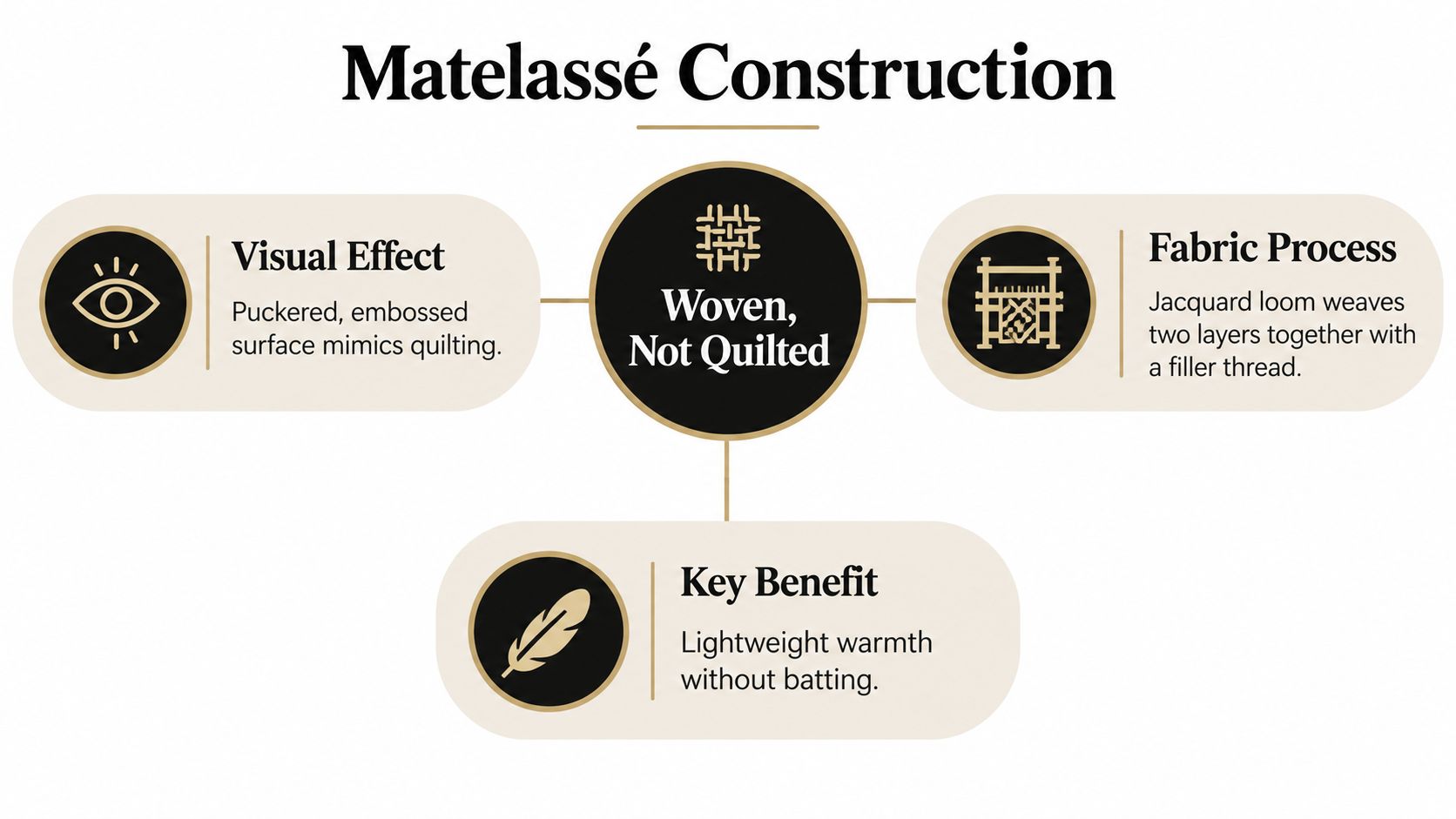
When you evaluate a product, separate appearance from insulation. A floral surface can suggest warmth, yet the actual bedspread may function mainly as a decorative or lightly warming layer. If you sleep cold, you may want a blanket or duvet underneath. If you sleep warm, the woven texture can add polish without making the bed feel as enclosed as padded bedding.
Materials and Construction Behind the Texture
The weave creates the signature look, but fiber choice controls much of the day-to-day experience. Cotton is a common choice because it feels soft, allows airflow, and suits bedding that needs regular laundering. Cotton blends can balance natural softness with easier shape retention, while polyester-rich fabrics may emphasize durability, smoothness, or resistance to wrinkling.
The right choice depends on how you use the bedspread. A guest room may prioritize easy maintenance and consistent appearance. A primary bedroom may place more weight on hand feel and breathability. A rental or hospitality setting may need a fabric that tolerates frequent handling while preserving its relief.
Reading the structure
Multiple warp and weft systems help create the raised design. Some matelassé fabrics use interlacing or extra yarn systems to form floral or geometric relief. Finishing may also use differential shrinkage, meaning parts of the textile contract at different rates and encourage the characteristic puckered surface.
That construction explains three practical qualities:
- Texture: The pattern has dimension because the yarn systems create changes in height and density.
- Warmth: The fabric can trap some air within its structure, but it doesn't automatically provide the insulation of batting.
- Drape: Without a thick padded core, the bedspread can fall more cleanly across the mattress and sides.
A shopper comparing woven patterns can also benefit from understanding related textile terminology. SouthShore Fine Linens offers a plain-language explanation of what Jacquard fabric means, which can make product descriptions easier to evaluate.
What quality looks like in person
Run your hand across the motif and look for an even transition between raised and recessed areas. The design should feel intentional rather than loosely distorted. Inspect the reverse side, too. A woven pattern may show structural changes, but the backing shouldn't appear carelessly finished or excessively loose.
Edge finishing matters because the border receives repeated handling. Look for a stable hem, neat corners, and a border that frames the relief instead of cutting awkwardly into it. If the product listing doesn't identify the fiber blend, finished dimensions, or care method, treat that missing information as a reason to ask questions before buying.
How Matelassé Compares to Quilts Coverlets and Comforters
The word “coverlet” describes a bedding role more than a specific construction. A coverlet may be flat, quilted, woven, or textured. Matelassé often serves as a coverlet or bedspread, but the terms aren't interchangeable because one describes the fabric technique and the other describes how the piece is used.
A quilt has stitched layers and usually offers more body. A comforter relies on fill and is designed primarily for warmth. Matelassé sits closer to a decorative woven bed covering, with texture that can add dimension without the same padded profile.
Matelasse vs Quilt vs Coverlet vs Comforter at a Glance
| Bed Cover | Structure | Warmth and Weight | Best For |
|---|---|---|---|
| Matelassé | Woven relief, often on a dobby or Jacquard loom, typically without traditional batting | Light to moderate warmth, with a cleaner drape | Decorative layering, warm rooms, and a tailored bed |
| Quilt | Fabric layers joined with batting and stitching | Moderate to substantial warmth, depending on fill and fabric | Added warmth with visible stitched character |
| Coverlet | Broad category that may include flat woven or quilted fabric | Usually light, though construction varies | A top layer, foot-of-bed accent, or minimal coverage |
| Comforter | Outer shells filled with down, fiber, or another insulating material | Generally warmer and fuller, with more loft | Cold rooms, sleepers who want insulation, and standalone warmth |
Match the cover to the job
Choose matelassé when you want the bed to look finished during the day and still have room for flexible layering at night. It works particularly well over breathable sheets or beneath a duvet that supplies extra insulation.
Choose a quilt when you want stitched construction and more substance, but don't assume every quilt has the same warmth. Choose a comforter when warmth is the priority and you're comfortable with a fuller silhouette.
For a broader explanation of how mattress protectors, comforters, and other bedding pieces work together, the Stahl Home Center mattress and bedding guide offers useful context. If the distinction between a coverlet and a bedspread still feels unclear, this guide to what a coverlet is can help you identify the role of each layer.
Choose by function first: Decide whether you need insulation, surface texture, full side coverage, or a flexible base layer. Then choose the construction that supports that job.
Finding the Right Size and Fit for Modern Mattresses
A beautiful bedspread can still look wrong if it doesn't cover the mattress properly. Modern beds may combine a thick mattress, a topper, a foundation, and an adjustable base. The size printed on the package identifies the mattress category, but it doesn't tell you how much fabric you'll need for the sides and foot.
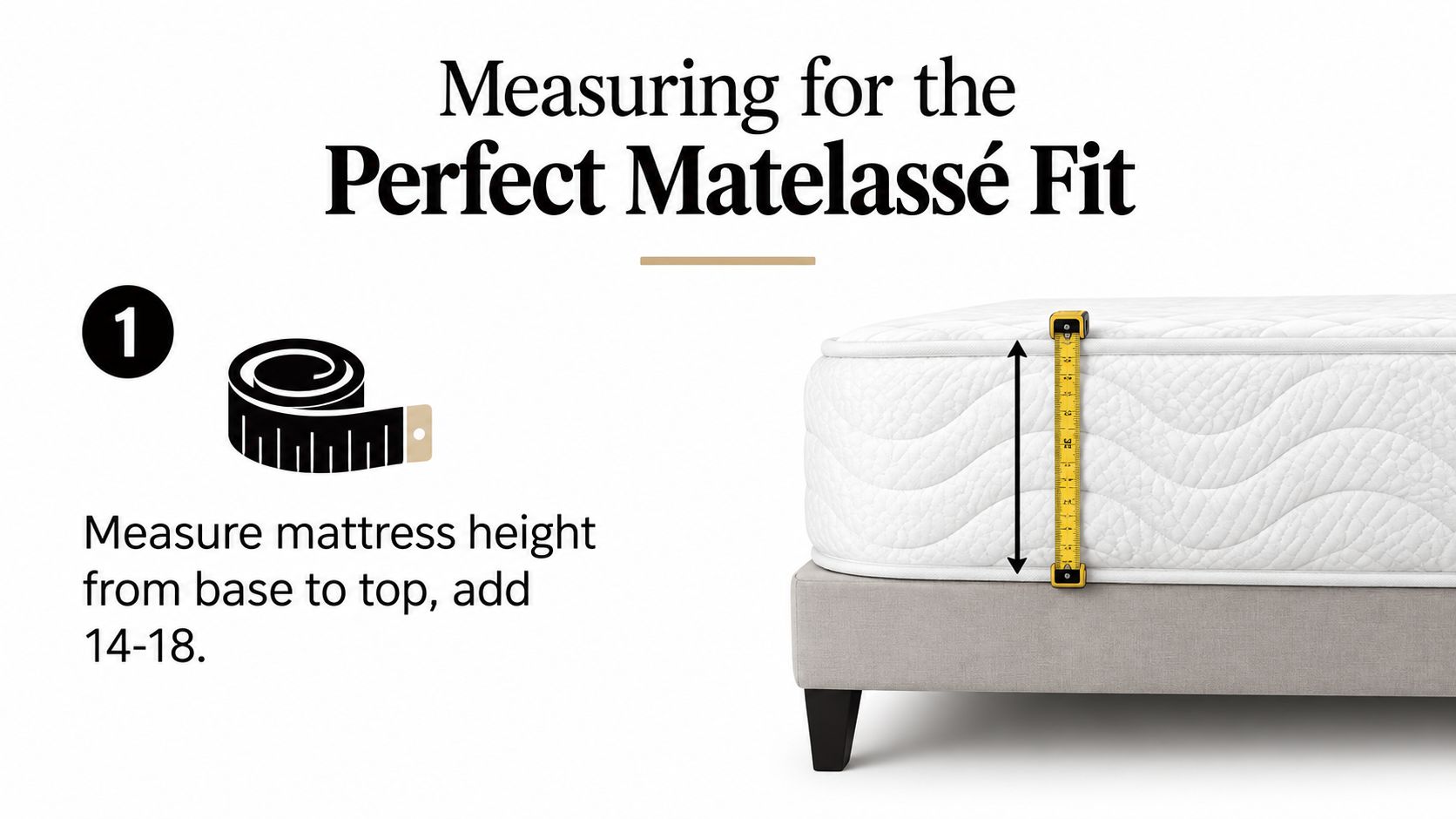
Measure before you shop. Start at the floor or bed platform, measure to the top of the mattress, and include any topper that will remain under the bedspread. Then decide whether you want the edge to stop above the rails, fall near the bottom of the mattress, or reach closer to the floor.
Calculate coverage from the bed outward
Measure the mattress width and length, then add the desired side drop to both sides and the desired foot drop to the length. For a clean look, the drop may end around the lower mattress edge. For generous coverage, choose an oversized design after checking its finished dimensions.
Adjustable bases need special attention. A spread that looks perfectly positioned when the bed is flat may shift when the head or foot rises. Look for enough width and length to maintain coverage through movement, but avoid excessive fabric that could bunch around the mechanism.
A quick fit checklist
- Measure the complete stack: Include the mattress protector, topper, and any layer that stays on the bed.
- Check finished dimensions: Don't rely on “queen” or “king” alone.
- Plan the side drop: Decide whether you want tucked, fitted, or generous coverage.
- Account for movement: Adjustable bases need flexible coverage rather than a rigid, exact edge.
- Read the care label: A fabric that may shrink needs a little more planning before the first wash.
Matelassé's cleaner drape can make an overly small size look especially obvious because the fabric won't disguise exposed mattress sides with bulky fill. When in doubt, compare the product's measurements with your own bed rather than choosing by habit.
Easy Care That Keeps the Texture Beautiful
The raised surface deserves gentle handling, but matelassé doesn't need an elaborate routine. Start with the manufacturer's care label, since fiber blends, dyes, finishing, and construction can change the recommended method.
For washable cotton or cotton-blend bedding, a gentle cycle, mild detergent, and cool or warm water are sensible starting points when the label permits them. Avoid harsh chemicals, which can weaken fibers or affect color, and use low heat when machine drying is allowed.
A simple laundering routine
- Prepare the bedspread: Close fasteners, remove loose items, and wash it separately if the machine would be crowded.
- Use a mild detergent: Too much product can cling to the textured surface and leave a stiff feel.
- Select gentle settings: Aggressive agitation can stress raised areas and hems.
- Dry with restraint: Low heat helps limit fiber stress and protects the fabric from excessive shrinkage.
- Remove promptly: Smooth the bedspread while damp or lightly tumble it, then lay or hang it according to the label.
Woven matelassé is often easier to launder than a bulky padded cover because it doesn't contain a thick fill compartment that must dry evenly. That doesn't make every product carefree. Dense weaves can hold moisture, and heat can alter the surface, so patience is more useful than a hot dryer setting.
Solving common texture problems
Wrinkles usually relax when you smooth the fabric immediately after washing. If the bedspread needs pressing, use the care label's temperature guidance and protect the relief with a cloth rather than crushing the surface directly.
Pilling can result from fiber friction, washing conditions, or the blend itself. Turn the item inside out when appropriate, avoid abrasive laundry products, and don't overload the washer. If texture appears flatter after drying, reduce heat and review whether the product was washed with heavier items that may have pressed against the relief.
SouthShore Fine Linens notes that many of its textiles are OEKO-TEX certified and responsibly sourced. When comparing products, certifications and transparent care instructions can help you judge how thoughtfully the textile was specified, but they don't replace checking the individual product label.
Styling and Buying Guidance for Your Bedroom Sanctuary
Matelassé works because it can play more than one role. Use it as a standalone summer cover when you want a composed bed with lighter warmth, or place it beneath a duvet when you want the woven surface to act as a quiet foundation. Add a folded throw at the foot and a small group of pillows, rather than covering every surface with competing patterns.
For a modern minimal room, choose a solid neutral and let the raised motif provide the visual interest. A relaxed coastal room can combine a pale matelassé with washed blue, natural fibers, or narrow stripes. Layered luxury benefits from contrast in scale, such as a small woven relief beneath a larger patterned duvet, but keep the color family controlled.

Build the bed around three decisions
Start with the job. Will the bedspread provide the main cover, a decorative base, or an extra layer beneath a duvet? The answer determines how much warmth and coverage you need.
Choose texture with intention. A prominent floral relief creates a traditional mood, while a geometric or pebbled design feels more current. If your sheets, curtains, or rug already have strong pattern, a quieter matelassé can keep the room balanced.
Inspect before checkout. Confirm the fiber content, finished size, border construction, care method, and return terms. For deep mattresses, compare actual measurements and look for oversized options instead of assuming the standard category will provide enough drop.
The same attention to scale helps with the smaller pieces around the bed. If your room includes a pet's sleeping space, a designer pet beds guide from Nandog Pet Gear can help you coordinate comfort and visual finish beyond the mattress itself. For the bed layers, SouthShore Fine Linens' guide to how to layer bedding offers a practical way to combine a textured base with sheets, blankets, duvets, and throws.
A matelassé bedspread is a strong choice when you want woven character, lighter warmth, and a polished drape in one layer. Once you understand the construction, measure your mattress carefully, and follow the care label, the fabric becomes easier to shop for and easier to live with.
SouthShore Fine Linens offers thoughtfully made bedding with attention to fabric selection, fit, finish, and everyday care, including oversized options for modern mattresses. Visit SouthShore Fine Linens to explore bedspread and layering pieces that can help you create a comfortable, refined bedroom.


