
Queen Size Quilts and Comforters Compared for 2026
You're standing beside a queen display bed, comparing a neatly folded quilt with a lofty comforter. The quilt looks polished and easy to layer; the comforter looks like it'll keep you warmer. Then you check the package labels, see “Queen” on both, and still can't tell whether either will cover your mattress the way you want.
That label is a starting point, not a fit guarantee. The useful questions are how each piece is built, how warm it feels in your room, how much side coverage you want, and whether its finished dimensions will hold up after washing.
| Criterion | Quilt | Comforter |
|---|---|---|
| Construction | Flat layers stitched together | Lofted fill enclosed by a shell |
| Look and drape | Textured, tailored, easier to layer | Puffed, cushioned, more enveloping |
| Warmth | Usually lighter and more adaptable | Usually warmer because of its loft |
| Queen fit | Choose by finished width, depth, and desired drop | Check finished dimensions against mattress depth |
| Best for | Decorative texture, lighter coverage, flexible layering | Primary warmth and a fuller bed profile |
Choosing Between a Quilt and a Comforter for Your Queen Bed
A quilt and a comforter aren't interchangeable, even when both are sold for a queen bed. A quilt is generally a flatter top layer, while a comforter is designed with loft and fill that make it a more substantial source of warmth. That difference shapes how each one looks, feels, and fits into the rest of your bedding.
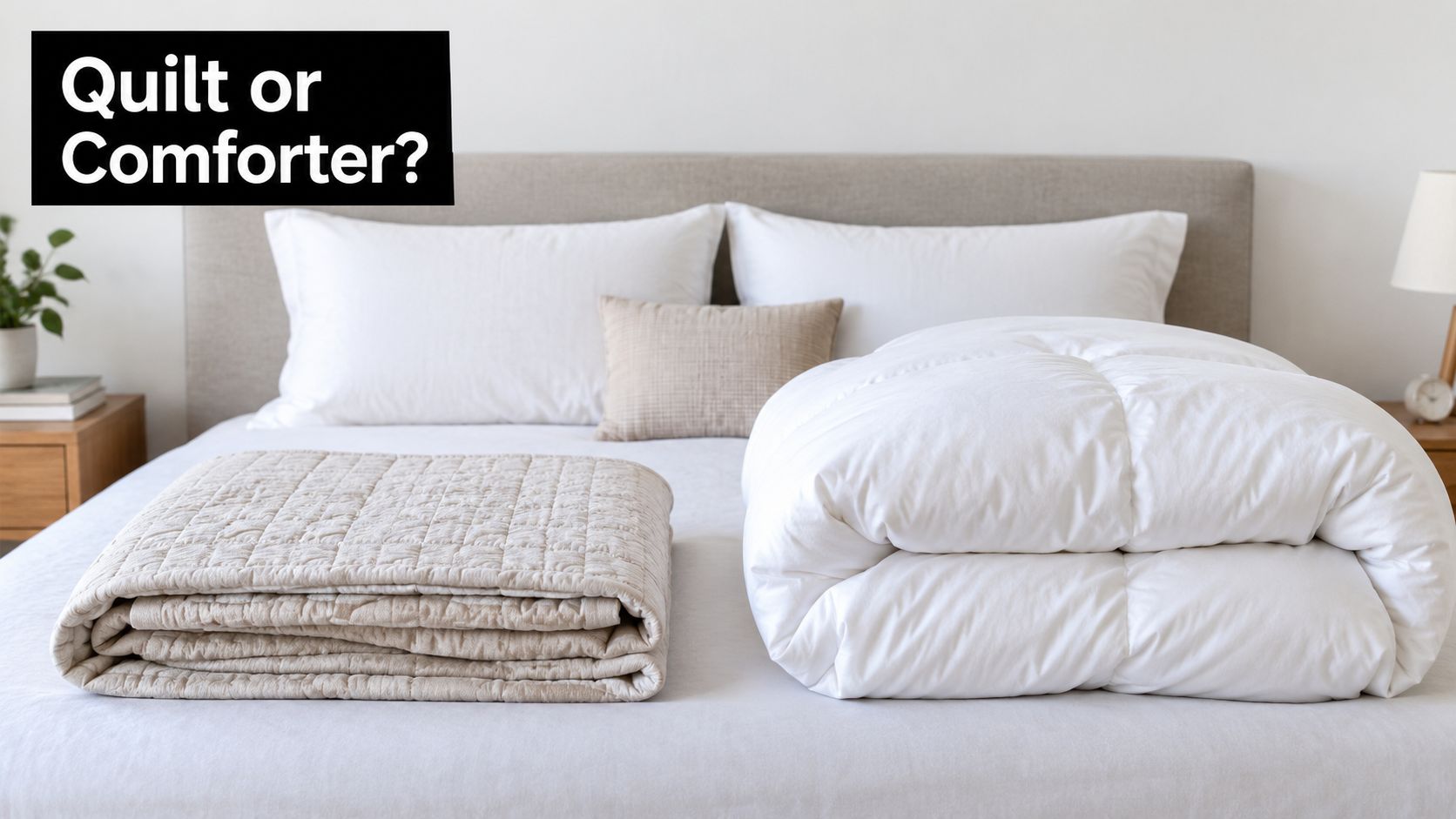
Before you buy, decide what job you need the top layer to do. If you want the bed to feel warmer without adding another blanket, start with comforters. If you want a lighter cover, surface texture, or a layer you can add over another blanket, look at quilts.
Then check the fit. “Queen” doesn't tell you the finished dimensions or how far the cover will hang over your mattress. A quilt or comforter can look undersized on a deep bed even if its label matches your mattress size.
A showroom-ready decision comes down to a few checks:
- Construction: Do you prefer a flatter, stitched layer or a puffier fill?
- Warmth: Will this be your main cover, or one layer in a bedding setup?
- Coverage: How deep is your mattress, and how much drop do you want?
- Care: Can you wash and dry the piece the way you need to?
- Style: Do you want a crisp, textured surface or a soft, lofty silhouette?
Practical rule: Choose the bedding piece by its job first, then choose its finished size by your mattress and preferred drape.
How Quilts and Comforters Are Actually Built
A quilt's construction is usually easy to recognize once you know what to look for. It has a top fabric, a layer of batting, and a backing, all held together with stitching. That stitching creates the quilted pattern and keeps the inner layer in place.
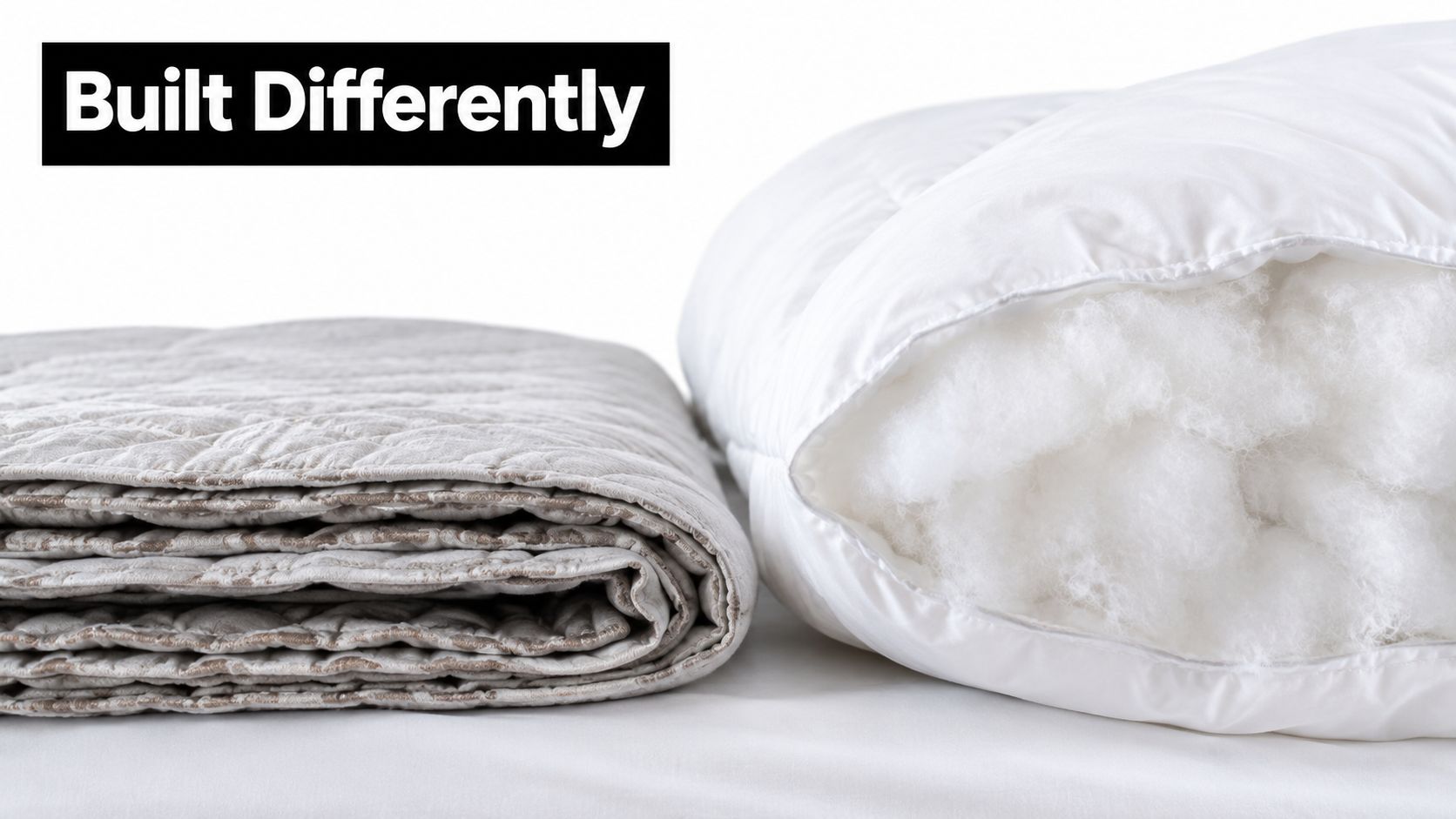
A comforter has a different job. Its outer shell holds a fill material, and its construction is designed to retain loft. The fill can be arranged in stitched channels or compartments that help distribute it through the shell. That volume gives a comforter its puffier profile and the cushioned feel many sleepers want.
Why the structure changes the feel
The quilt's flatter build usually makes it easier to fold, layer, and arrange neatly at the foot of the bed. It can show off fabric patterns and stitching without adding as much visual bulk. A comforter takes up more space on the bed and creates a fuller outline, which can make a room feel cozier but may be less convenient to fold away.
Construction also affects how the cover drapes. A flatter quilt tends to follow the contours of the mattress and bedding beneath it. A lofty comforter can sit higher and fall differently at the sides, especially if the fill is thick or unevenly distributed.
Don't assume that a quilting pattern tells you how warm a piece will be. Stitching, fill, shell fabric, and the way the cover sits against your body all contribute to the feel. A decorative quilt can be a substantial piece of bedding, and a comforter can be light enough for layering. Look beyond the product name and check the construction details.
Care depends on the specific item, not just its category. Follow the maker's washing instructions, and pay attention to the size and fill before putting a comforter in a home washer. For either type, look for finished dimensions after laundering or ask the seller how the piece is expected to change with washing. A cover that loses its shape or loft won't keep looking or feeling the way it did on the bed.
Warmth Fill and Seasonal Performance
Choose a lofted comforter if you sleep cold and want warmth from a single top layer. For a warm bedroom or a bed you adjust through the seasons, choose a lighter quilt and add bedding as needed. Start with how you sleep, then compare the actual fill and coverage.
Coverage belongs in the warmth decision. A generous-looking queen cover that leaves your shoulders or feet exposed will feel different from one that stays over you. Compare finished dimensions after laundering alongside fill weight, loft, and shell fabric. The package's size name cannot settle that choice.
In testing 64 bedding systems, researchers found that body coverage affected insulation nonlinearly, while the quilt cover and sleepwear contributed to the whole system's insulation (research on insulation across bedding systems). Apply that finding when comparing layers: judge the bedding you will sleep under, with your usual sleepwear, rather than treating fill as an isolated warmth rating.
Match materials to the room
- Cotton: Choose it for a familiar everyday feel and straightforward care. Check thickness before buying; a substantial cotton quilt can be warmer than a lightweight one.
- Linen: Consider it for a warm room if you enjoy its relaxed texture. The fiber name alone does not establish how cool the finished bedding will feel.
- Wool: Consider it for cooler rooms or a naturally fuller layer. Let the item's construction and care requirements decide whether it suits your routine.
- Down alternatives: Choose them when you want a comforter's lofted feel. Compare fill details instead of accepting “all-season” or “temperature balancing” as a warmth specification.
Keep cooling expectations practical. In a 2025 field study of women aged 40–60 with heat-related sleep difficulties, cooling bedding improved self-reported sleep quality by 74%, satisfaction by 80%, and feeling rested by 91%, without an objective change in sleep (the field study on cooling bedding).
For summer, buy a manageable layer with enough finished coverage for your bed. SouthShore Fine Linens' guide to lightweight summer quilts offers another reference for comparing lighter options. Prioritize fabric, fit, and washing requirements over a cooling label.
Getting Queen Sizing Right by Coverage Geometry
Start with the mattress, not the size name on the package. A modern U.S. queen mattress measures 60 by 80 inches and has about 4,800 square inches of surface area, roughly 18.5% more than a full mattress (queen and full mattress dimensions). The cover needs extra fabric beyond those mattress dimensions to hang over the sides and foot.
Use this simple formula for width:
Mattress width + twice the mattress depth + twice your desired drop = target cover width.
The same idea applies to length, but account for whether you want the cover to reach the bottom edge, hang past the foot, or tuck under pillows. Measure your actual mattress, including any topper or pillow top.
Work from your bed outward
For a queen that's 15 inches deep, the mattress width plus the depth on both sides is 90 inches before adding any extra drop. That's why an 86–88-inch comforter can fall short of reaching the bottom edges on a bed with that depth. Those dimensions may suit a shallower mattress or a tighter look, but they aren't a safe assumption for every queen.
For a standard-depth mattress, measure from the top edge down to where you want the cover to end. Multiply that drop by two, then add the result to the mattress width. Repeat the process for the length, using your desired coverage at the foot and any pillow tuck.
A pillow-top mattress or topper increases the depth you need to cover. An adjustable base adds another consideration: check how the bedding hangs when the bed is raised, especially if you don't want the fabric to pull tight or drag unevenly. For a split adjustable bed, consider whether one shared cover or separate covers better suit the way the bed moves.
Before you order: Compare the listing's finished dimensions with your calculation. Don't assume a label like “Queen” accounts for a deep mattress or a generous drop.
Also check how the dimensions are measured and whether the listed size is before or after laundering. A brand that gives finished measurements makes it easier to judge whether its quilt or comforter will cover your mattress the way you expect. For shoppers who want more side coverage, compare the product dimensions with this guide to oversized queen comforter dimensions.
Real Scenarios for Quilts Comforters and Layered Looks
The best choice depends on how the room is used. A guest bed that sits made for long stretches has different needs from a primary bed that's used every night and needs dependable warmth.
Choose for the way you live
Guest room: I'd lean toward a quilt if the room needs a tidy, lighter top layer and you want something straightforward to fold back. Still check the care label and dimensions. A quilt isn't automatically easier to wash just because it's flatter.
Cold primary bedroom: Pick a comforter with enough loft for your preferred warmth, and check the fill and shell details. If you share the bed with someone who sleeps warmer, a lighter comforter plus a separate layer can be easier to adjust than one very heavy cover.
Relaxed coastal or minimalist room: A quilt often wins on texture and visual restraint. Its flatter profile keeps the bed from looking overstuffed, and a stitched pattern adds detail without requiring another decorative blanket.
Layered bed: Put a comforter underneath for warmth and use a quilt on top when you want a more fitted finish. The arrangement lets you adjust what you use without giving up the texture of the quilt. For more ideas on balancing layers, see this guide to how to layer bedding.
Wash frequency should influence the purchase, but don't rely on category shortcuts. A quilt can be easier to handle than a bulky comforter, yet both need to fit your washer and dryer and follow their care instructions. If the bed is used by guests or children, prioritize durable construction, a manageable wash routine, and stable dimensions after laundering.
Choose the piece that suits the room's actual job, then confirm its fit. If you're torn between the two, a quilt and comforter can work together rather than compete. Just check that their dimensions won't create an awkward pile or leave the mattress exposed.
Why Cooling Claims and Thread Counts Deserve a Second Look
A quilt feels cool against your hand in the showroom. That tells you about its first-touch feel, not how comfortable you'll be beneath it overnight. Before paying extra for “cooling,” ask what the claim describes: the shell's surface feel or the performance of the complete cover. A vague answer gives you little reason to choose it.
Thread count needs the same scrutiny. A high number alone doesn't establish softness, wash performance, or suitability for your bedroom. Handle the fabric, inspect the weave, and read the care instructions. Buy the feel you prefer and the upkeep you can manage.
Inspect the claim against the actual bed
Keep testing in context. Thermal-manikin bedding research concerns bedding-system performance; it does not settle whether a particular “cooling” quilt or comforter will suit you. Leave the insulation comparisons aside here and examine what the product description promises.
Start with Room: judge the cover against your usual sleeping conditions. Then consider Sleeper: distinguish between disliking a warm initial touch and waking overheated later. Those are different buying concerns, and a surface-feel claim addresses only the former.
For Cover: inspect how the quilt or comforter rests against you, including where it bunches, presses down, or pulls away. Judge that contact on a made bed whenever possible. A fabric swatch cannot show the fit of the complete item.
Give Care: and Fit: equal attention. Ask whether the listed measurements describe the item before or after laundering, and whether shrinkage guidance is available. Compare finished dimensions with your mattress and desired side drop. The queen label alone cannot answer those questions.
“Cooling,” “all-season,” and “luxury thread count” should earn their place through clear specifications. Choose the cover whose fabric, care requirements, and finished drape you can assess.
Recommendations for Different Sleepers and Room Styles
A quilt can look right on a display bed and leave too little drop on your deeper mattress. Choose for the sleeper first, then judge how the finished piece will hang on your bed after laundering.
- Warm sleepers: Start with a cotton or linen quilt sized to cover the mattress properly. Choose a light layer with enough width to stay in place and provide your preferred side coverage.
- Cold sleepers: Choose a comforter with clear fill information and details about loft recovery after washing. Check its finished dimensions so the fuller profile still gives you the drop you want.
- Design-led rooms: Make a quilt the visible layer for stitched texture and a lower-profile bed. It suits relaxed, coastal styling or a clean, minimal room. Use the side drop to decide how much of the bed base remains visible.
- Homes with frequent laundering: Prioritize care instructions, dimensional stability, and construction suited to your routine. Hospitality and short-rental hosts should verify measurements after washing before committing to a Full/Queen label.
Consumer bedding surveys summarized in the Sleep Junkie survey summary report that 58.3% of participants used comforters, while 11% used quilts or bedspreads. Those preferences support stocking both categories, but they do not settle your purchase. Buy for warmth, drape, and upkeep.
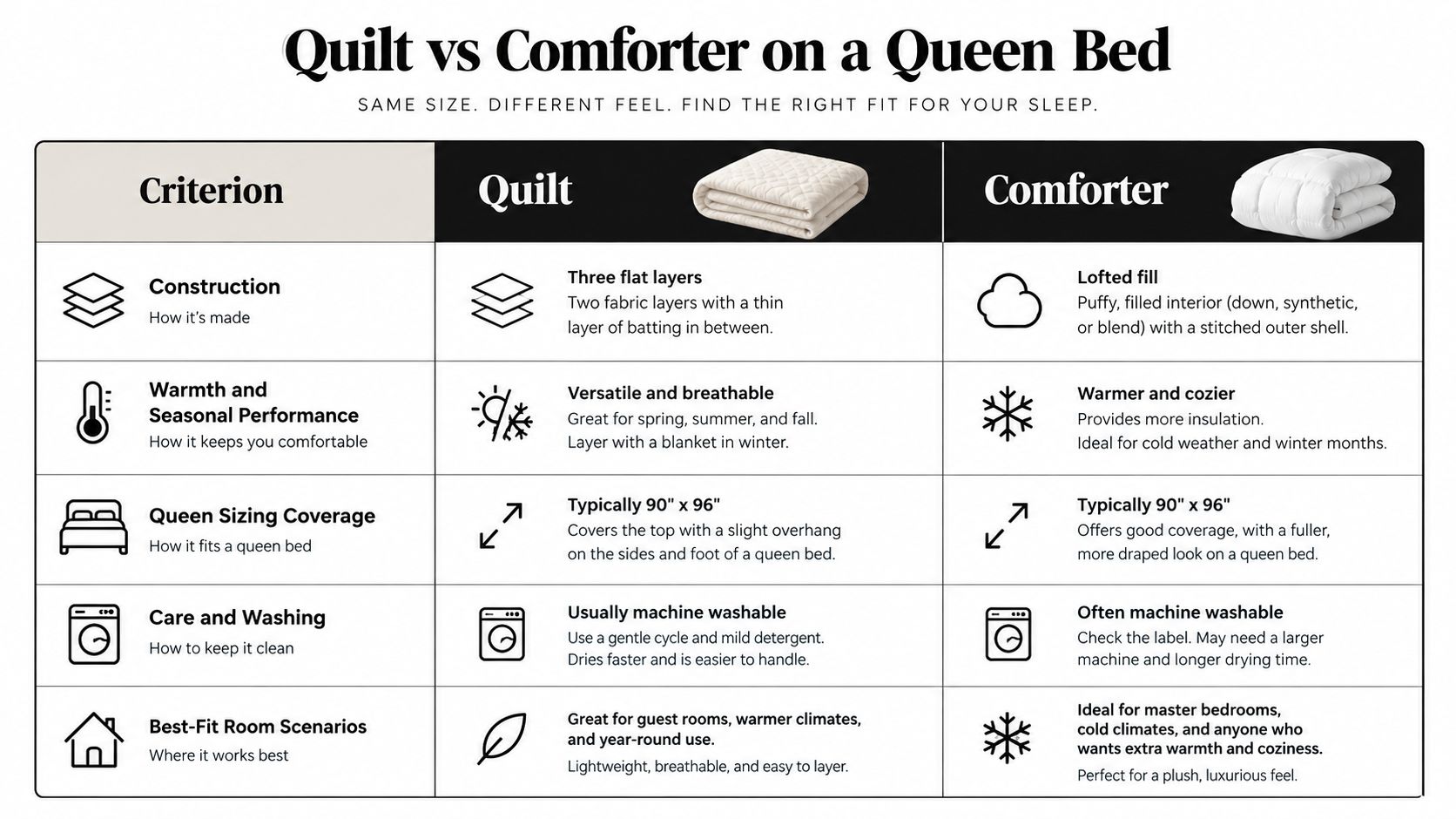
Quilt vs Comforter on a Queen Bed
| Sleeper or room | Recommended choice | Buying priority |
|---|---|---|
| Warm sleeper | Cotton or linen quilt | Light coverage with sufficient finished width |
| Cold sleeper | Comforter | Clear fill details, loft recovery, and adequate drop |
| Guest room | Quilt or comforter matched to the room | Manageable laundering and stable finished dimensions |
| Layered bed | Comforter beneath a quilt | Warmth below, texture above, with compatible drape |
For a layered bed, let the comforter provide warmth and the quilt supply the visible texture. Confirm mattress depth, desired drop, finished width and length, fill details, and care requirements before checkout. Make sure the comforter fits your washer and dryer.
SouthShore Fine Linens offers Full/Queen quilt sets, including an oversized quilt option, and Full/Queen comforter sets. Compare each item's finished dimensions with your mattress when browsing SouthShore Fine Linens. Choose the piece whose coverage and feel suit your bed.


