
Hotel Style Sheets Review: The Ultimate 2026 Guide
You know the moment. You slip into a hotel bed, smooth the top sheet with one hand, and instantly think, why doesn't my bed feel like this at home? The answer usually isn't magic, and it isn't just a bigger price tag. It's a set of deliberate choices in material, weave, finish, and fit, the same kinds of choices people now expect to see explained in a serious hotel style sheets review.
That expectation isn't random. A 2026 hospitality report found that 92% of guests read reviews before booking a hotel (Alchemer hospitality research report), which helps explain why bedding shoppers now want the same level of proof, not just glossy marketing. If you've ever wanted to understand why one sheet set feels crisp and another feels limp after a few washes, this guide breaks it down in plain language.
If you're also refining the rest of the bed, a practical companion resource is maximizing sleep mask profit, because the sleep experience is usually a system, not a single product. And if you like seeing the finished look, SouthShore's guide to how to make a bed like a hotel pairs well with the buying advice below.
The Allure of the Perfect Hotel Bed
The hotel bed feeling usually starts with contrast. The sheets feel cool, the surface looks precisely fitted, and the bed holds its shape instead of collapsing into wrinkles or bunching at the corners. That's why people keep chasing the same result at home, especially when their own bed looks fine but doesn't feel refined.
Why the feeling is harder to copy at home
A hotel bed works because every layer has a job. The mattress supports, the sheets regulate touch and airflow, and the tucked finish keeps everything visually clean. In hospitality, that kind of consistency matters because guests are comparing the room against memory and expectation, not just against another set of sheets.
That same review culture has shaped bedding shopping. Buyers now look for proof that a sheet set can deliver a repeatable result, not just a first-night impression. In practice, that means paying attention to the way the fabric behaves after laundering, how it fits the mattress, and whether it keeps its crispness instead of fading into softness too quickly.
Practical rule: if a sheet set only sounds luxurious in the product description, treat it as unfinished information. Real hotel-style comfort shows up in the way the fabric feels after washing, sleeping, and remaking the bed.
The reason this matters goes beyond aesthetics. A great hotel-style bed is meant to invite rest, but also to withstand the habits of real life, from weekly washing to changing seasons. That's why the best hotel-style sheets review starts with performance, not hype.
What Actually Defines Hotel Style Sheets
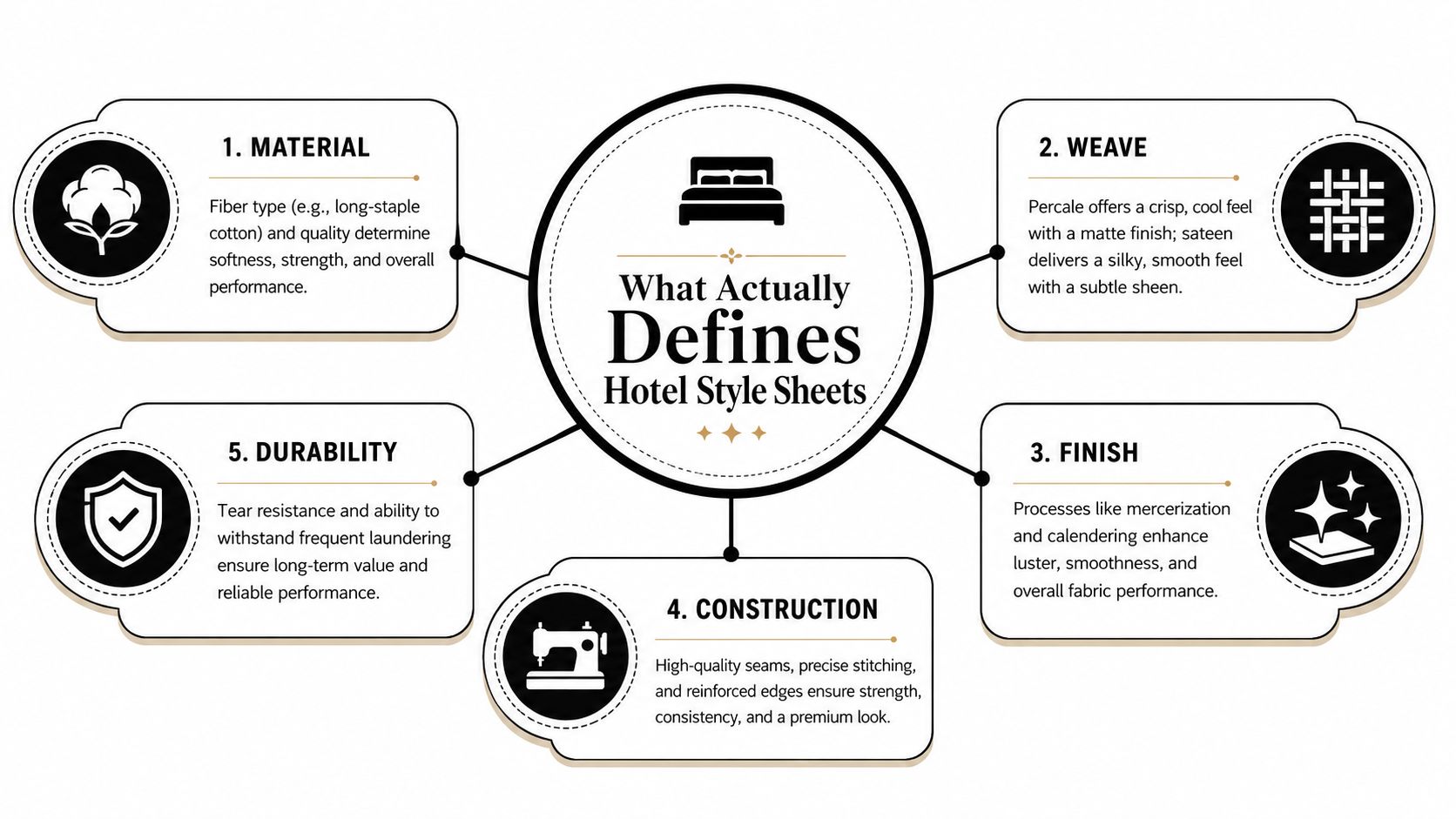
Hotel-style bedding is a materials story, not a thread-count story. The feel comes from how the fibers are made, how the fabric is woven, and how the edges are finished. Independent guidance consistently points readers toward construction quality and a 200 to 400 thread count range for a balance of comfort, durability, and airflow, especially when the goal is a crisp, breathable bed (The Spruce).
The material matters first
Think of cotton fibers like strands of hair. Longer, stronger strands can be spun into smoother yarns, which helps the sheet resist pilling and keeps the surface cleaner-looking over time. That's why hotel-grade advice tends to focus on long-staple cotton and, more specifically, single-ply construction rather than flashy numbers.
A cleaner fiber structure tends to feel better in daily use because it holds its shape instead of getting fuzzy fast. In hospitality settings, that matters because sheets have to survive hard use and still look composed on the bed.
The weave changes the mood of the bed
Percale and sateen are the two names shoppers hear most often. Percale usually feels crisp, matte, and cooler to the touch, which is why it's often the first choice in hotel-like bedding. Sateen leans smoother and a little more lustrous, so it can feel softer right away but doesn't always give that freshly pressed look people associate with hotels.
If your goal is breathable comfort with a polished surface, percale usually gets you closer to the classic hotel experience. If you prefer a warmer, silkier drape, sateen may suit you better. The right choice depends on the sensation you want when you get into bed, not on which fabric sounds more luxurious in a listing.
Finish and construction complete the picture
Finish refers to how the cloth is treated after weaving, which can affect sheen, hand feel, and stability. Construction refers to the details you rarely notice until they're wrong, like seam quality, stitching, and how cleanly the corners sit on the mattress. These details matter because a good sheet can only feel premium if it holds together after repeated laundering.
For shoppers who want to compare bedding language across categories, even something like discover organic cotton bridal PJs can help reinforce the idea that fiber quality and finish shape feel far more than marketing copy does.
Hotel style isn't one feature. It's the combined effect of fiber quality, weave, finish, and fit working together.
Debunking the Great Thread Count Myth
Thread count is easy to understand, which is exactly why it gets overused. It gives shoppers a single number to chase, and that makes it a convenient marketing tool. The problem is that a bigger number doesn't automatically mean a better sheet.
Why the number can mislead you
Thread count measures how many threads are woven into a square inch, but it doesn't tell you whether those threads are strong, fine, or well spun. That's why two sheets with the same count can feel completely different. A lower-count sheet made with better cotton and cleaner construction can feel smoother and hold up better than a higher-count product built around weaker yarns.
Expert hotel-style sheet guidance keeps circling back to the same point, fiber quality and single-ply construction matter more than an inflated number (Peacock Alley). That's especially important for anyone comparing product pages that advertise very high counts without explaining the yarn quality behind them.
What a smarter comparison looks like
Instead of asking only, “What's the thread count?”, ask what the fabric is made from, whether the yarn is single-ply, and what weave was used. A well-made 300-thread-count sheet in long-staple cotton can feel more refined than a much higher count sheet made from weaker fibers. That's because feel and longevity come from the whole textile system, not from one printed spec.
This is also where the most confusing bedding claims tend to unravel. Some shoppers assume a higher number must mean more softness, but the actual result is often the opposite when the yarns are thin or overbuilt for marketing. If you want the fuller breakdown, SouthShore's guide on what is a good thread count is a useful reference point before you buy.
Single-ply is part of the quality signal
Single-ply yarn means each thread is made from one strand rather than multiple twisted strands hiding behind a higher count. That matters because hotels and hospitality buyers often prioritize sheets that stay crisp, dry quickly, and resist wear after repeated laundering. Industry guidance describes this as the durability advantage of single-ply, long-staple cotton and notes that many buyers target 200 to 300 thread count percale for balance, with some going up to 400 for a more luxurious feel (Dzee USA).
The takeaway is simple. Thread count can be part of the conversation, but it should never be the whole conversation.
Your Hotel Sheet Review Checklist
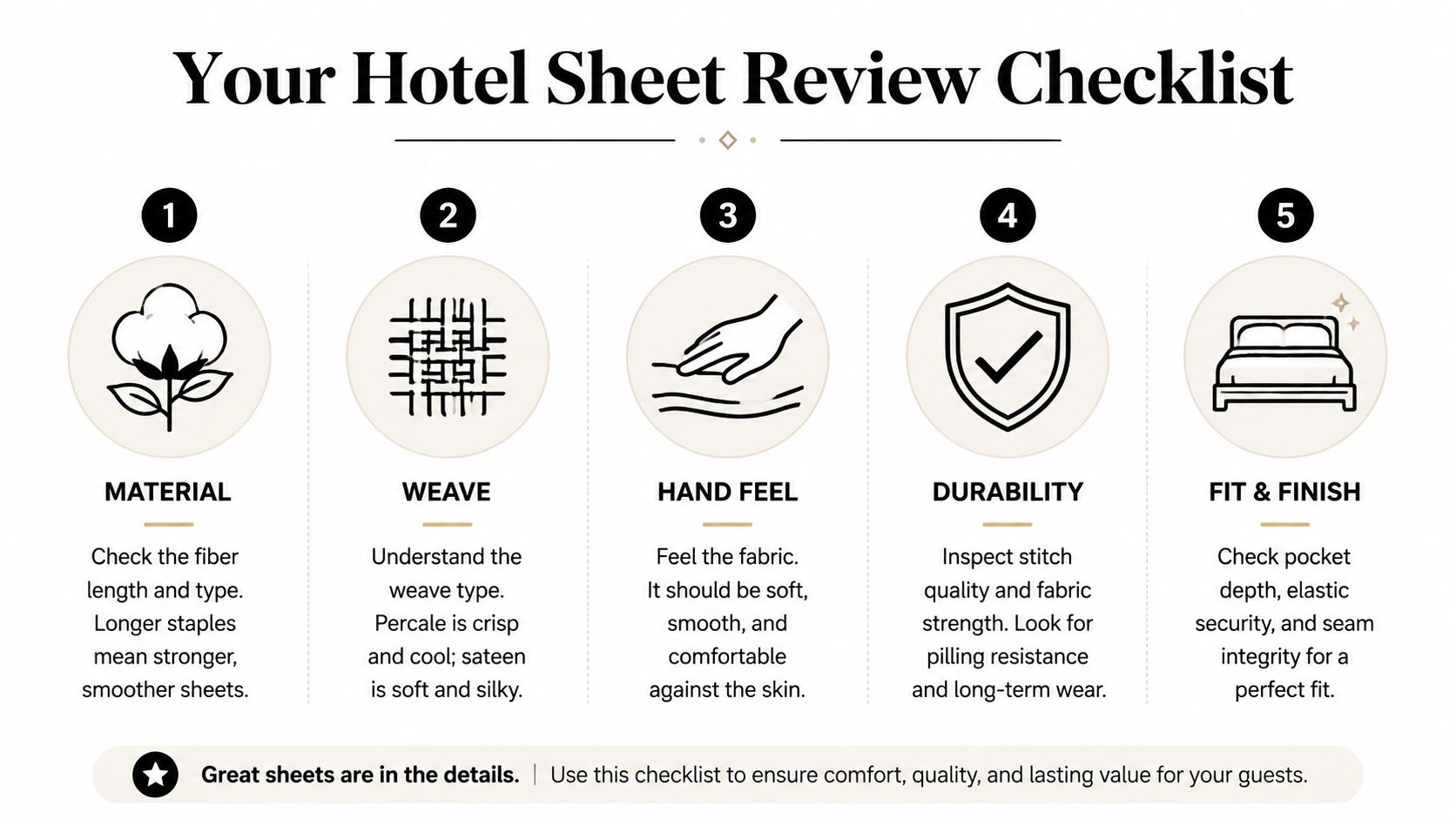
A useful hotel-style sheet review comes down to five questions you can ask before you buy. If a product can answer these clearly, you're much closer to the hotel feeling you want at home. If it can't, the sheet may look good online and disappoint in use.
1. Material
Start with the fiber itself. Look for long-staple cotton if you want smoother yarns and a better chance of long-term comfort. If the listing buries the fabric type and leans too hard on adjectives, keep looking.
2. Weave
Ask whether the set is percale or sateen. Percale gives you that crisp, cool feel people often associate with hotels, while sateen feels smoother and a bit more fluid. The weave tells you more about how the bed will sleep than the marketing language does.
3. Hand feel
Touch matters, but only after you understand the fabric. A sheet can feel soft in hand and still wear poorly, so look for a balance between softness and structure. A hotel-like sheet should feel composed, not flimsy.
4. Durability
Construction quality shows its value through key details. Look for reinforced seams, even stitching, and evidence that the fabric is meant to resist pilling. Hospitality-grade sheets are built with repeated washing in mind, and that standard should influence home buying too.
5. Fit and finish
Fit is where many bedding reviews miss the fundamental issue. A sheet set can feel luxurious for one night and still fail if it won't stay on a thicker mattress. For shoppers comparing options, the practical concern is whether the fitted sheet stays tucked, especially on modern beds with deeper profiles.
If you want a deeper shopping framework, SouthShore's article on how to choose bed sheets is a smart next stop. It's especially useful if you're weighing fabric feel against care needs and mattress depth.
Shop with the bed in mind, not the package. A sheet that looks elegant folded flat still has to survive corners, wash cycles, and nighttime movement.
The hospitality standard is a useful benchmark here. Industry education sources describe hotel performance using occupancy rate, ADR, and RevPAR, and that logic translates well to bedding because you're also judging how efficiently a sheet “performs” in real use, not just how attractive it appears on the shelf (Zerodha Varsity). In bedding terms, you want fit, comfort, and durability to work together every time you make the bed.
How SouthShore Delivers the Hotel Experience at Home
SouthShore Fine Linens fits into this conversation because it focuses on the practical details that shoppers notice once the sheets are on the bed. The brand's emphasis on oversized bedding, extra-deep pocket sheet sets, and OEKO-TEX®-certified materials lines up with the same criteria a careful hotel-style sheet review should use. It's a useful example of a home-linen brand thinking about both appearance and day-to-day use.
Applying the checklist to a real brand
On material, SouthShore's product story centers on comfort and responsible sourcing, which is the right starting point for hotel-inspired bedding. On fit, its extra-deep pocket construction directly addresses the common problem of sheets slipping off modern, thicker mattresses. That matters because many shoppers don't need another soft sheet, they need one that stays put and keeps the bed looking neat.
On durability, the brand's focus on dependable construction and repeated wash performance is aligned with how hospitality buyers think about bedding. Sheets have to look good after laundering, not just on day one. That's where a hotel-style mindset becomes practical instead of aspirational.
Why fit deserves more attention than it gets
A lot of bedding content spends time on softness and very little on whether the sheet stays tucked. That gap matters in real homes, especially for homeowners and short-term rental hosts who need bedding that can handle extra depth and frequent washing (Direct Textile Store). A sheet set that looks refined but shifts all night never feels like hotel bedding, no matter how expensive it is.
SouthShore's appeal is that it treats fit as part of the luxury story instead of an afterthought. That's exactly the kind of detail a serious hotel style sheets review should highlight, because the bed has to work in a real bedroom, not just a styled photo.
Practical Tips for Buying and Caring for Your Sheets
Before you buy, check the return policy and read reviews for comments about pilling, shrinkage, and fit after washing. Those comments tell you more about long-term satisfaction than polished product descriptions do. If you're comparing several sets, look for notes about whether the sheets stay smooth on the mattress or lose shape after a few laundry cycles.
For care, use cool or warm water, not hot, unless the care label says otherwise. Skip harsh detergents and fabric softeners that can break down fibers over time. Tumble drying on low helps protect the weave and reduces stress on the seams.
If you want one more ownership tip, keep an eye on your wash rhythm and replacement habits by pairing bedding care with maintaining clean sheets advice that fits your routine. Clean, well-cared-for sheets hold their shape better, feel fresher, and keep the bed looking intentional.
If you want bedding that brings the hotel look home without ignoring real-world fit and durability, SouthShore Fine Linens is built around that exact balance. Explore the collection at SouthShore Fine Linens to find sheet sets and layered bedding that suit modern mattresses, everyday washing, and a more polished bedroom finish.


