
Buffalo Plaid Comforters: A Practical Style and Care Guide
You're scrolling through bedding options, looking for something with more personality than a plain white comforter, when the same bold red-and-black checks keep appearing. The pattern feels familiar, but you may still be wondering whether a buffalo plaid comforter belongs only in a holiday bedroom or rustic cabin. The better question is how the shell, fill, weight, quilting, and fit will work in your room throughout the year.
Buffalo plaid can look warm and traditional, but the pattern itself doesn't make a comforter hot, heavy, fragile, or seasonal. Those qualities come from the materials and construction. Once you separate visual style from physical performance, choosing becomes much easier.
What a Buffalo Plaid Comforter Actually Is
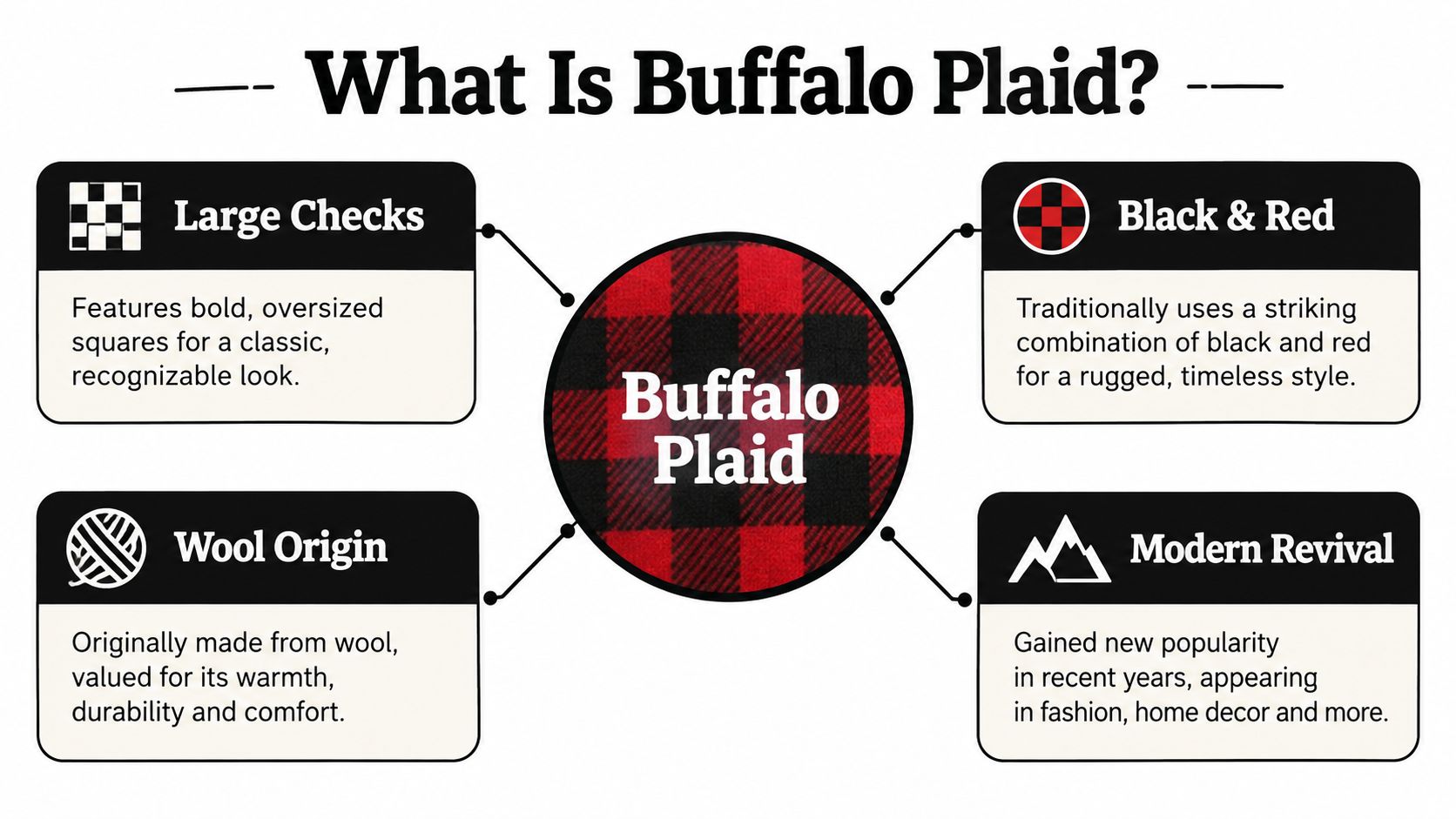
A buffalo plaid comforter uses a large-scale check made by alternating two colors. Where the colors overlap, the woven or printed structure creates a darker dual-tone square. That simple geometry gives the design strong contrast without requiring an elaborate motif, which is why it can anchor a bed while leaving room for quieter sheets, pillows, curtains, and rugs.
The most recognizable version combines red and black, but buffalo plaid also appears in black and white, navy and cream, forest green combinations, gray palettes, and other neutral pairings. A black-and-white version can feel clean and graphic in a contemporary bedroom, while red and black carries a more traditional lodge or holiday association.
A pattern with a longer history than seasonal décor
The design's documented American commercial history reaches back to 1850, when Woolrich introduced a red-and-black buffalo-check shirt made from wool flannel, as described in Woolrich's account of the pattern's history. Its deeper lineage is associated with Scotland and the Rob Roy MacGregor tartan, which appears in portraits dating to the early eighteenth century and is recorded in the Scottish Register of Tartans.
That history matters because shoppers aren't choosing a disposable seasonal graphic. They're choosing a recognizable textile language that has moved from apparel into home furnishings. In bedding, the large checks become a broad visual field, so the comforter can serve as the room's focal point without looking fussy.
The same consistent geometry can read as rustic in red and black, contemporary in neutrals, festive in holiday colors, or relaxed when paired with natural textures.
| Element | What It Means | Why It Matters for Bedding |
|---|---|---|
| Large checks | Broad squares created from alternating colors | Gives the bed a clear focal point |
| Two-color structure | Overlapping colors create darker squares | Produces contrast without a complicated print |
| Wool-associated history | The design has strong roots in flannel apparel | Supports its cabin, lodge, and heritage associations |
| Adaptable palette | The color combination can change while the geometry stays recognizable | Lets the same style work in modern, farmhouse, coastal, or country rooms |
| Comforter application | The pattern covers a large textile surface | Makes fabric, fill, quilting, and dimensions just as important as appearance |
Before comparing products, ask five practical questions: What is the shell made from? What fills it? How much does it weigh? How is it quilted? Will its finished dimensions cover your mattress? Those answers tell you more about everyday satisfaction than the words “rustic,” “premium,” or “cozy.”
Fabric, Fill, and Construction Choices That Matter
A buffalo plaid comforter's appearance comes from the pattern, but its feel comes from the materials beneath it. Start by separating the shell from the fill. The shell is the fabric against your skin and the surface that carries the plaid. The fill creates loft, warmth, and much of the comforter's weight.
Cotton or cotton-rich shells generally feel breathable and can support moisture transfer. Polyester microfiber commonly offers abrasion resistance, easier care, and lower shrinkage. Neither choice is automatically superior. A warm sleeper may prefer a breathable cotton shell with a lighter fill, while a household prioritizing simple washing may value microfiber and a resilient synthetic fill.
Read the specification in layers
Fill type changes the character of the bed. Polyester fill and down alternatives can provide consistent loft with straightforward care. Cotton batting tends to create a flatter, more quilt-like profile. A weighted construction is a separate category altogether, so its total mass and care requirements deserve close attention rather than being compared casually with a lightweight comforter.
Construction determines whether the fill stays where the manufacturer placed it. Quilting intervals hold the interior material in sections, while secure stitching and bound edges help the comforter resist shifting and fraying. A very loose quilting pattern may create larger uninterrupted panels, but it can also allow more movement during washing. A densely quilted design may feel more structured and keep the fill distributed more evenly.
Look past vague phrases such as “hotel feel” or “all-season comfort.” Ask for the fiber composition, fill type, finished weight, quilting method, edge finish, and laundering instructions. If you're also protecting the mattress from spills and body moisture, a practical guide to choosing the right mattress protector can help you evaluate the bedding system rather than treating the comforter as an isolated purchase. For a broader buying checklist, the comforter buying guide is another useful reference.
| Shell Fabric | Common Fill | Best For | Care Note |
|---|---|---|---|
| Cotton | Down alternative or polyester | Sleepers who want a softer, more breathable surface | Follow temperature guidance closely to limit shrinkage |
| Cotton blend | Polyester or cotton batting | Households balancing comfort and simpler maintenance | Check the blend before choosing a drying temperature |
| Microfiber | Polyester or down alternative | Frequent washing, guest rooms, and active households | Lower shrinkage can simplify care, but heat may still damage loft |
| Quilted cotton | Cotton batting or a lighter synthetic fill | A flatter, layered bed with a traditional appearance | Quilting and drying method affect shape retention |
| Microfiber with dense quilting | Synthetic fill | Durable everyday or rental use | Inspect seams and binding after laundering |
“Cooling” is not a fiber by itself. A comforter feels cooler or warmer because of the combined effect of shell breathability, fill quantity, loft, quilting, and room conditions. A lightweight cotton-shell comforter may suit a warm climate, while a lofty synthetic-filled version may be better for someone who needs more insulation. The check pattern doesn't decide that outcome.
Three Ways to Style Buffalo Plaid in a Bedroom
A buffalo plaid comforter can change character when you change the surrounding materials. The bed remains visually bold, but the room's furniture, wall color, lighting, and accent textiles tell the eye how to interpret it.
Modern minimalist
Use black-and-white, charcoal-and-cream, or another restrained combination over a simple upholstered or low-profile bed. Keep the sheets solid, add pillows in one neutral shade, and choose lamps with clean shapes. The pattern becomes a graphic architectural element rather than a country reference.
This approach works especially well when the room already has uncluttered surfaces. A single textured throw at the foot of the bed can soften the contrast without introducing another dominant print. Matte black hardware, pale wood, and warm white walls help the plaid feel intentional instead of stark.
Rustic lodge
Choose red and black, deep green, brown, or a warm cream variation, then support it with wood, leather, wool-like textures, and woven accessories. A solid sheet set keeps the bed from becoming visually crowded. Add one or two pillows with subtle animal, stripe, or heritage-inspired detail, but avoid covering every surface in checks.
A lodge room benefits from contrast between the strong plaid and tactile solids. Rough wood, a braided rug, or a simple metal reading lamp can reinforce the setting without turning the room into a themed display.
Relaxed coastal
The coastal direction depends on the palette more than the pattern. Try navy and cream or a softened gray combination with white linen-look sheets, pale wood, woven baskets, and blue-gray accents. Keep the window treatments simple and let daylight balance the larger checks.
For more general ideas on building warmth through texture, lighting, and small details, how to make your home cozy offers useful decorating context. The goal isn't to copy a style exactly. It's to choose supporting pieces that make the comforter feel at home.
Let the comforter carry the strongest pattern. Use solid pillows, quiet curtains, and natural textures to give the eye somewhere to rest.
A useful styling test is to look at your existing room before buying. If the furniture is sleek and neutral, research modern combinations. If you already have wood and warm materials, a lodge palette may feel natural. If the room is light, airy, and blue-toned, a coastal interpretation can keep the plaid from feeling too heavy.
Sizing and Fit for Deeper Mattresses
A comforter can look attractive online and still disappoint once it reaches the bed. The usual problem isn't the printed width alone. It's the relationship between the comforter's finished dimensions, the mattress depth, the topper, the foundation, and the way you want the sides to hang.
A pillow-top mattress has an added cushioned layer at the top. A deep mattress has more vertical height than a conventional profile, while an extra-deep setup may include a thick topper, foundation, or both. Retailers don't always use these labels consistently, so measure the actual bed instead of relying on a category name.
Measure the bed you sleep on
Place the mattress on its foundation exactly as you use it. Measure the mattress length and width, then measure from the top sleeping surface down to the point where you want the comforter to finish. Include the topper in that vertical measurement. If you use an adjustable base, measure with the bed flat and consider how the comforter shifts when the head or foot rises.
Your target side drop is a design choice. Some sleepers want the comforter to end near the lower mattress edge, while others prefer more coverage over the foundation. A standard comforter may look short when paired with a thick mattress because its width must cover the top surface before it can fall down the sides.
Use a mattress-based bedding dimensions guide to compare nominal comforter sizes, but verify the manufacturer's actual measurements before checkout. You can also follow this guide on how to measure mattress depth when a topper, platform, or adjustable base makes the setup less straightforward.
Check more than the label
Look for:
- Finished dimensions: “King” or “Queen” can conceal meaningful differences between brands.
- Edge construction: Bound or reinforced edges help the comforter hang cleanly and resist wear.
- Total loft: A lofty comforter may occupy more vertical space than its flat measurements suggest.
- Movement: On an adjustable base, a comforter with insufficient width can pull upward when the head section rises.
- Insert interaction: If the plaid cover is used with a separate insert, account for the insert's loft and the cover's internal ties.
A good fit should cover the mattress without constant tugging. If you're between sizes, compare the manufacturer's width and length with your measured target drop rather than automatically sizing up. Oversizing can create unnecessary weight and bunching, especially when the fill is lofty.
Certifications, Safety, and What Labels Really Mean
Bedding labels often place chemical safety, fiber origin, softness, and performance in the same marketing paragraph. They're separate issues. OEKO-TEX STANDARD 100 is a harmful-substance screening certification, not a warmth, loft, durability, or colorfastness rating.
For skin-contact bedding, Product Class 2 applies to products with direct skin contact. The framework tests textile products and their components against limits for substances such as certain azo colorants, heavy metals, and per- and polyfluorinated substances. That scope matters because a comforter includes more than the visible plaid shell. Thread, piping, labels, backing fabrics, fasteners, and filling may also require assessment.
Ask what the certificate covers
A credible retailer should be able to clarify whether certification applies to the finished comforter, specific components, or only a fabric used during production. The OEKO-TEX STANDARD 100 requirements explain why intended use and skin contact affect the testing framework.
Ask these questions before buying:
- What is certified? Is it the completed comforter or only the shell fabric?
- What are the fibers? Request shell, fill, backing, and trim information.
- Where was it made? Country of manufacture adds useful supply-chain context.
- What does the claim exclude? Certification for harmful substances doesn't promise lasting loft or resistance to fading.
- Can the documentation be verified? A logo without scope or product identification leaves important gaps.
“Organic cotton” describes fiber production standards, not necessarily every component in the finished comforter. “Hypoallergenic” may refer to a fill choice or a company's own product positioning, so ask for the specific basis of the claim. “Non-toxic” is broad language unless the seller identifies the tested substances and the applicable standard.
A saturated red-and-black plaid isn't automatically more hazardous because it looks intense. Color alone doesn't establish chemical risk. At the same time, a certification label without product-level documentation may not answer your question. Recent OEKO-TEX regulatory changes for 2025 included tighter controls for some substances and processing chemicals, which reinforces the value of checking current certification details rather than assuming every label means the same thing.
Care and Laundering for Real Households
A bold plaid makes wear visible. A faded black square, gray cast, pilling, or a shifted fill can stand out more than it would on a low-contrast solid. That doesn't mean buffalo plaid comforters are impractical. It means the care label and construction deserve attention before the first wash.
A household with children, pets, or frequent guests should start with the manufacturer's laundering instructions, not a favorite routine. Use the recommended water temperature, a suitable detergent, and enough room for the comforter to move through the machine. Overloading compresses the fill and prevents thorough rinsing.
Protect contrast and loft
Wash dark and light bedding separately when the care instructions allow it. Avoid unnecessary heat, especially when the shell includes cotton or the fill depends on loft. A low or moderate drying setting, periodic repositioning, and complete drying can help reduce clumping. If the comforter is too large for your home machine, a commercial washer with adequate capacity may be safer than forcing it into a crowded drum.
AATCC TM61 provides an accelerated colorfastness method in which a test cycle of 45 minutes or less can approximate the color and surface changes associated with five home or hand launderings, depending on the selected option and temperature. Its vigorous option uses conditions comparable to five home machine launderings at approximately 60 °C, as described in the AATCC TM61 overview. That doesn't mean every washable comforter has passed this test. It means shoppers should distinguish documented wash testing from an unsupported “machine washable” claim.
For detailed handling of synthetic down-alternative construction, use this guide to launder a down-alternative comforter correctly.
Make everyday maintenance easier
Spot-clean small marks promptly with a compatible cleaning solution and a light touch. Rubbing aggressively can disturb the surface or spread dye. Air the comforter between full washes, use a cover when practical, and store it completely dry in a breathable container rather than a sealed plastic bag.
A short-term rental host should pay particular attention to edge binding, quilting security, and documented care limits. Frequent changeovers reward a comforter that can be cleaned consistently without high heat, overcomplicated instructions, or delicate components that fail after repeated handling.
Choosing the Right Buffalo Plaid Comforter for You
Start with the problem you're trying to solve, then choose the specifications that address it.
- Maximum warmth: Look for a higher-loft fill, secure quilting, and a shell that feels comfortable against your skin. Don't assume flannel or plaid alone provides insulation.
- Year-round versatility: Favor a lighter construction, breathable cotton or cotton-rich shell, and a removable cover or layering system. You can add a blanket when the room is cold instead of buying one heavy comforter for every season.
- Deep-mattress fit: Measure the complete bed, including the topper and foundation, then compare those measurements with the comforter's finished dimensions.
- Certified safety: Look for product-level OEKO-TEX STANDARD 100 information, complete fiber declarations, and clear documentation of what was tested.
- Rental-grade durability: Prioritize reinforced edges, stable quilting, resilient shell fabric, and care instructions that suit frequent washing.
Consider two shoppers. One wants a red-and-black comforter for a drafty guest room and values warmth above all else. The other has a deep mattress, sleeps warm, and wants a neutral pattern that can remain in place year-round. The first should compare fill loft and construction. The second should begin with dimensions and thermal weight, then use color to finish the decision.
The strongest buffalo plaid comforter isn't the one with the boldest product photograph. It's the one whose materials, fit, safety documentation, style, and care requirements match the way you live.
SouthShore Fine Linens offers oversized bedding and thoughtfully finished comforters designed for deep mattresses, active homes, and year-round bedroom styling. Visit SouthShore Fine Linens to explore bedding that combines refined textures, practical fit, and dependable care.


