
Soft Microfiber Sheets Explained: Feel, Fibers and Care
Will a sheet feel soft because it's well made, or because its surface has been brushed to feel that way? With microfiber, the answer can be both. The best way to judge soft microfiber sheets is to look beyond the first touch and consider the fibers, fabric construction, finish, sleeping temperature, and care routine.
Microfiber can offer a smooth feel and easy laundering, but it isn't automatically cool, durable, or environmentally low-impact. Understanding what creates its softness helps you decide whether it suits your bed and what to check before buying.
What Microfiber Sheets Are Made Of
Microfiber describes how fine the fibers are, not a quality grade. The textile definition centers on filaments under one denier, and most microfiber sheets use polyester. Nylon versions are also sold.
Think of a yarn as a small space that can hold either a few thick ropes or a crowd of fine threads. Because microfiber strands are extremely fine, many can fit into that space, helping create an even, smooth fabric surface. The result can feel sleek against the skin, much as a closely packed lawn feels more uniform underfoot than a patch of coarse, widely spaced stalks.
Synthetic fibers are a major part of the textile industry. A review of synthetic textile fibers reports global production of approximately 74 million metric tonnes, or 61.77% of total worldwide fiber production. Polyester can be engineered into lightweight, tightly constructed fabrics that are smooth, quick to dry, wrinkle-resistant, and relatively inexpensive.
How to read the label
A label that says only “microfiber” tells you about fineness, but may not identify the fiber. “Polyester microfiber” names the most common material, while a “microfiber blend” calls for a closer look at the listed percentages.
That still doesn't tell you everything about the sheet. Fabric density, yarn construction, weave or knit, and surface finish all affect how it feels and performs. Fiber loss can also occur at multiple stages of textile production, so composition and construction provide more useful information than the word “microfiber” by itself.
Microfiber at a Glance Against Cotton and Linen
Use this table as a quick comparison. Each row describes a quality you might notice in daily use, and no fiber leads in every category.
| Criterion | Microfiber (polyester) | Cotton (percale or sateen) | Linen |
|---|---|---|---|
| First touch | Smooth, silky, slightly warm | Crisp (percale) or smooth (sateen) | Textured, cool, softens with use |
| Breathability | Lower; can trap heat | High | Very high |
| Wrinkle resistance | High | Moderate | Low |
| Drying after washing | Fast | Moderate | Moderate |
| Pilling over time | Can pill when fabric is low quality or over-brushed | Low to moderate | Low |
| Typical price | Low to moderate | Moderate to high | High |
| Dust mite resistance | Tight weave limits access; not allergen-proof | Depends on weave density | Depends on weave density |
| Shrinkage in wash | Low | Can shrink if not preshrunk | Low to moderate |
Microfiber's appeal is practical: it often has a smooth first touch, resists wrinkles, and dries quickly after laundering. That can make it a useful choice for a busy household or a rental bed that needs to look tidy after frequent washes. If that's your priority, compare the details in this guide to cotton versus microfiber sheets.
Cotton offers a different range of feels. Percale is crisp, while sateen has a smoother surface, and either can feel breathable when the construction suits the sleeper. Cotton quality also changes with weave and fabric construction, so the fiber name alone isn't a complete guide.
Linen feels textured and cool to the touch, and softens with use. It's also a higher-priced choice. If you wake up warm during summer, breathability may matter more than wrinkle resistance; if your main goal is a smooth bed that's easy to launder, microfiber's convenience may matter more.
Choose by the row that matters most to you. Then check the fabric's other trade-offs before deciding.
Why Microfiber Feels So Soft
A dense carpet of short, fine grass feels gentler than a bundle of coarse straw. More fine ends sit close together, so fewer rough, prominent ends reach the skin. Microfiber can create a similar effect by packing fine filaments into a smooth, uniform fabric surface.
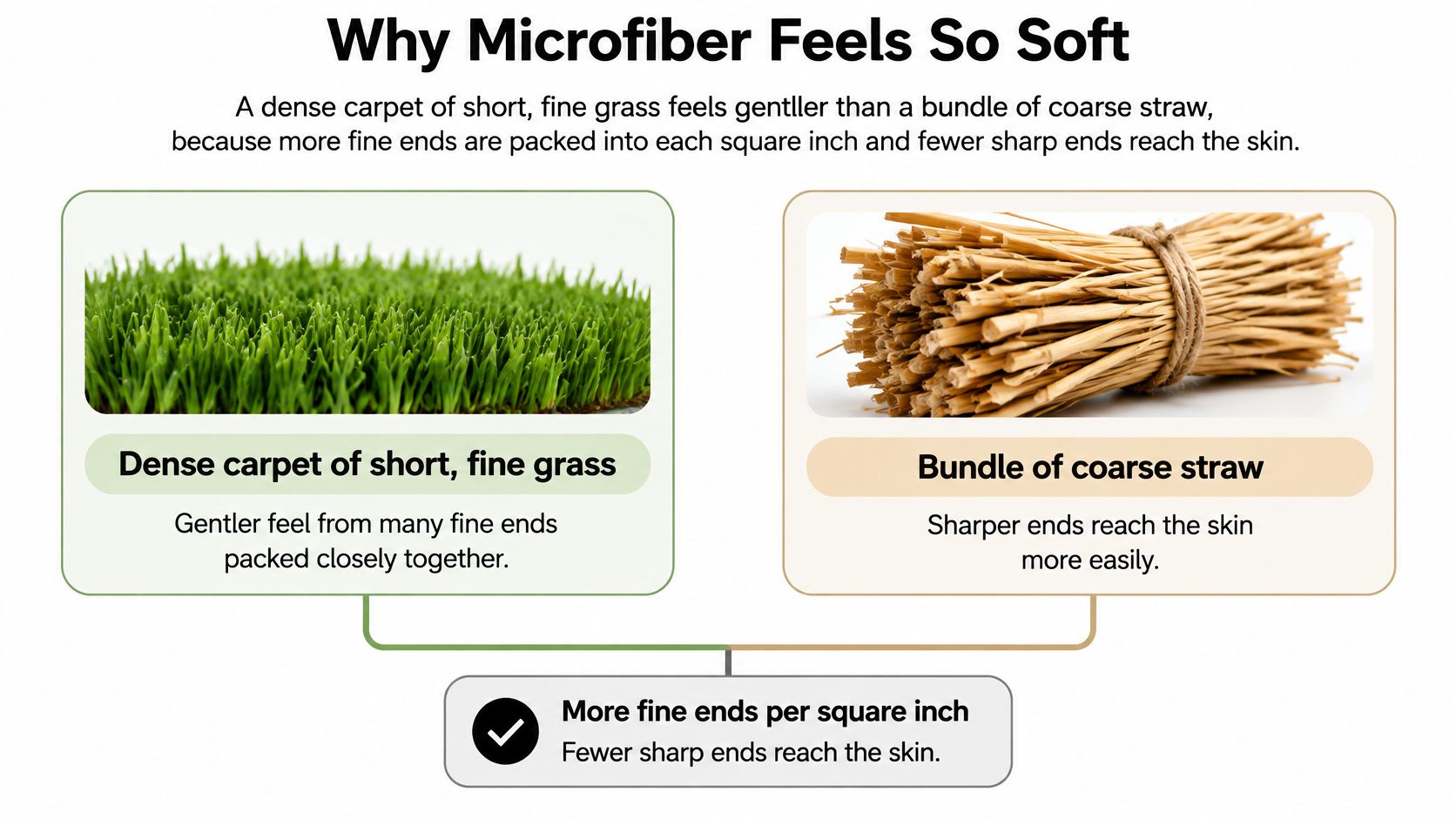
Softness comes from several parts of the fabric working together:
- Filament fineness: Finer filaments can create a smoother surface.
- Yarn construction: The way those filaments are grouped affects the fabric's hand and strength.
- Fabric weight: A fabric's weight influences how substantial it feels and drapes.
- Weave or knit structure: The arrangement of the yarns affects the surface and flexibility.
- Finishing: Brushing raises fine fiber ends to create a warmer, peach-like feel.
Brushing can make fabric feel inviting, but too much surface raising can contribute to linting or pilling if the fibers aren't well anchored. A finish can also make a new sheet feel especially soft at first, while repeated laundering and abrasion change the surface. For more on the factors behind sheet feel, see this guide to what makes sheets soft.
What to check in person
Rub the fabric lightly against your palm and notice whether the surface feels consistent. Look for an even finish without thin or rough patches, and check the label for fiber content, fabric weight, and finishing details. Give the fabric a few seconds against your skin rather than judging it with a quick pinch.
Here's a short visual explanation of how fiber texture contributes to feel:
Where Microfiber Sheets Fall Short
The most common concern is heat. Polyester microfiber may feel warm or less breathable than cotton or linen, especially in a warm room or beneath heavy bedding. A cold sleeper may welcome that warmth, while someone who wakes up damp may not.
Another possible issue is pilling or linting. Lower-density fabric or an overly brushed surface may develop small balls with wear and friction. Static can also become noticeable in dry air or after tumble-drying. These are related to the fabric and care conditions, not to whether a label says “microfiber.”
Shedding during laundering is another consideration for synthetic bedding. In a peer-reviewed domestic laundry study, mechanically treated polyester samples dominated by fleece and jersey constructions released an average of 161 ± 173 milligrams per kilogram per wash, compared with 27 ± 14 milligrams per kilogram for tested woven nylon samples with filament yarns. The PLOS ONE laundry study found the polyester samples released approximately six times more fiber by mass.
Those results don't mean every microfiber sheet sheds at the same rate. Construction, finishing, fabric age, and washing conditions all matter, and the tested materials weren't a universal stand-in for every sheet. Still, they make it sensible to consider fiber shedding alongside softness and durability when choosing bedding that will be laundered repeatedly.
Say two people share a bed and find their sheets clammy in summer. Before replacing the entire set, they could try a lighter blanket or a more breathable mattress protector, then see whether the bed feels more comfortable. Fit the fabric to the sleeper and the whole bedding setup, rather than expecting one sheet to solve every temperature complaint.
How to Choose Quality Microfiber Sheets
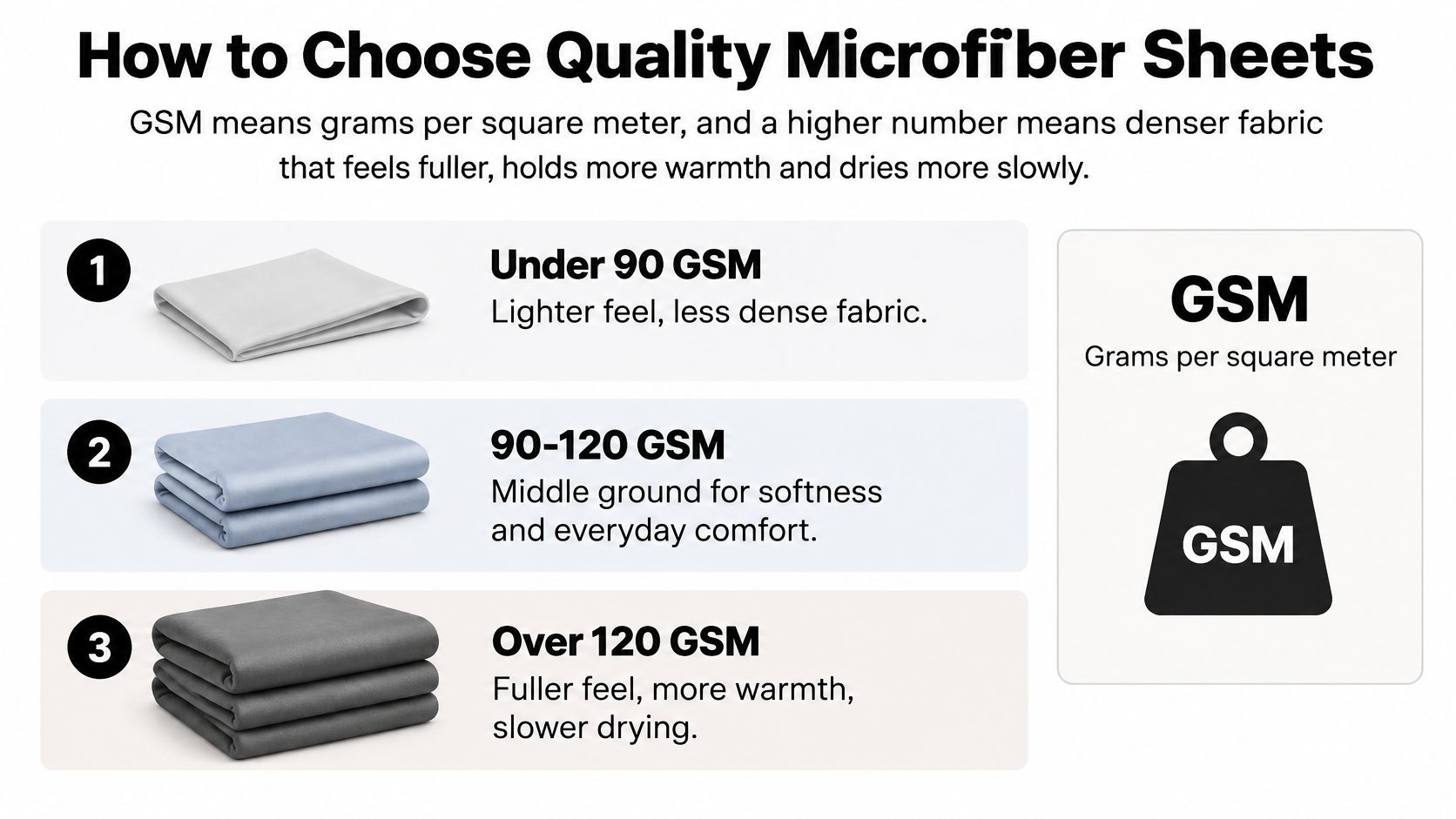
GSM means grams per square meter. A higher GSM means thicker microfiber fabric, which generally feels fuller and can hold more warmth. As a practical starting point, consider how much insulation you want and how quickly you need the sheets to dry.
| GSM band | Feel and drape | Suits | Trade-off |
|---|---|---|---|
| Under 90 GSM | Light, airy, drapes softly | Warm sleepers and hot climates | Less insulation; may show wear sooner |
| About 90 to 110 GSM | Balanced, smooth, everyday weight | Year-round use | Middle ground; check finish and pilling |
| Above 110 GSM | Dense, full, warmer hand | Cold bedrooms and winter use | Slower drying; can feel heavy in summer |
A buyer comparing two sets can use this checklist:
- Confirm the fiber content. Look for a clear statement such as polyester microfiber, rather than relying on the word “microfiber” alone.
- Compare the GSM. SouthShore Fine Linens offers microfiber in 90 GSM, 100 GSM, and 110 GSM weights. A higher GSM means a thicker fabric, so choose according to the feel and warmth you want.
- Check the finish. Double-brushed microfiber is one finishing approach used to create a softer surface. The feel still needs to hold up to laundering.
- Look for pilling information. If the seller provides a pilling test result, it gives you a useful point of comparison.
- Check the fit. For deep-pocket sheets, compare the pocket depth with your mattress height so the fitted sheet can stay in place.
Thread count tells you less about microfiber than fabric weight and construction. For a broader explanation of how to assess bedding beyond a single number, see this guide to choosing quality sheets beyond thread count.
Verify skin-contact safety separately
Performance and chemical-safety checks answer different questions. The OEKO-TEX STANDARD 100 certification framework tests textile components for harmful substances, with limits adjusted to the product's intended skin contact. It identifies bed linen as Product Class 2, the category for products with direct skin contact. Check that a current certificate covers the exact product or certified component configuration, rather than relying only on a general claim about the fiber.
How to Care for Microfiber Sheets So They Stay Soft
A simple routine can protect the surface and make laundering more predictable. It can't eliminate all fiber release, but drying choices matter: a microfiber data portal's annual insights reports that tumble-drying released approximately 3.5 times more fibers than washing in a cited study, while detergent and softener didn't significantly change emissions in that study.
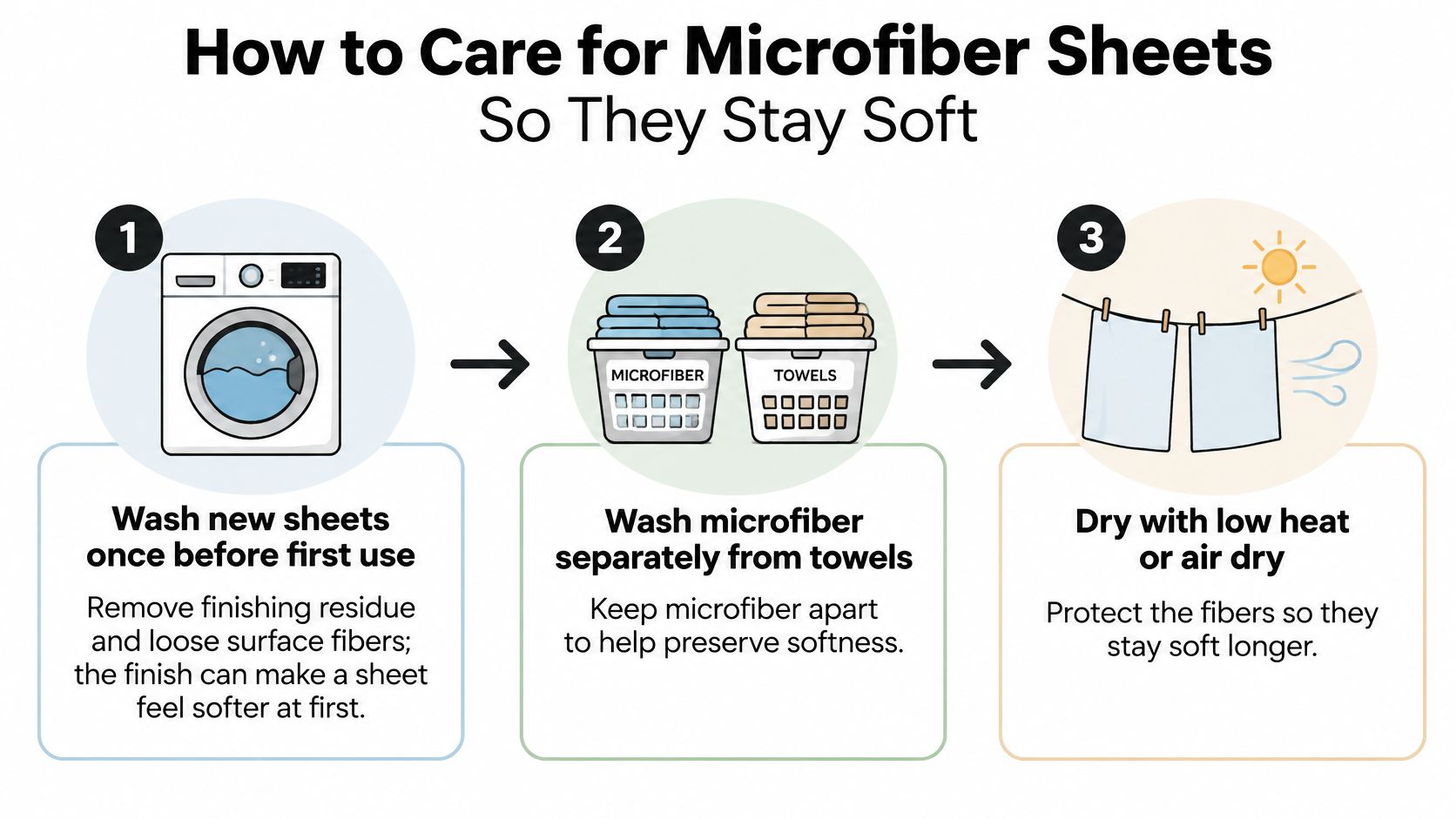
- Wash new sheets once before use. This helps remove finishing residue and loose surface fibers; a finish may make a new sheet feel softer initially.
- Separate them from lint-heavy laundry. Wash microfiber apart from towels and fleece so transferred lint doesn't cling to the smooth surface.
- Use cold or moderate-temperature water. Avoid hot cycles when they aren't needed, because gentler temperatures help protect the fabric and its finish.
- Use a standard dose of mild detergent and leave room in the washer. A properly loaded machine lets the sheets move and rinse more freely.
- Skip fabric softener. The cited study didn't find a significant effect on emissions; the practical reason to skip it is to avoid coating or changing the fabric's finish.
- Choose a shorter cycle when the sheets aren't heavily soiled. Less agitation can help limit unnecessary wear.
- Air-dry when practical. If you use a dryer, choose low heat and remove the sheets promptly.
- Clean the lint filter after each load. This keeps the dryer's collection system clear for the next cycle.
For a complete routine, follow these microfiber sheet laundering steps. If pills form, trim them with a fabric shaver rather than pulling them by hand. If static bothers you, try a shorter, lower-heat drying cycle. If the fabric feels dull or coated, try washing with less detergent and make sure the sheets rinse thoroughly.
Drying method has a clearer connection to shedding than switching detergent. Air-drying when practical is a concrete step, but don't treat one laundry adjustment as proof that a product is sustainable. Care choices can reduce some sources of wear and fiber release without establishing the full impact of a textile across its life.
Deciding Whether Soft Microfiber Sheets Suit Your Bed
Microfiber is a sensible option if you want a smooth feel, easy care, and a lower-cost sheet. It may be a poorer fit if you sleep hot or prefer a crisp, cool hand. Use the table as a starting point, then account for the mattress protector, blankets, room conditions, and your own comfort.
| Situation | Lean toward microfiber? | Why | Better alternative |
|---|---|---|---|
| Cold bedroom, sleeps cool | Yes | Smooth feel, low cost, and retained warmth | Higher-weight microfiber |
| Hot sleeper or humid climate | Usually no | Lower breathability can feel warm | Percale cotton or linen |
| Frequent washing, rentals, or hospitality | Yes | Wrinkle-resistant and fast-drying; built for easy care | Cotton if a crisp feel matters more |
| Wants a crisp, cool hand-feel | No | Microfiber feels smooth rather than crisp | Percale cotton |
| Allergy-prone sleeper | Possibly | Tight weave limits dust mite access but isn't a cure | Certified cotton plus a protector |
Bedding fiber can influence sleep through skin temperature and thermal comfort, but direct evidence specific to microfiber sheets remains limited. A systematic review in the Journal of Sleep Research also highlights that material performance needs to be considered alongside room temperature. Softness, moisture handling, airflow, and warmth are separate properties, so no fabric is universally cooling.
If you wake up sweaty, first look at the bedroom temperature, mattress protector, and blankets. A heavy top layer can trap warmth even when the sheet itself isn't the main problem. Adjust one layer at a time and notice whether you feel different at bedtime and in the morning.
SouthShore Fine Linens' microfiber products are double-brushed, hypoallergenic, and dust mite resistant. Before buying any set, compare its listed GSM, certificate coverage, fit, and wash label with the checklist in this article; after you start using it, pay attention to how it feels over a week of nights.
Explore SouthShore Fine Linens for double-brushed microfiber sheets in multiple weights, along with bedding designed for everyday comfort and practical care. Compare the fabric weight and fit with your sleep preferences, then choose the set that suits the way you want your bed to feel.


