
Queen Sheet Sizes: The Complete Reference Guide
Queen sheets are designed for a 60 by 80 inch mattress, but modern mattresses often require deep or extra-deep pockets, commonly 14 to 22 inches, to fit properly. The queen label tells you the surface size, not whether the fitted sheet will reach securely around your mattress.
You buy a queen set, wash it, and discover that the fitted sheet keeps pulling off one corner. Or the flat sheet barely reaches beneath the mattress, even though the package says “queen.” The problem usually isn't the queen footprint. It's the gap between a nominal size and the actual height of your bed.
Queen sheet sizes make sense once you treat bedding as a fit system. Width and length identify the mattress category, while pocket depth, topper height, elastic design, overhang, and shrinkage determine whether the sheets stay in place.
Understanding Queen Sheet Dimensions
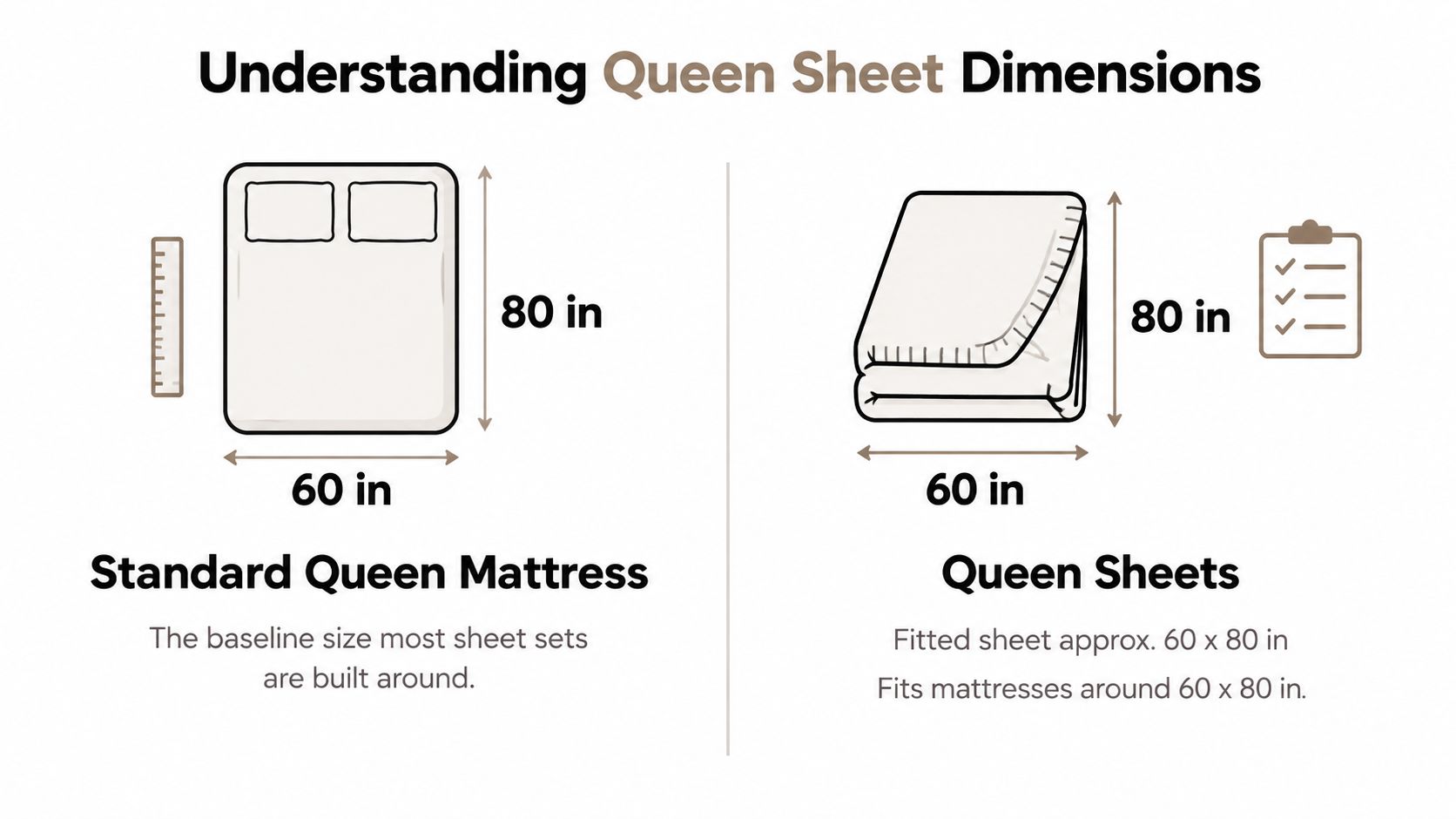
A queen mattress has a 60-inch width and 80-inch length, approximately 152.5 by 203 centimeters. Queen fitted sheets are cut for this surface footprint, as documented in Sierra's bedding guide.
The footprint covers 4,800 square inches, calculated by multiplying 60 by 80. That area describes the sleeping surface only. A fitted sheet also needs fabric to descend along the sides, wrap beneath the mattress, and maintain tension around its edges.
Why the queen label isn't enough
Queen remains a common choice because it provides more sleeping room than a full bed while using less width than a king. A queen mattress is 7 inches wider and 5 inches longer than a full mattress, and 16 inches narrower than a king mattress, according to Casper's bed sheet size guide.
The surface dimensions stay the same while the vertical fit changes. A 14-inch traditional mattress and a 20-inch pillow-top mattress can share the same 60-by-80-inch footprint, yet the second requires a deeper pocket. Add a topper, and its height becomes part of the sheet's fitting calculation too.
Practical rule: Use “queen” to identify the surface size. Use the pocket-depth specification to select the sheet.
Measure from the highest sleeping surface to the mattress's bottom edge, including any protector or topper that will stay in place. This measurement shows how much fabric must travel down the sides and tuck underneath. A sheet can match the queen footprint precisely and still pull off the corners if its pocket is too shallow.
Standard, Deep, and Extra-Deep Pocket Options
Pocket depth describes how far a fitted sheet can extend down the mattress. The categories overlap across brands, so use the product's stated compatibility range as the final check rather than relying on the category name alone.
| Pocket Type | Depth Range | Best For |
|---|---|---|
| Standard pocket | 14 to 16 inches | Traditional mattresses and moderately tall constructions |
| Deep pocket | 17 to 20 inches | Thicker memory foam, hybrid, and pillow-top mattresses |
| Extra-deep pocket | 21 inches or more | Oversized mattresses, substantial toppers, and especially tall beds |
These ranges reflect the pocket-depth guidance in Casper's sheet sizing resource. A standard pocket may be suitable when the mattress height falls comfortably within its range. If the sheet barely reaches the underside, however, normal movement can pull the elastic over the corners.
A deep pocket gives the sheet more vertical fabric, but more depth isn't automatically better. Excess fabric can bunch beneath a shorter mattress, create loose areas, and reduce the tension that keeps the sheet smooth. Choose the smallest stated range that accommodates the full measured height with a practical margin.
Match the pocket to the mattress
For a mattress with a built-in pillow top, measure from the highest point of the sleeping surface. Don't measure only the core mattress beneath the cushion. If you add a topper later, the sheet must accommodate the combined height.
Elastic construction also matters. Some fitted sheets use corner elastic, while others extend elastic around more of the perimeter. A broader elastic design can distribute tension more evenly, which may help on mattresses that shift or flex.
For a broader buying framework covering fabric, construction, and fit considerations, consult this sheet buying guide for better sleep. If your mattress needs substantial vertical coverage, compare the specifications in this guide to extra-deep pocket fitted sheets before choosing a set.
Anatomy of a Queen Sheet Set
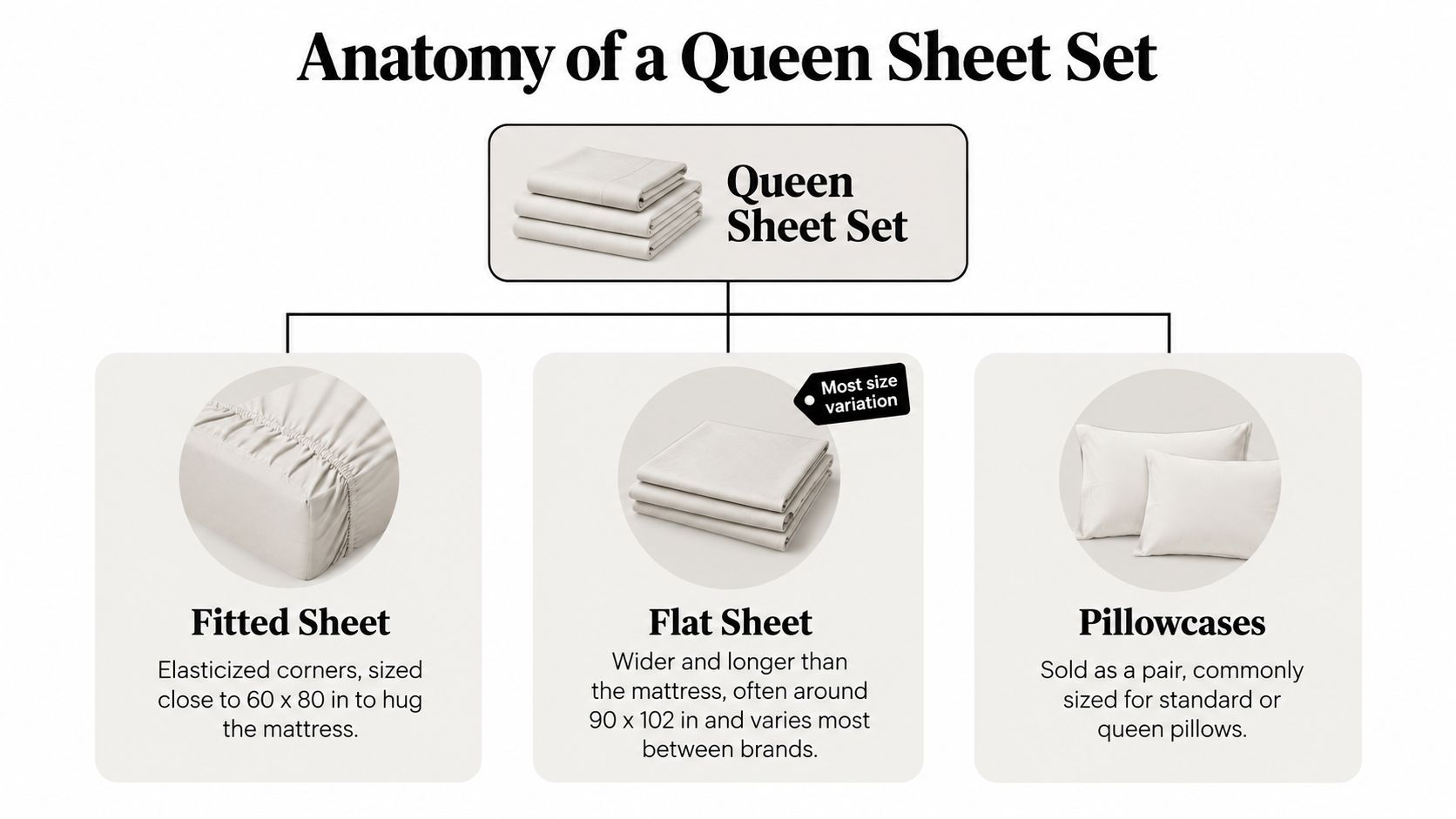
A queen sheet set usually includes a fitted sheet, a flat sheet, and pillowcases. Each piece follows a different fit system, so two packages marked queen can behave differently on the same bed. The label identifies the mattress footprint, while pocket depth, fabric dimensions, and intended use determine how the set performs.
The fitted sheet is cut for a 60 by 80 inch mattress. Its side panels and elasticized corners wrap over the edges and hold the sheet beneath the mattress. Check the package for the compatible pocket-depth range separately. A topper, pillow-top surface, or adjustable base can change the required depth even when the mattress length and width remain unchanged.
Flat sheet dimensions vary more
Published queen flat-sheet dimensions vary by brand, typically 90 to 110 inches wide and 90 to 114 inches long. Check the listed measurements rather than relying on the queen label alone. Flat sheets work like a cover with extra fabric for draping and tucking, so their cut affects how securely they stay in place.
A wider or longer sheet can suit a taller mattress, a topper, or a preference for deeper tucks. A shorter cut may be comfortable on a lower bed but provide less fabric for securing around the sides. Laundering can also change the final fit, depending on the fabric and care instructions.
Pillowcases are generally made for standard or queen pillows. Confirm the included dimensions and quantity in the set description. For guidance on fabric choice and construction, see Gorins Furniture & Mattress sheet advice.
How to Measure Your Mattress for Sheets
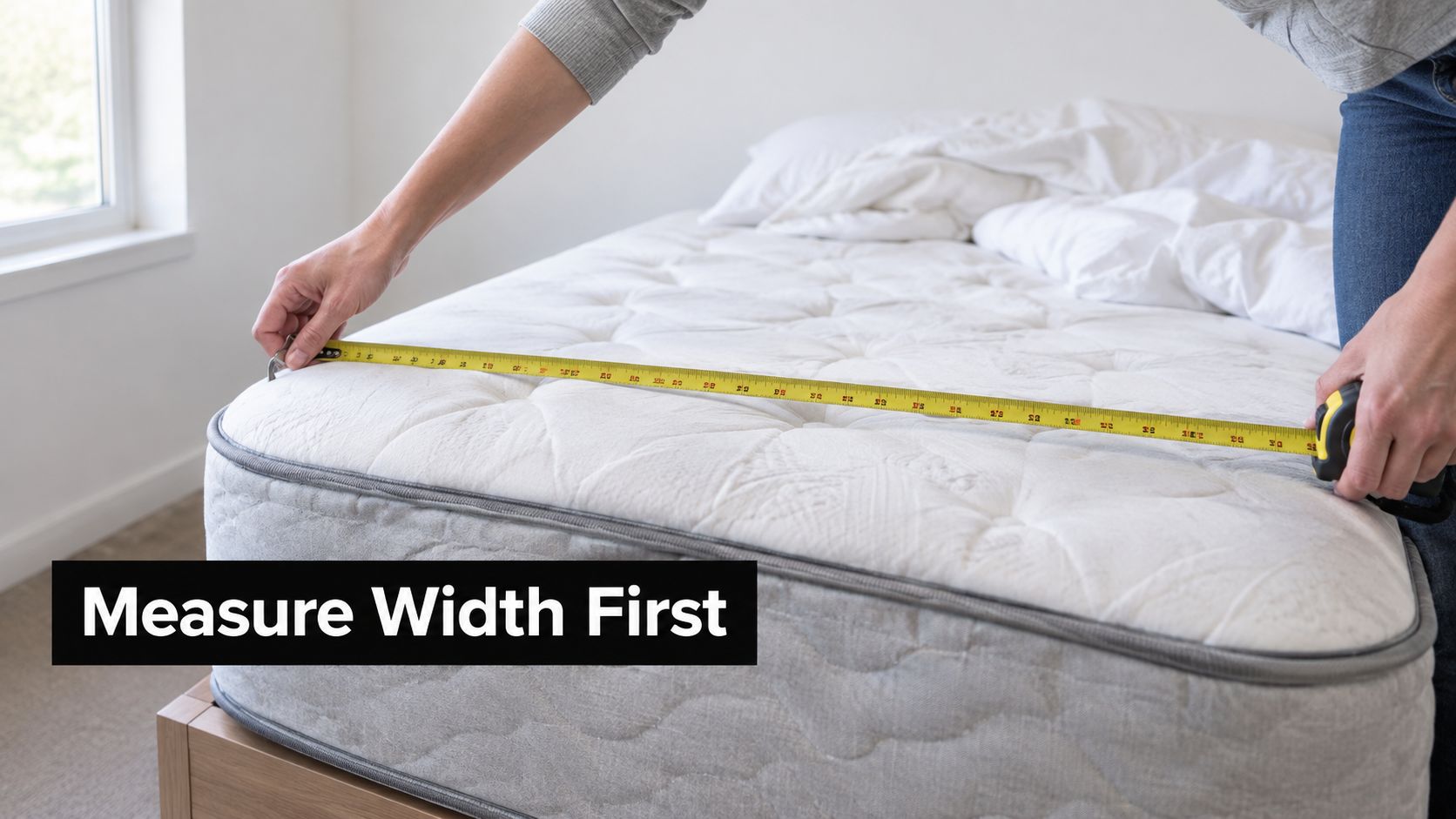
A tape measure removes most of the guesswork. Measure the bed in the condition in which you'll use it, not with the topper, protector, or other layer removed.
Follow these steps
- Measure the width. Place the tape across the mattress from one side seam to the other. A queen should measure close to 60 inches across, but measure yours rather than assuming.
- Measure the length. Run the tape from the head of the mattress to the foot. A standard queen length is 80 inches.
- Measure the full height. Start at the top of the sleeping surface and measure down to the bottom edge. Include a mattress topper and any thick protector that will stay beneath the fitted sheet.
- Check the construction. Note whether the top is quilted, pillow-topped, rounded, or especially flexible. These details can consume more pocket fabric than a flat-sided mattress of the same measured height.
- Compare the result with the package. Look for a stated pocket-depth range, not just “deep” or “queen.” The sheet should reach underneath without excessive strain.
Account for how you use the bed
Your preferred tuck also affects the right flat sheet. A sheet used only as a light cover needs less tuck-in fabric than one pulled firmly beneath the mattress. For a fitted sheet, leave enough room for the elastic to sit underneath rather than stretching it diagonally across the corners.
Cotton sheets may shrink during washing, so read the care and shrinkage information before buying. If you want a more detailed measuring walkthrough, use this guide to measure mattress depth before ordering.
Special Considerations for Adjustable Bases and Toppers
An adjustable base changes the fitting problem because the mattress bends as the head or foot section rises. A fitted sheet that looks secure when the bed is flat may pull toward the center when the base moves, especially if the pocket is already close to its limit.
Elastic placement becomes important here. Look for a fitted sheet with elastic that maintains tension around the mattress rather than relying only on short corner bands. A little flexibility helps the sheet follow the bed's movement without forcing the corners upward.
Toppers increase the effective height
A topper adds height even though the mattress underneath still has the same queen footprint. The sheet must cover the combined mattress-and-topper depth, and the topper may also make the upper surface softer and more rounded.
Platform beds create a different issue. The frame itself doesn't change the queen dimensions, but a low platform can make excess sheet fabric more visible around the sides. Adjustable bases need movement tolerance, while platform beds often reward a neater, more controlled fit.
For beds with moving sections, compare construction details in resources about sheets for adjustable beds. SouthShore Fine Linens offers queen sheet sets with fitted-sheet options listed at 21 to 22 inches deep, which may suit mattresses that need extra-deep coverage, as shown in its product information.
Common Queen Sheet Fitting Mistakes to Avoid
A sheet can fit the queen footprint and still fail overnight. For example, a fitted sheet with the right length and width may keep popping off because its pocket depth does not cover the mattress and topper together. Treat queen sizing as a fit system, not a single label.
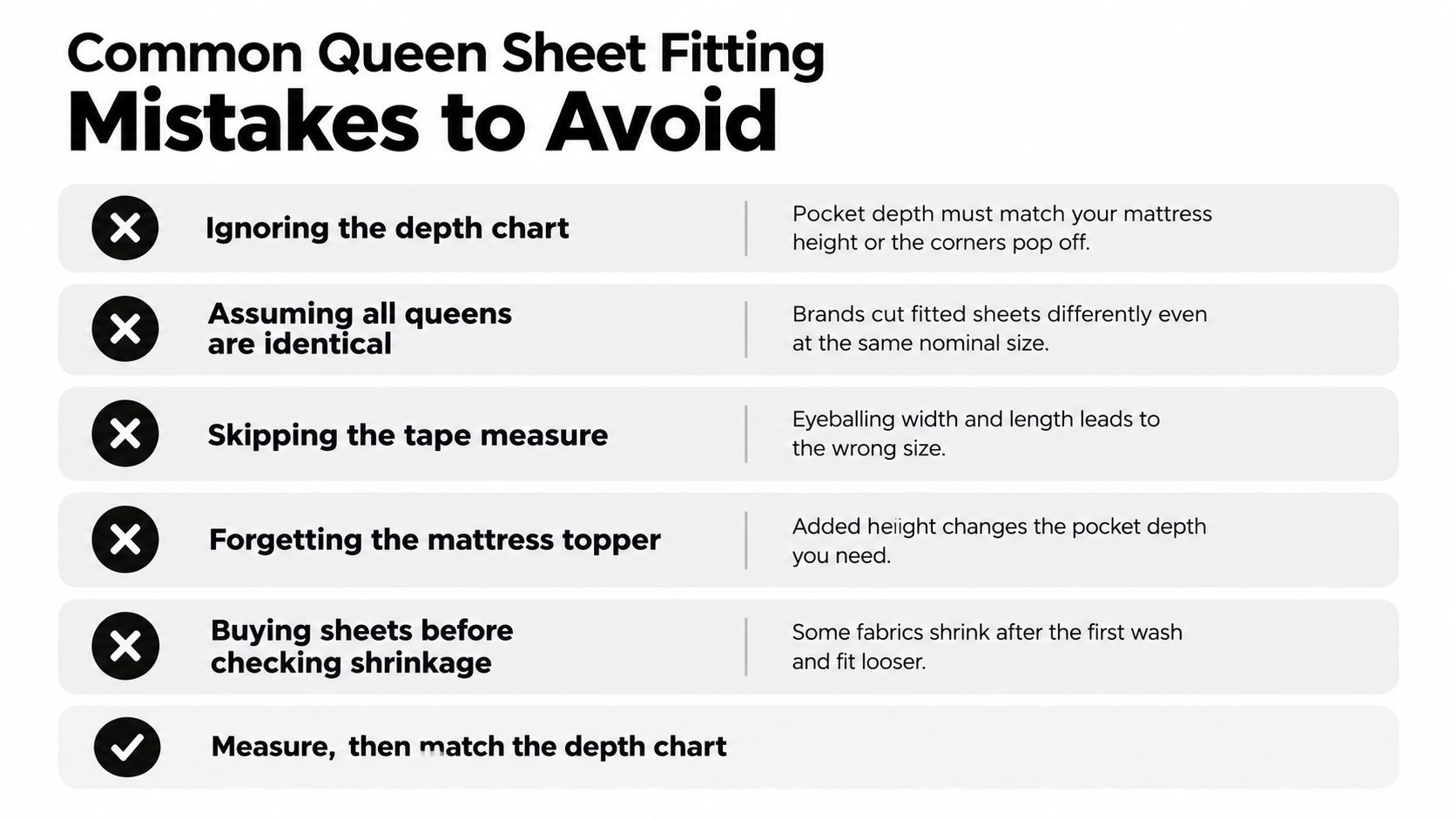
- Ignoring the depth chart: Match the pocket range with the mattress's measured height. A shallow fitted sheet can pop off even when its length and width are correct.
- Assuming all queens are identical: Brands may use different side-panel dimensions, elastic designs, and fit tolerances under the same queen label.
- Skipping the tape measure: Measure the width, length, and full height instead of estimating from the mattress type or brand.
- Forgetting the mattress topper: Include every layer that will remain beneath the sheet. A topper increases the required pocket depth without changing the queen footprint.
- Buying before checking wash care: Material and care instructions can affect shrinkage, so pre-wash measurements may not remain the final measurements.
Flat sheets deserve their own check
Flat sheets need enough fabric for both side overhang and tuck. A 90-inch flat sheet on a 22-inch-deep mattress leaves roughly 3 inches of tuck on each side after covering the top, which may not hold the sheet securely overnight. Published queen dimensions vary across brands and regions, as shown in Wayfair's sizing guidance.
Check the actual flat-sheet measurements when you want a particular drape. The queen label alone cannot tell you whether the fabric will reach beneath a tall mattress or stay neatly tucked at the sides.
The Evolution of Mattress Thickness and Sheet Fit
Older bedding assumptions often centered on a simpler mattress profile. Modern beds may combine foam, springs, quilted tops, cooling layers, and separate toppers, so the same 60 by 80 inch footprint can have a much greater vertical measurement.
That change explains the move toward deep and extra-deep pockets. The fitted sheet still needs to cover the same sleeping surface, but it must travel farther down the sides before the elastic can grip underneath.
Why the label feels less useful now
A size chart that lists only width and length leaves out the measurement most likely to cause failure. Buyers with hybrid mattresses, plush tops, or adjustable bases need compatibility information that describes depth and movement, not just the nominal category.
The same principle applies outside ordinary bedrooms. Care facilities and specialty beds have their own sizing constraints, so readers comparing unusual configurations may find hospital bed sheet sizes useful as a reminder that mattress context affects fit.
A queen sheet is not a single measurement. It's a surface size plus a depth requirement and a way of securing the fabric.
Measure before shopping, then choose the pocket category that fits the measured height. That process is more reliable than assuming a familiar mattress style automatically matches a familiar sheet size.
Quick Reference for Queen Sheet Sizes
Use this checklist when comparing queen sheets:
- Queen footprint: 60 by 80 inches, approximately 152.5 by 203 centimeters. Confirm the mattress surface with Saatva's size reference.
- Fitted-sheet fit: Measure the mattress height, including protectors and toppers. Match that total to standard pockets, about 14 to 16 inches, deep pockets, about 17 to 20 inches, or extra-deep pockets, 21 inches or more.
- Flat-sheet fit: Check width and length separately, since coverage varies by brand. See Wayfair's guide.
- Adjustable bases: Leave enough fabric for movement so corners do not pull free.
Measure first, then compare the listed pocket depth and flat-sheet dimensions with your setup. A familiar queen label identifies the surface, not the complete fit system.
If you need more coverage, SouthShore Fine Linens offers queen sheet sets, including deep-pocket options.


