
How to Make a Bed with a Quilt: The Layered Guide
You've smoothed the sheets, fluffed the pillows, and placed the quilt on top, yet the bed still looks oddly uneven. One side hangs lower, the top edge slips beneath the pillows, and the quilt seems too small for the mattress. This is especially common with modern deep mattresses, where standard bed-making instructions often stop at “center the quilt” without explaining how to judge proportion.
Learning how to make a bed with a quilt is less about piling on layers and more about controlling fit, alignment, and visual weight. The right sequence creates a bed that feels comfortable at night and composed during the day, without forcing a bulky duvet or a collection of unnecessary throws into the arrangement.
Setting the Stage for a Cozy, Layered Bed
On a 14- to 16-inch mattress with a 2-inch topper, a standard queen quilt may leave only a 6-inch drop, exposing the fitted sheet. The quilt is centered, yet the bed still looks underdressed. Modern mattress depth changes the balance of every layer, so fit and proportion should guide the arrangement before styling begins.
A quilt changes the character of a made bed. Unlike a thick comforter that can conceal the layers beneath it, a quilt has a flatter, more structured presence. It allows the fitted sheet and flat sheet to contribute to the finish, while its stitching, color, and texture become visible parts of the design. On a deep mattress, that structure makes uneven side drops and a short foot drape especially noticeable.
A quilt consists of fabric, batting, and backing, secured with stitching. It behaves more like a finished bedcover than a loose blanket, which explains why it works well as the visible top layer. The word “quilt” entered English around 1300, and the surviving Sicilian Tristan quilt dates to the 14th century, according to the Louisiana Folklife overview of quilt history.
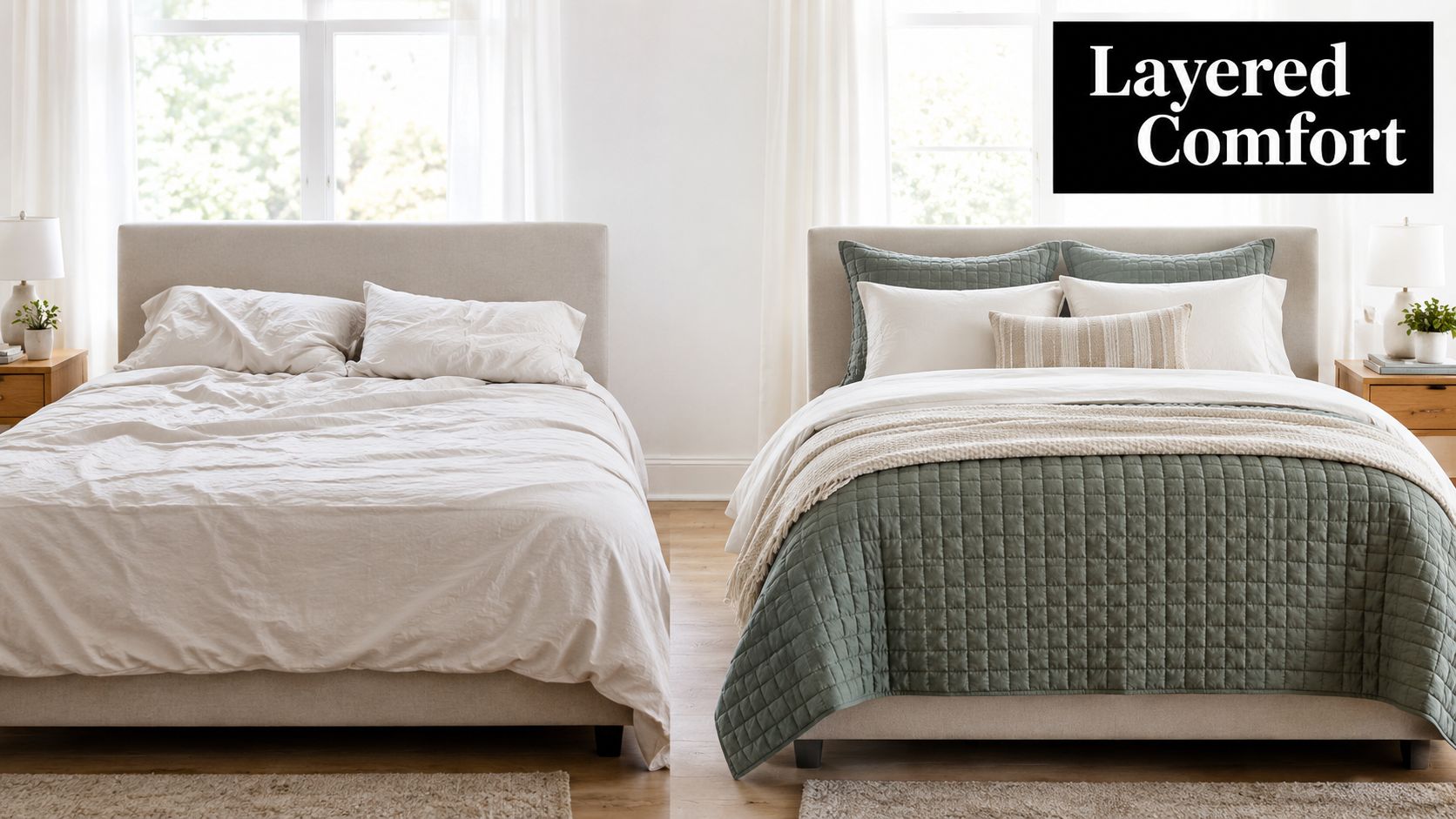
Start with the sleeping layers
Place the bedding in a deliberate order:
- Fitted sheet: Pull it tightly over the mattress and check that every corner remains seated.
- Flat sheet: Position the finished side facing down if you want the folded edge to show cleanly later.
- Quilt: Use it as the visible cover, extending toward the pillows or folding it at the foot.
- Optional duvet or throw: Add warmth only when the quilt does not suit the sleeper or season.
This sequence keeps each layer usable. A sleeper can remove the quilt or duvet without disturbing the fitted sheet, while the room retains a finished appearance during the day.
Practical rule: Treat the quilt as the bed's visual anchor, not as an afterthought placed wherever it lands.
A restrained extra layer can add warmth without crowding the bed. For cold evenings, guidance on choosing the perfect cashmere for cold nights can support a lighter, softer accent instead of another bulky blanket. Aim for contrast, comfort, and controlled volume.
Choosing the Right Quilt Size for Your Mattress
A quilt can have beautiful fabric and still look wrong if its dimensions don't suit the mattress. Width and length aren't enough to judge fit. You also need to account for the mattress depth, plus any topper or pad sitting above it.
Measure the complete sleeping surface before shopping. Include the mattress, topper, and pad in the height, then consider how far the quilt needs to fall over the sides and foot. Bedding guidance from Sleepiverse's mattress and bedding guide specifically recommends measuring the full sleep system because deeper mattresses can make a standard-sized quilt look skimpy.
Use proportion as the deciding test
Lay a tape measure across the mattress width and from the head toward the foot. You don't need to chase a rigid formula, but you do need enough fabric to create a balanced drop on both sides. If one edge reaches close to the floor while the other barely clears the mattress, the quilt will look lopsided even when the center is technically aligned.
A slightly larger quilt can solve this problem. It gives you more room to cover the mattress sides and creates a fuller drape, particularly when the quilt is folded over the foot or layered with a flat sheet. The trade-off is weight and manageability. An oversized quilt may look generous, but it can become cumbersome to wash, fold, or move if the fabric is dense.
For a bed with a deep mattress, compare the manufacturer's measurements with a practical sizing reference such as these king-size quilt measurements. Use the dimensions as a starting point, then adjust for your mattress profile rather than assuming the label alone guarantees coverage.
Diagnose the problem before changing the style
If the quilt appears too short at the sides, don't try to hide the issue with extra pillows or a dramatic foot fold. The styling will only disguise the imbalance temporarily. If it slides toward one side, confirm that the mattress is centered on the frame and that the quilt's top edge is parallel with the headboard before changing its fold.
The right quilt size does more for a polished bed than an elaborate arrangement placed over the wrong dimensions.
Building the Foundation Sheets and Layers
A quilt can't sit neatly on a wrinkled or shifting base. Start by clearing the mattress, then inspect the fitted sheet before you put anything else on the bed. Pull each corner fully over the mattress and smooth the center outward, rather than dragging wrinkles from one side to the other.
If the fitted sheet has deep pockets, check that the pocket depth suits the mattress and topper together. A sheet that barely grips the underside may look acceptable at the head of the bed but creep loose during the night. A practical bedding guide from Indian River Furniture can help you compare the roles of sheets, mattress protectors, comforters, and other layers before you assemble the bed.
Create a clean top surface
Spread the flat sheet evenly over the fitted sheet. Keep its top edge level across the mattress, and leave enough fabric near the pillows to fold back over the quilt later. That visible band gives the bed a crisp transition between the sleeping surface and the decorative cover.
At the foot, choose between a relaxed finish and a more secure one. For a neatly finished bed, fold the lower corners into hospital corners, keeping the fabric smooth rather than pulling it so tightly that the sheet strains. If you prefer easier access, tuck only the lower edge and let the sides fall naturally beneath the quilt.
The flat sheet should support the quilt, not compete with it. Remove visible bunching before adding the quilt because a heavy top layer can conceal wrinkles without eliminating them. Once the quilt settles, those uneven areas tend to reappear as ridges or diagonal pulls.
Keep the layers functional
The sheet and quilt serve different purposes. The sheet creates the washable sleeping surface, while the quilt supplies structure, warmth, and the visible finish. An optional duvet belongs above the quilt only when you want extra insulation or a softer, fuller silhouette.
Avoid adding a layer just because the bed looks bare. Too many thick pieces can obscure the quilt's stitching and make the arrangement difficult to maintain. A smooth foundation gives you more styling options than a crowded one.
Positioning and Draping the Quilt Correctly
Place the quilt on the bed with the top edge parallel to the headboard. Don't start by folding it. First, let it open fully so you can see whether the pattern, seams, and edges sit squarely.
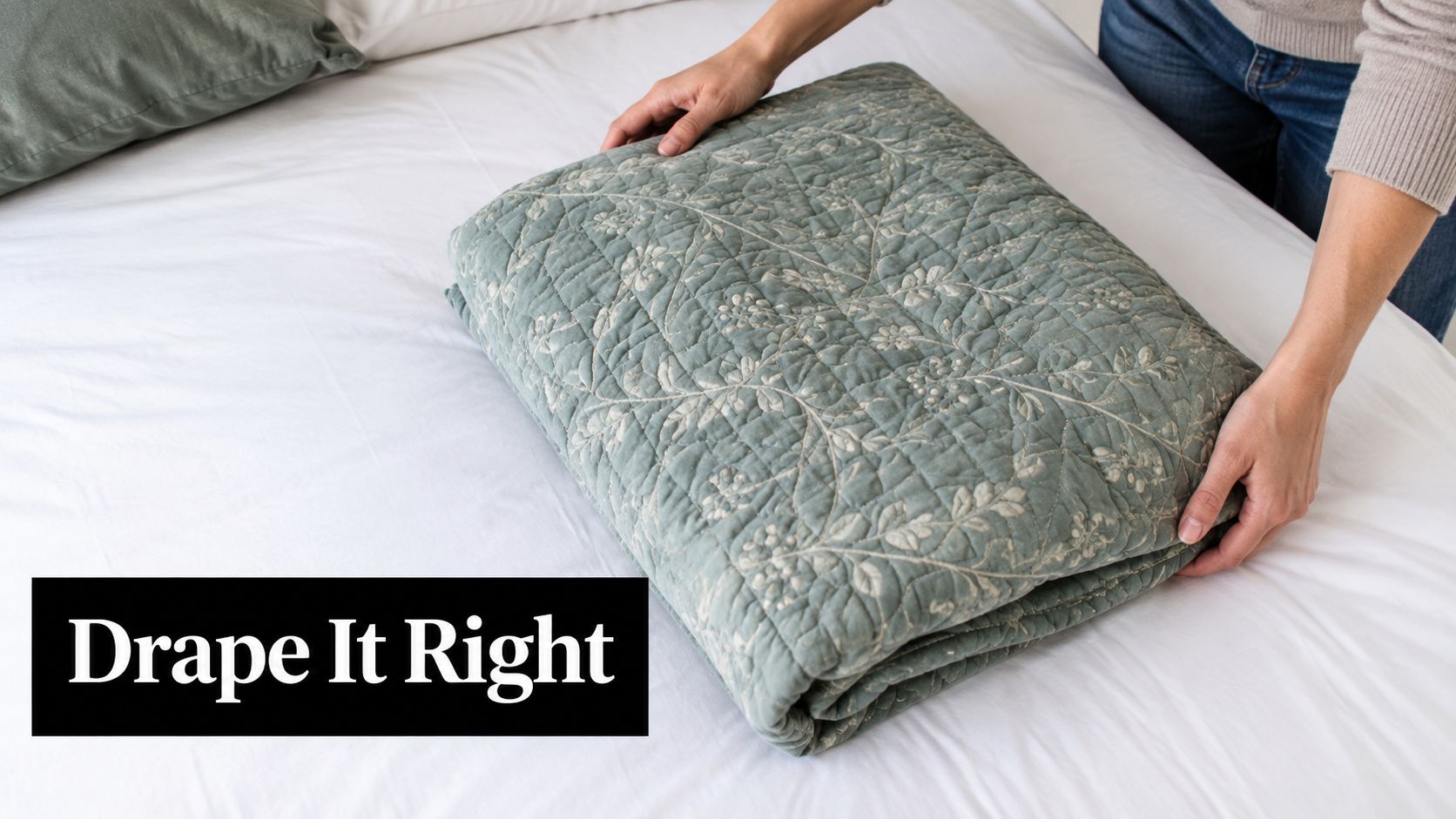
Stand at the foot of the bed and compare the side drops. Adjust the quilt from the center, not by tugging only one corner. If you pull the left side into place without checking the right, you can create a diagonal top edge that makes the whole bed look twisted.
Choose the top edge position
For a fully covered bed, bring the quilt toward the pillows and stop it before the headboard or pillow arrangement. Leave enough flat sheet exposed to fold back over the quilt. This small contrast creates a clean border and prevents the quilt from disappearing beneath the pillows.
For a more relaxed look, fold the quilt back near the upper portion of the mattress and let the sheet show beneath it. The fold should be straight across the bed unless you deliberately want an informal diagonal drape at the foot.
A quilt can also sit primarily at the bottom of the bed. Fold it neatly into thirds, then place it across the lower portion with equal side overhang. This approach works particularly well when the quilt has a strong pattern or decorative stitching that deserves to remain visible rather than being buried under pillows.
Alignment check: Look at the headboard, mattress edges, and quilt border together. If those lines don't run in the same direction, reset the quilt before styling anything else.
For additional guidance on how quilts function as bed covers, consult this comparison of quilts and bed covers. The distinction matters because a quilt can act as the primary cover, a decorative top layer, or a folded accent, and each role calls for a different placement.
Once the quilt is centered, smooth from the middle toward the edges. Don't iron every natural crease out of a quilt. Light texture makes the bed feel usable, but deep diagonal wrinkles usually signal that the layers underneath or the quilt's alignment need attention.
Styling with Folds, Tucks, and Pillows
The most successful styling choice depends on the quilt's role. If it's the main bedcover, keep it broad and orderly. If it's an accent layer, give it a defined fold so it looks intentional rather than undersized.
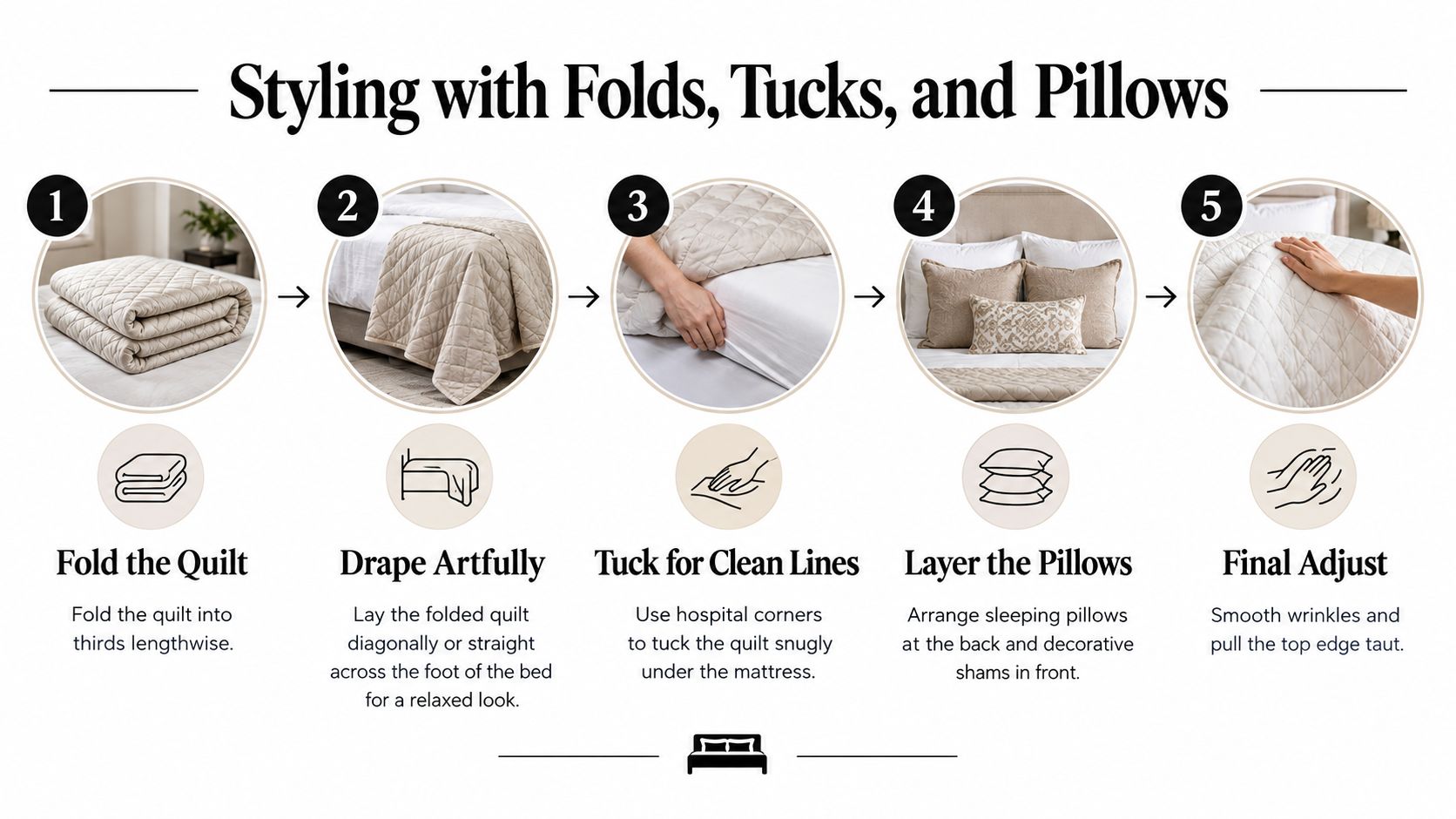
Fold the quilt into thirds lengthwise, then place it straight across the foot for a composed finish. A diagonal drape feels less formal and adds movement, but it requires enough width to reach both sides without looking like a narrow strip. A quilt that barely covers the center should be folded more compactly instead of stretched across the entire bed.
Match the finish to the room
Tucking creates sharper lines. After centering the quilt, smooth the sides and tuck them under the mattress if you want a crisp appearance. Hospital corners can make the foot look architectural, while leaving the sides loose gives the room a softer, more relaxed quality.
Pillows should support the fold rather than hide it. Place sleeping pillows at the back, then add shams or a modest decorative arrangement in front. The exposed band of sheet or quilt should remain visible, because that contrast gives the bed depth.
If you want more ideas for accessorizing your dream bed, focus on coordination rather than accumulation. Pull a color from the quilt into one pillow or nearby textile, then allow the remaining pieces to stay quiet. Too many competing patterns make it harder to see the quilt's texture.
A final smoothing pass matters. Pull the top edge taut without stretching the fabric, straighten the pillow line, and check both lower corners from the doorway. The bed should look balanced from the position where you usually see it, not only from directly above.
Caring for Your Quilt and Bedding
Quilts need gentle, consistent care. Check the maker's instructions before washing, then inspect stitching for loose threads or weak seams. Choose a cycle and detergent suited to the fabric, avoid overloading the washer, and dry the quilt completely before folding it.
Rotate the quilt when practical so sleeping, sitting, and pulling it into place do not wear the same area repeatedly. Vary the fold lines during storage to reduce permanent creases. A breathable fabric container allows air circulation, while long-term plastic storage can trap moisture against natural fibers. This guide to washing and storing quilts explains how material and construction affect the routine.
Quilting holds batting between fabric layers, so thorough drying helps prevent clumping and mildew. Keep stored bedding away from damp areas, and refold it occasionally if it remains packed away.
For modern deep mattresses, care also includes checking fit after laundering. Shrinkage or a shifted filling can change how securely the quilt sits at the foot and sides. Recenter it, smooth the surface, and adjust the fold before use.
SouthShore Fine Linens offers extra-deep-pocket sheets, oversized bedding, quilts, comforters, and coordinated textiles for modern mattresses and layered arrangements. Visit SouthShore Fine Linens for bedding suited to a cleaner fit and smoother daily routine.


