
Hotel Style Sheets Queen How-to Guide for a Luxe Look
You've pulled fresh sheets over the mattress, smoothed the duvet, and arranged the pillows. Then a fitted corner creeps upward, the top sheet barely reaches beneath the mattress, and the bed looks rumpled before anyone's slept in it. Buying hotel-style queen sheets won't fix that unless the fit survives both your mattress setup and your laundry routine.
Start With the Bed You Actually Have
A sheet set can look perfect in a product photograph and wrong on your bed. The difference might be a pillow-top mattress, a topper you added last winter, or an adjustable base that pulls the corners whenever you raise the head. Start with the bed's actual dimensions, not its size label.
A U.S. queen mattress typically measures 60 × 80 inches, or approximately 152 × 203 centimeters, but international queen terminology can differ, as explained in this queen-bed sizing reference. Treat that footprint as a starting point, not a complete sheet specification. It tells you nothing about the height the fitted sheet must cover.
The finished look should be smooth without looking stretched.
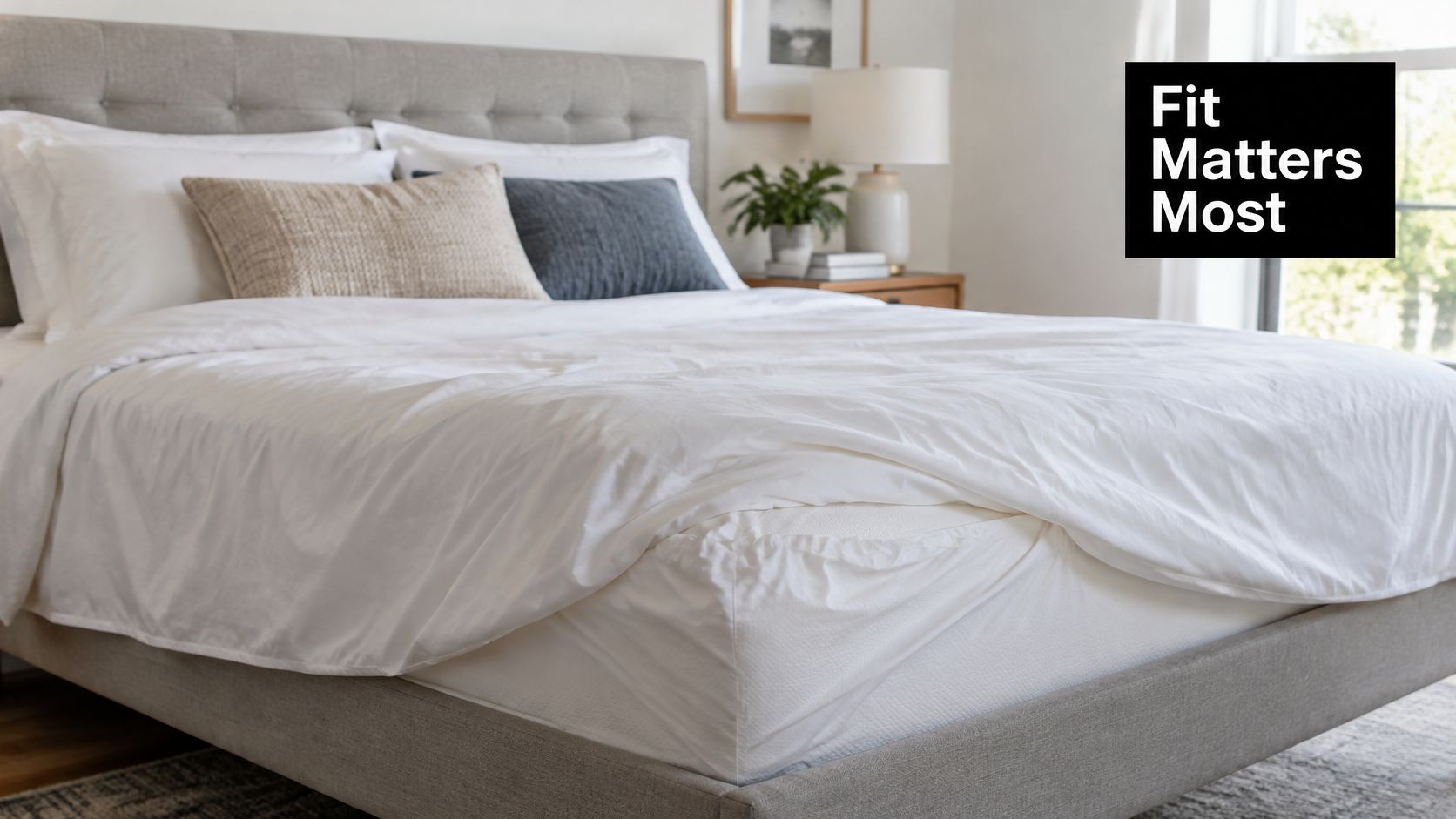
Think in Terms of a Complete Setup
Keep everything you normally sleep on in place when assessing fit. That includes the mattress, topper, pad, and protector. A fitted sheet has to wrap that complete stack, while its elastic needs enough purchase beneath the mattress to stay put.
An adjustable base deserves a movement check, too. Raise it into your usual sleeping position and watch whether the sheet pulls at the corners. For a split configuration, confirm the dimensions of each sleeping surface rather than assuming a conventional queen set will work.
Practical rule: Don't ask decorative layers to hide a fitted-sheet problem.
My buying order is straightforward: establish fit, choose the sleeping surface, check care requirements, then consider appearance. A generous top sheet and coordinated pillows are finishing choices. They can't compensate for a bottom sheet that needs constant adjustment.
Choose a Fabric and Weave That Feels Right
Choose percale for crispness, sateen for smoothness, and consider a cotton-polyester blend when frequent laundering is a priority. There isn't a universal hotel-grade fabric. Your preference matters more than whether a product photograph resembles a resort room.
Separate fiber content from weave when comparing labels. Cotton describes a fiber; percale and sateen describe constructions. A cotton sheet can therefore feel quite different from another cotton sheet, even before you consider yarn quality or finishing.
Choose Your Sheet Construction
| Construction | Typical Feel | Best Fit For | Laundering Consideration |
|---|---|---|---|
| Cotton percale | Crisp, breathable, structured | Sleepers who prefer a fresh, less silky surface | Request shrinkage information and inspect the finish after washing |
| Cotton sateen | Smooth, warmer, softly draped | Sleepers who dislike a crisp hand and prefer a polished appearance | Check the care label and look for surface-wear testing |
| Cotton-polyester blend | Varies with the blend and weave | Busy households and frequently reset guest beds | Ask for wash-test evidence rather than assuming every blend performs alike |
For a sleeper who dislikes a close, silky drape, I'd start with percale. For someone who wants sheets to feel smooth against the skin immediately, I'd compare sateen samples. Neither choice needs to match someone else's definition of luxury.
For a rental or busy family bedroom, make the laundry routine part of the purchase decision. Don't buy a fabric requiring care you won't consistently provide. Ask how the finished sheet behaves after washing, not just how the display sample feels.
Use this comparison of bamboo, linen, and cotton sheets if you're also weighing fiber options. Keep that decision separate from weave and fit. My preference is to judge a sample after laundering whenever possible, because that's the surface you'll live with.
Look Beyond the Threadcount Number
Thread count is a specification, not a quality score. Hospitality guidance commonly places commercial sheets around 180–320 threads per square inch, with approximately 200–400 a practical consumer comparison range; the same hotel sheet thread-count guidance distinguishes crisp, breathable percale from smoother, warmer sateen.
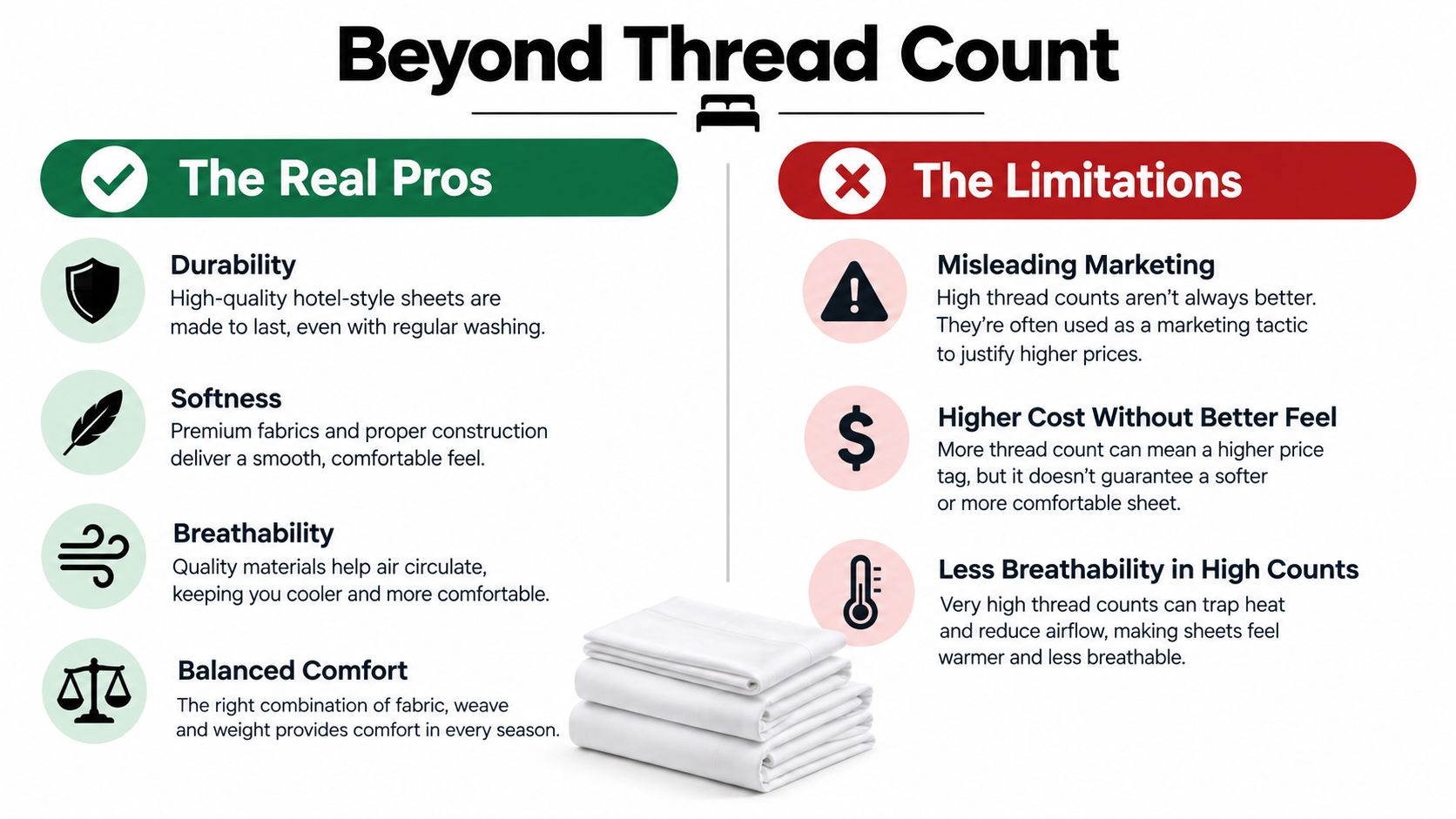
Don't turn those ranges into another rigid shopping rule. Fiber length, yarn quality, weave, and fabric construction also affect performance. A larger number doesn't establish that a sheet will feel better to you or retain its fit.
Use the visual below as a reminder to compare the whole product, not just the headline specification.
Read the Details That Affect Ownership
When a product page leads with thread count, look further down the specification:
- Yarn and fiber information: Look for a clear description rather than luxury language without construction details.
- Seams and hems: Ask for close-up photographs if the stitching and finishing aren't visible.
- Wash performance: Request dimensional-change or durability information where available.
- Care requirements: Decide whether the recommended routine suits your household.
I'd pass on a supposedly premium set if the seller can't explain its construction or finished dimensions. A more modestly positioned sheet with clear specifications is easier to evaluate.
For broader guest-experience context, Irie Tulum Boutique Hotel on memorable stays is a useful companion resource. Keep that perspective separate from textile evidence: an appealing room concept doesn't establish a sheet's technical quality. Evaluate the bedding on information you can verify.
Measure Pocket Depth Before You Buy
Buy the smallest pocket that comfortably accommodates your complete bedding stack and the manufacturer's wash allowance. Choosing the deepest option automatically is a mistake. Insufficient depth can release the corners; excessive depth can leave fabric gathering beneath you.
Use a tape measure and write the measurements down. The dimensional-testing guidance associated with ASTM D4037 supports checking dimensions and laundering-related change rather than relying on nominal sizing alone.
Build a Measurement Worksheet
- Width and length: Measure the sleeping surface directly. Don't substitute the bed frame's dimensions.
- Complete stack height: Leave your topper, pad, and protector in place. Check the sides and corners, especially around a pillow top.
- Product terminology: Confirm whether the listing describes pocket construction depth or the maximum mattress height it accommodates.
- Retention: Check the elastic configuration and ask how the sheet is intended to secure beneath the mattress.
Use this measurement visual alongside the product's own fit instructions.
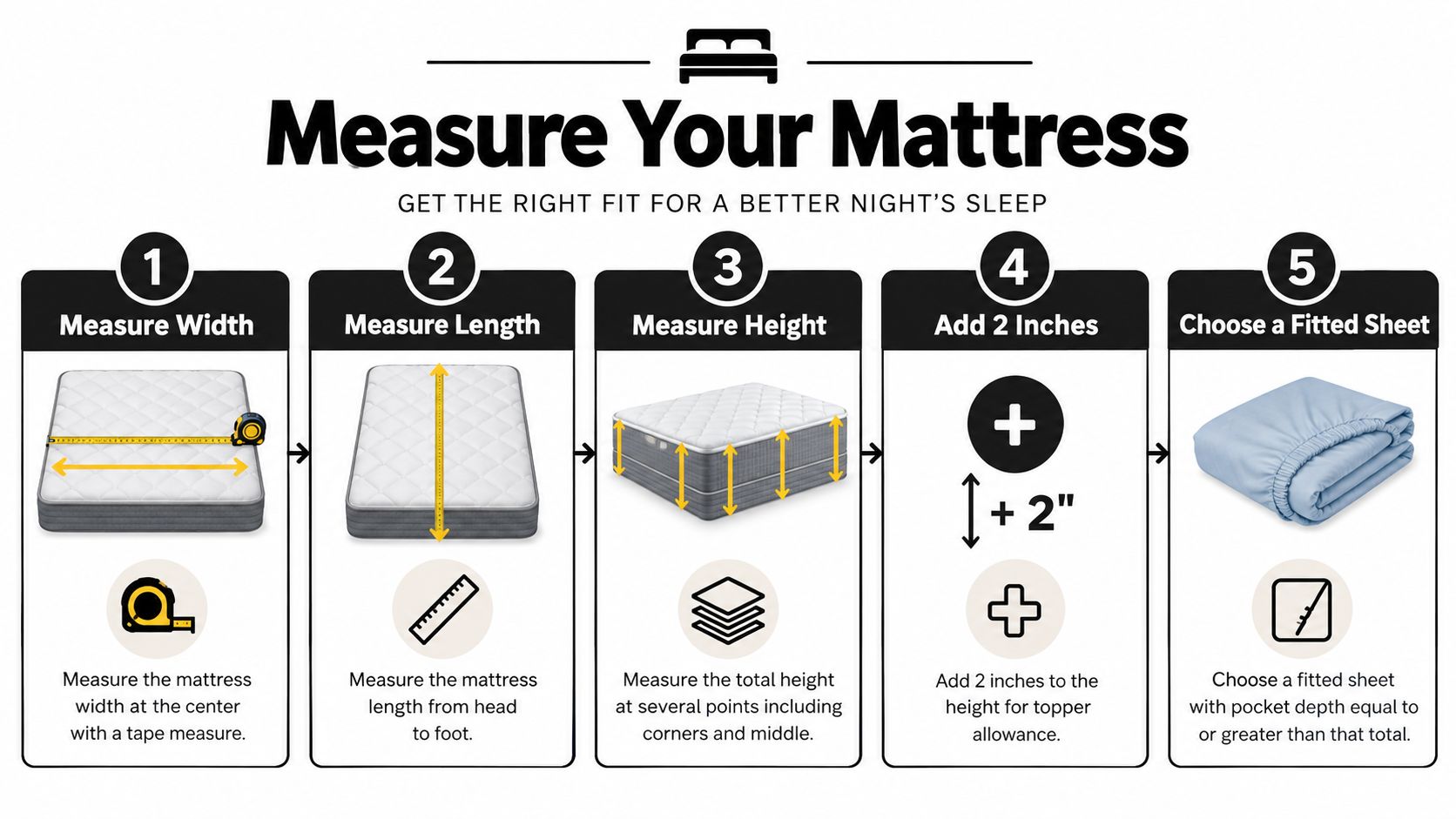
A practical starting allowance is 1–2 inches beyond the measured stack height, as described in the fit and laundering guidance, but don't treat that as a universal shrinkage guarantee. If you've already measured the topper, don't add its height again. Ask the seller whether its stated fit range already accounts for laundering.
The mattress-depth measuring guide can help you record the setup before comparing products.
Pocket depth and flat-sheet coverage solve different problems. Don't use either measurement as a substitute for the other.
For the flat sheet, measure the side drop and foot tuck you want separately. Allow for any fold-back at the head. On an adjustable bed, check both fitted-sheet retention and comfortable top-sheet movement in your usual raised position before approving the setup.
Wash Sheets for Lasting Fit and Feel
Make the first wash a fit test, not just a freshening step. Before laundering a new set, record its dimensions and examine the seams, elastic, and color. Check the return policy before washing so you understand your options if the fit changes.
Inspect the sheets again when they're clean and dry.
Follow a Repeatable Care Routine
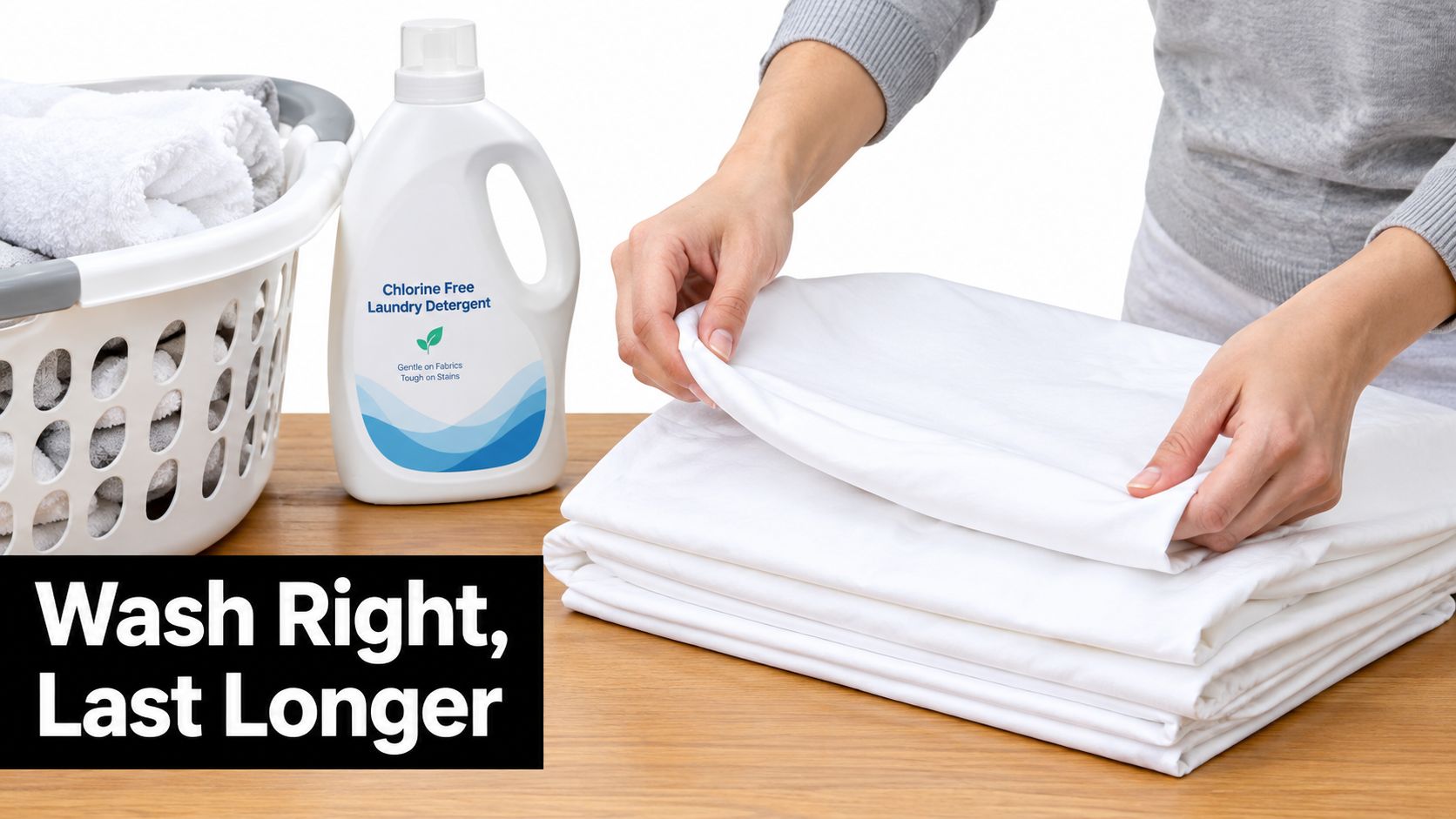
Read the sewn-in care label before choosing a cycle. Where the instructions permit, use chlorine-free detergent, avoid overloading the machine, and control drying heat rather than defaulting to the hottest setting.
Available hospitality benchmarks place durable cotton or blended sheets at approximately 150–200-plus commercial wash cycles, but these are benchmarks, not guarantees, according to this hotel bed-sheet buying guide. That guidance also identifies chlorine exposure, excessive heat, overloading, and aggressive processing as potential causes of accelerated damage.
After the first wash, make the bed with its usual layers and inspect:
- Corner recovery: Does the elastic return securely beneath the mattress?
- Dimensions: Has the fitted sheet become difficult to install, or has the flat sheet lost useful coverage?
- Seam condition: Look for puckering, loose stitching, or pulling at stressed corners.
- Surface and color: Check for unexpected roughness, pilling, or uneven fading.
For a visual companion to your care routine, use the video below while keeping the product label as your primary instruction.
Don't confuse gentle residential care with a commercial sanitation protocol. Hosts and hospitality managers need procedures appropriate to their operation, with textiles validated for that process. Homeowners should follow the sheet manufacturer's instructions rather than trying to reproduce industrial laundering.
Style the Bed Like a Hotel Room
Aim for balanced coverage, not maximum decoration. Start with the fitted sheet secured beneath the mattress, then smooth the surface with your palms. If you have to pull aggressively to remove every crease, reassess the fit instead of adding more tension.
Center the flat sheet so the side overlap looks even. Establish the foot tuck before arranging the fold-back at the head. For a thick mattress, judge coverage from the side of the bed, not only from above.
Build a Restrained Finish
- Set the main layer: Center a duvet or quilt and check that its visible drop looks balanced.
- Arrange sleeping pillows: Straighten the cases and place the pillows in a repeatable arrangement.
- Choose a finishing accent: Use a folded quilt or throw if the room needs texture, rather than adding unrelated layers.
- Check usability: Loosen a restrictive foot tuck and remove decorative pieces that make bedtime cumbersome.
For a relaxed room, I'd keep the top fold soft and use a textured quilt. For a modern room, I'd choose a straighter fold and a quieter palette. A layered bedroom can accommodate more texture, but the edges should still look intentional.
The guide to making a bed look luxurious offers additional styling options. Choose a setup you can recreate without lengthy rearranging.
For rental beds: Keep only the finishing details you're willing to reset after every turnover.
Hosts planning the wider room can also consult Global's Airbnb hosting success guide. My bedding recommendation is to photograph the approved arrangement for whoever resets the room. A clear reference is more useful than asking someone to make the bed look luxurious.
Use a Simple Hotel Style Checklist
The strongest purchase is the sheet set you can fit, wash, and remake without fighting it. Treat fit, feel, and repeatability as connected requirements. A beautiful unwashed sample isn't enough, and neither is a fitted sheet that stays on but feels wrong to you.
Before ordering, compare the product description with your written measurements and care routine. If important details are missing, ask the seller rather than filling the gaps with assumptions.
Before You Buy
- Fiber and weave: Confirm what the sheet is made from and whether its construction matches your preferred feel.
- Finished dimensions: Check both fitted-sheet specifications and flat-sheet coverage.
- Pocket fit: Match the stated range to your complete bedding stack.
- Care instructions: Make sure you can follow them consistently.
- Performance evidence: Ask about shrinkage, colorfastness, and laundering tests when durability matters.
- Purchase terms: Understand the return policy before opening or washing the set.
Oversized bedding is worthwhile when you need additional visible coverage or tuck. Extra-deep pockets make sense when your measured stack requires them. Neither feature is an automatic upgrade for a shallower bed.
For hosts furnishing beyond the bed, Avistar's guide to guest amenities for hosts provides a broader planning resource. Keep the bedding decision practical: choose a setup that feels comfortable to guests and remains manageable for the person doing the laundry.
SouthShore Fine Linens offers queen sheet sets, oversized bedding, and extra-deep-pocket options for modern mattress setups. Bring your mattress measurements and preferred care routine to SouthShore Fine Linens, then compare the listed dimensions and construction before choosing your hotel-style foundation.


