
Hotel Collection Bedding Queen: A Practical Buyer's Guide
You've probably had the experience: you check into a hotel, drop your bag, and sit on the bed for “just a minute.” The sheets feel cool and crisp, the top layer lies smoothly across your body, and the whole bed looks fuller and more composed than the one at home.
That comfort isn't created by a label or an impressive thread-count number. Hotel collection bedding queen refers more usefully to a coordinated system of fit, fabric construction, layering, and care. Once you separate those elements, it becomes easier to recreate the feeling without buying a set that looks luxurious on the package but slips off your mattress or loses its shape after repeated washing.
What a Hotel Bed Actually Feels Like

The first sensation is usually order. The fitted sheet stays anchored when you turn over. The flat sheet has enough material to tuck cleanly instead of pulling loose at the corners. A duvet or coverlet falls in an even plane, and the pillows hold their shape rather than collapsing into a thin ridge.
Housekeeping creates that effect through several coordinated choices:
- Secure fit: The fitted sheet matches the mattress depth, including any topper or pad.
- Generous flat-sheet proportions: Commercial linens often leave enough fabric for firm tucking and a smooth finish.
- Controlled layering: Each layer has a job, from mattress protection to warmth and visual structure.
- Repeatable laundering: The fabric is selected to tolerate frequent washing while retaining its shape and hand-feel.
A common hospitality benchmark places mid-scale hotel percale around 200–300 thread count, with upscale properties often specifying roughly 250–400 thread count. Commercial cotton percale is also generally expected to withstand well over 100 industrial wash cycles before noticeable quality degradation, although fabric weight, construction, and laundering conditions affect the result. You can review the hospitality specifications in this hotel bedding buying guide.
The practical translation: A hotel bed feels polished because every layer fits, supports the next layer, and survives the care routine.
That explains why a retail sheet labeled “queen” can disappoint. A typical U.S.-style queen mattress measures approximately 60 × 80 inches, or 152 × 203 centimeters, but queen sizing varies by country and by manufacturer. Mattress depth varies too, especially with pillow tops, toppers, and adjustable bases.
The phrase “hotel collection” should therefore make you think of a construction philosophy, not a guaranteed sensation. A hotel-style bedding guide can help with the overall look, but your own mattress measurements and care habits determine whether the result works in daily use.
What Hotel Collection Really Means
“Hotel collection” isn't a regulated technical category. One product may use cotton percale, while another uses sateen, a cotton blend, or synthetic microfiber. The label can suggest a crisp, durable, professionally styled bed, but the product page must confirm whether the materials support that promise.
Hotels typically care about three practical outcomes.
The three questions behind the label
Will the bedding survive repeated laundering? Sheets in hospitality face more frequent washing than most household bedding. The important details include fiber type, yarn construction, seam strength, finishing, and dimensional stability.
Will the bedding keep its shape? A queen fitted sheet must continue covering the mattress and stay attached at the corners. A flat sheet needs enough finished width and length for tucking. A duvet cover must hold the insert without excessive shifting.
Will the bed look and feel consistent? Hotels need rooms to present the same way from one turnover to the next. That requires predictable fabric behavior, even color, stable sizing, and a hand-feel that remains pleasant after laundering.
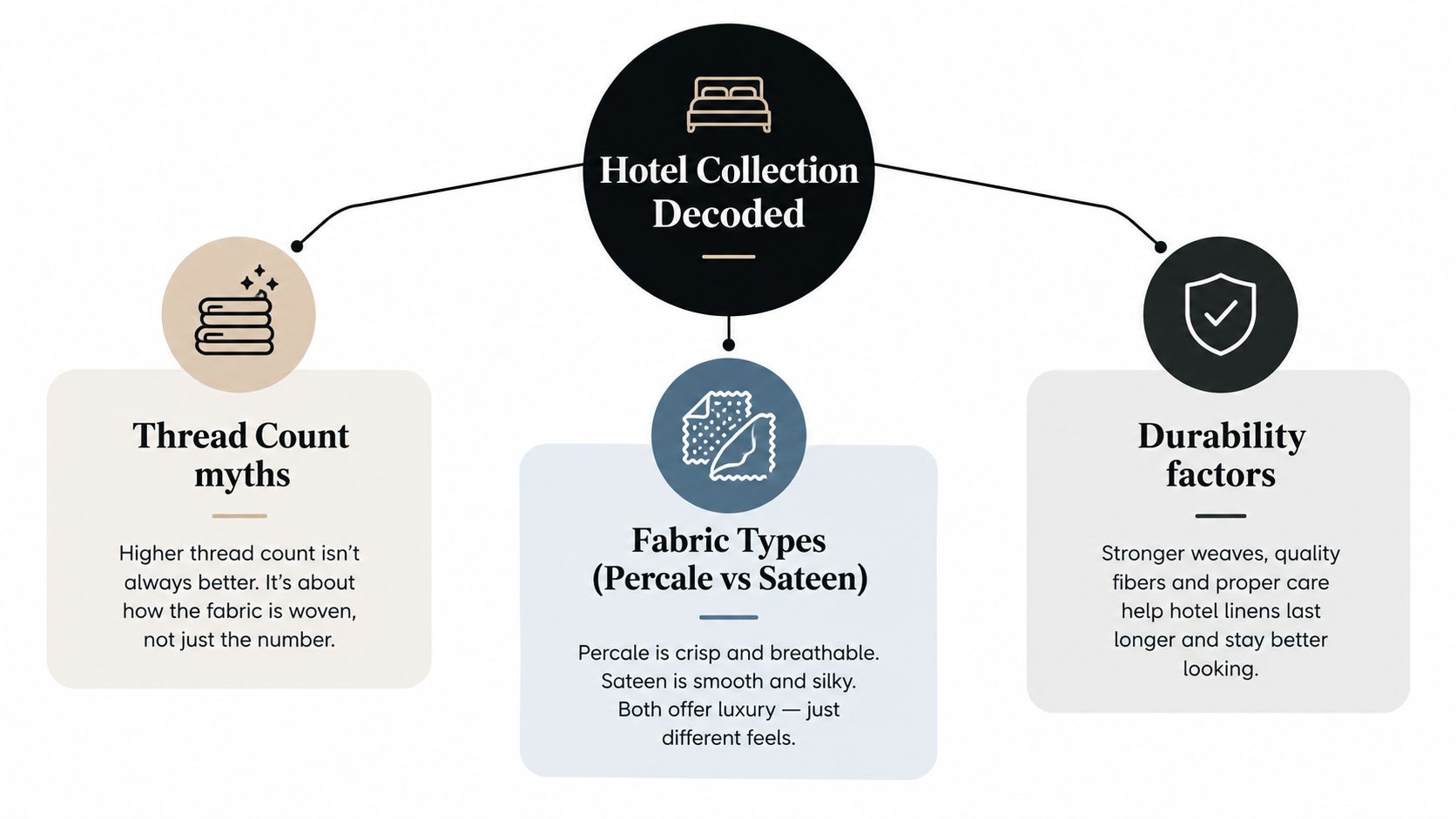
Size creates another source of confusion. A U.S. queen mattress measures about 60 × 80 inches, while commercial queen flat sheets can measure roughly 90 × 115 to 97 × 115 inches. That extra fabric allows hotel staff to tuck and finish the bed neatly, so a commercial-style sheet may feel much more generous than a retail queen sheet. See the sizing context in this hotel bedding standards reference.
A shopper should read a product page in this order:
- Finished measurements, especially for flat sheets and duvet covers.
- Pocket depth, including the maximum mattress height supported.
- Fiber and weave, such as long-staple cotton percale or cotton sateen.
- Ply and fabric weight, which provide more useful context than thread count alone.
- Care instructions, including washing temperature, drying guidance, and stain treatment.
A high thread count can sound impressive, but it doesn't tell you whether the sheet breathes, stretches properly, or holds up to your dryer. A true hotel-style purchase starts with the bed underneath it.
Weave, Fiber, and Thread Count Explained
A queen sheet can feel crisp, smooth, heavy, or warm before thread count explains any of those sensations. Thread count records the number of threads woven into a defined area, but it does not fully describe yarn quality, ply, weave structure, or finished weight.
Thread count is like page count in a book. It indicates quantity, while the paper, printing, and binding shape the reading experience. In bedding, fiber length and weave supply that missing construction detail. A clearer explanation appears in this thread count guide for bed sheets, alongside this thread-count guide for bed sheets.
Single-ply cotton percale in roughly the 200–400 thread-count range is generally made to support airflow and a crisp hand. Denser constructions can add weight and warmth, yet a larger number does not reliably predict softer fabric, longer wear, or better sleep. For queen hotel bedding, match the construction to your room temperature and laundry habits before treating the label as a quality score.
The construction hierarchy
Fiber length affects smoothness and wear. Longer cotton fibers can form more even yarns, producing a cleaner hand-feel and less roughness from uneven fibers.
Ply indicates how many yarn strands are twisted together. Multi-ply fabric may show a higher nominal thread count because each component is counted. Comparing that number directly with single-ply fabric can therefore produce a misleading result.
Weave changes how the sheet handles heat and movement. Percale uses a plain structure with a crisp, breathable surface. Sateen has a smoother, more fluid face and can feel warmer and more enveloping.
Finished weight gives useful clues about drape and warmth. A heavier fabric may feel substantial, but weight alone does not guarantee softness or lasting strength.
| Weave | Feel | Breathability | Best For |
|---|---|---|---|
| Percale | Crisp, matte, and freshly pressed | Higher airflow | Warm sleepers and a classic hotel feel |
| Sateen | Smooth, soft, and gently lustrous | More enveloping | Sleepers who prefer a warmer, fluid drape |
Choose percale for a cool, lightly crisp hotel sensation. Choose sateen for a smoother surface and warmer touch. Neither weave wins for every household. Temperature preference, tactile preference, and washing and drying routines should guide the choice.
Product pages should identify the fiber length, ply, weave, and finished fabric weight where possible. If the only prominent specification is a very high thread count, you still lack the construction information needed to predict how the queen bedding will perform.
Getting the Fit Right on a Queen Mattress
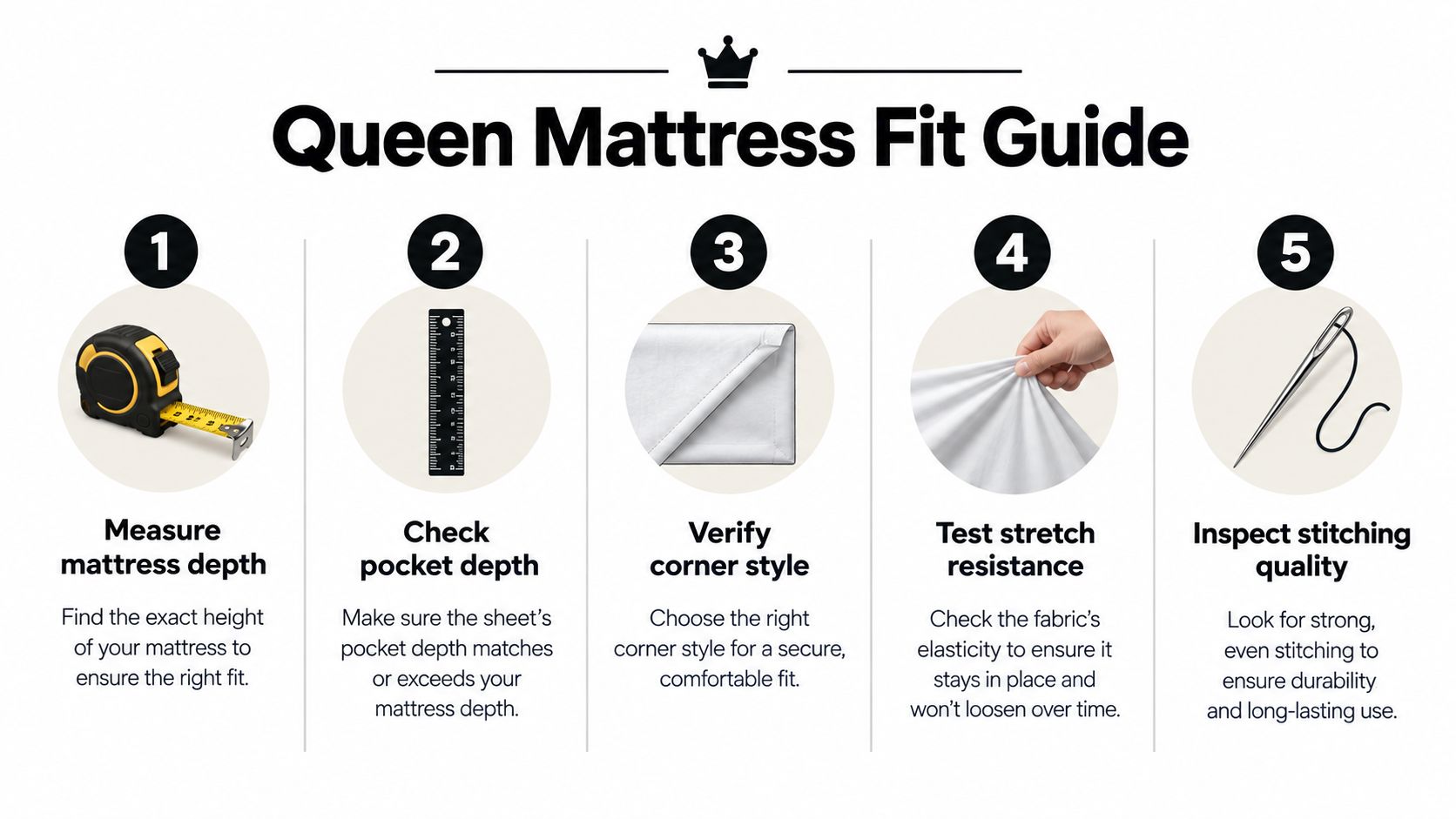
A queen sheet can feel luxurious in the package and still fight your bed every night. The problem is usually fit engineering: pocket depth, added layers, elastic recovery, and the way the mattress moves.
Measure the complete sleeping system, beginning at the mattress base and ending at its highest surface. Include a mattress pad, topper, quilted protector, or any other layer that will remain beneath the fitted sheet. A fitted sheet sized only for the bare mattress may lose its corners once those layers are added.
A simple measurement routine
- Measure the mattress depth. Hold the tape vertically from the lower edge to the highest sleeping surface.
- Measure every added layer. Record the combined thickness of toppers, pads, and protectors.
- Allow room for movement. The pocket needs enough depth for elastic tension and ordinary shifting.
- Compare the total with the listed pocket depth. Use the manufacturer's maximum supported depth when it is provided.
- Inspect the corner construction. Strong elastic, reinforced seams, and controlled stretch help the sheet stay attached.
A nominal queen size describes the mattress surface, not the entire bed setup. A U.S. queen is approximately 60 × 80 inches, while hotel-style queen flat sheets can measure about 90 × 115 to 97 × 115 inches. A commercial flat sheet may therefore look generous on a home queen mattress, giving more material for tucking but also more fabric to manage. For the dimension distinction, consult this queen flat sheet sizing guide.
A sheet should be sized for the complete mattress system, not for the mattress label alone.
Adjustable bases add another test. The fitted sheet must follow the mattress as the head or foot rises, so elastic recovery and flexible corner seams matter as much as extra depth. Too much fabric can bunch beneath moving sections. Too little depth can pull the corners free.
Flat sheets require a separate decision. Extra width and length make hospital corners easier and create a fuller appearance, but excess fabric can gather underneath and form bulky folds. Compare the finished dimensions with your actual mattress, layers, and tucking preference instead of treating “hotel queen” as a universal size.
Layering a Queen Bed the Hotel Way
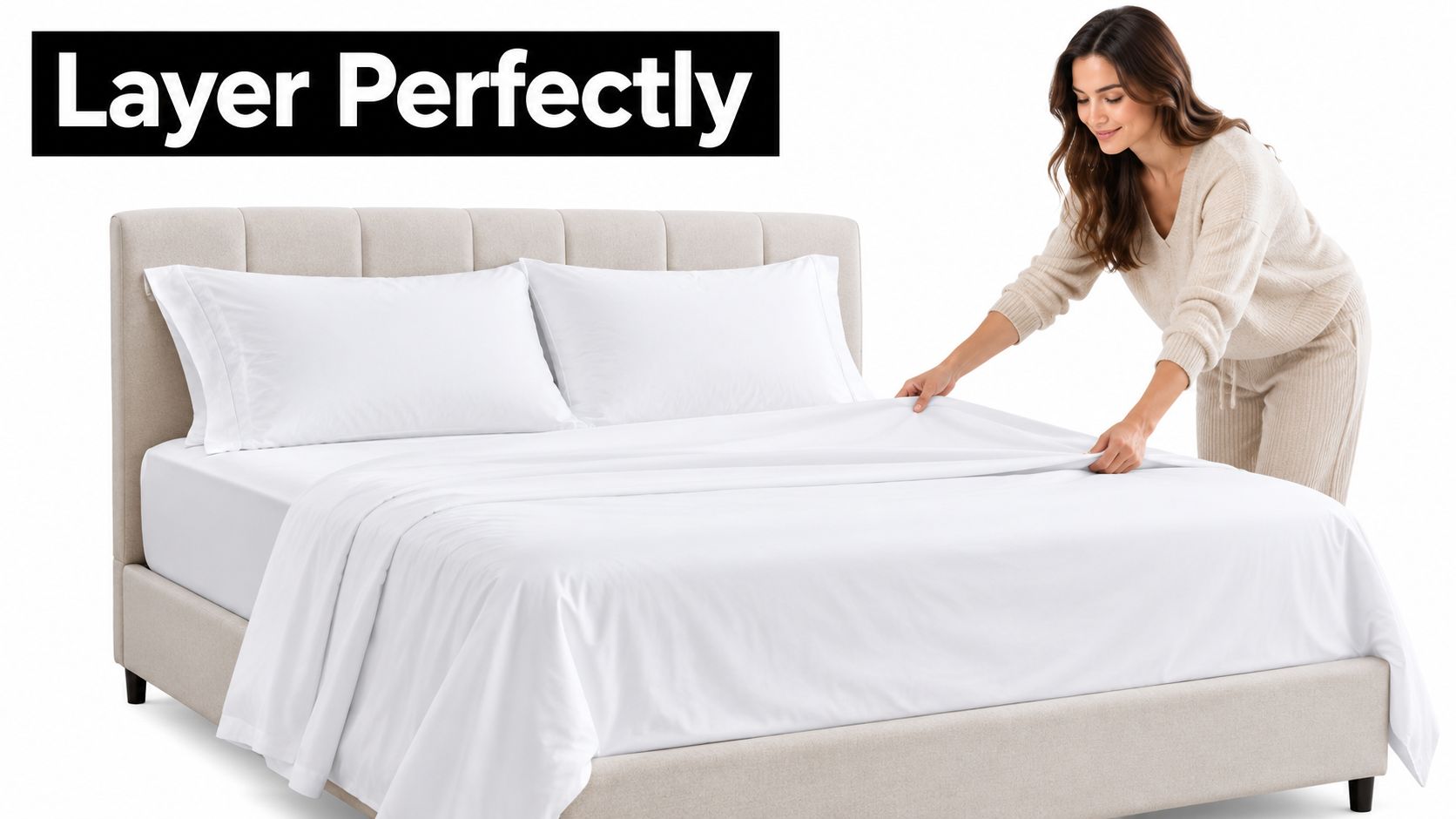
A hotel bed looks inviting because the layers create both function and proportion. Begin with the mattress protector, then add a fitted sheet that reaches every corner without strain. Place the flat sheet with its finished side facing the sleeper, tuck the lower edge, and fold the corners neatly rather than forcing the fabric into a tight knot.
Add a blanket or coverlet next. This middle layer gives the bed structure and makes temperature control easier. Finish with a duvet insert inside a separate duvet cover, which creates a softer drape than a thin top layer alone.
A practical styling sequence looks like this:
- Base: Mattress protector and correctly fitted queen sheet.
- Envelope: Flat sheet with enough overhang for secure tucking.
- Middle layer: Blanket or coverlet for light warmth and visual depth.
- Top layer: Duvet cover and insert, arranged so the fill reaches the corners.
- Pillows: Larger sleeping pillows at the back, followed by smaller pillows or shams.
For a fuller appearance, many sleepers choose a duvet that's one size larger than the mattress. Check the cover and insert measurements before buying, since oversized proportions can create unwanted drag or bunching if the pieces aren't compatible.
The final layer is visual rather than essential. A folded throw or runner at the foot of the bed anchors the arrangement and introduces texture without covering the entire sleeping surface. Keep it coordinated with the coverlet or pillow shams, and the bed will look intentional without becoming crowded.
The video below demonstrates the type of careful bed-making technique that creates a smooth, structured finish.
You can use the same system for a restrained white room, a relaxed neutral scheme, or a layered pattern mix. The building blocks stay the same. Only the color, texture, and amount of decorative layering change.
Caring for Queen Hotel Bedding So It Lasts
A hotel appearance depends on laundry discipline as much as fabric selection. Cotton can feel substantial when new yet lose strength through repeated washing, harsh chemistry, excessive heat, and abrasion.
Independent textile research reports that repeated washing can reduce cotton's degree of polymerization by about 15% under household conditions and up to 80% under industrial washing. The same research notes that free chlorine becomes particularly damaging above 20°C, which can accelerate strength loss even when the fabric initially feels durable. Read the underlying textile research in this study on cotton laundering and fiber integrity.
A workable home routine
- Wash with measured detergent. Too much detergent leaves residue that can make fabric feel stiff and can require more rinsing.
- Use moderate temperatures. Warm water is often a reasonable balance between cleaning and fiber protection.
- Choose oxygen-based stain treatment when suitable. It can address stains without relying on chlorine chemistry.
- Select a low-abrasion cycle. Reduce unnecessary mechanical stress, especially for quilts and decorative layers.
- Dry completely without prolonged overheating. Remove bedding promptly when dry to limit wrinkles and heat exposure.
- Rotate your sets. Keeping multiple sheet sets in service gives each set time between wash cycles and simplifies an unexpected change.
Skip fabric softener if you want to preserve the natural absorbency and surface character of cotton. Softeners can coat fibers, while a thorough rinse and correct detergent dose often produce a cleaner hand.
Duvet inserts need different treatment from duvet covers. Follow the care label, avoid compressing the insert for long storage, and let it regain loft in a dry, well-ventilated space. For mattresses and surrounding textile surfaces that need deeper attention, a resource on professional mattress cleaning in Birmingham offers useful context on specialist cleaning.
Laundry rule: Protect the fabric you bought by treating heat, chlorine, detergent, and friction as separate wear factors.
Fold sheets as soon as they come out of the dryer if a smooth finish matters. Store them in a dry cupboard, and keep complete sets together so fitted sheets, flat sheets, and pillowcases don't become separated. Small routines preserve the fit and appearance that make hotel collection bedding feel considered.
What to Look For in a True Hotel Collection
Softness is a pleasant first impression, but it isn't a complete quality test. Some fabrics feel exceptionally smooth in a showroom and then trap heat, pill, stretch, or lose their finish after repeated care.
Start with the specification sheet. A credible queen collection should state:
- Fiber type: Look for clear wording such as cotton, cotton-polyester, or cotton-linen blend.
- Ply and weave: Single-ply percale and sateen behave differently at the same thread count.
- Finished fabric weight: This gives more context about drape and substance.
- Pocket depth: Match it to the full height of your mattress and topper.
- Construction details: Inspect elastic, corner seams, closures, and stitching.
- Care instructions: A product designed for frequent use should explain how to wash and dry it.
- Safety certification: OEKO-TEX® can provide a useful baseline for tested harmful substances, but it doesn't prove durability.
Blends deserve a fairer evaluation than they often receive. Industry reporting estimates that cotton-polyester or cotton-linen blends can last roughly 30–40% longer than 100% cotton in demanding use, with some commercial products reaching more than 400 wash cycles instead of about 200–250. Those figures are industry estimates rather than universal laboratory results, so use them as context, not as a guarantee. The reported comparison appears in this hotel bedding market overview.
A blend may suit a short-term rental, a busy family home, or anyone who washes bedding frequently. Pure cotton may offer the hand-feel you prefer, while a blend can provide practical resistance to repeated care. The correct choice depends on whether your priority is tactile character, easy maintenance, or long service.
The strongest purchase combines a clear material specification with reliable fit. If a listing emphasizes only “luxury,” “hotel,” or an oversized thread-count figure, keep looking for the construction details that explain how the bedding will perform.
Why SouthShore Fine Linens Fits the Brief
The fit problem is especially important for modern mattresses, which often include thick comfort layers, toppers, or adjustable foundations. SouthShore Fine Linens offers extra-deep pocket sheet sets designed around those conditions, along with oversized flat sheets and layered quilt collections that support a more generous hotel-style finish.
That product approach addresses the practical failures discussed above. A deeper pocket can help a fitted sheet stay attached when the mattress system is taller, while an oversized flat sheet gives you more flexibility for tucking and smoothing. The finished dimensions still need to be compared with your own bed, because “queen” remains a category rather than a complete fit specification.
SouthShore's queen-oriented assortment includes sheets, duvets, duvet covers, quilts, comforters, pillowcases, and blankets. Its Full/Queen comforter sets are approximately 98 × 98 inches, and the collections include matching standard pillow shams. Many textiles are OEKO-TEX® certified and responsibly sourced, which provides a useful safety baseline alongside the separate questions of weave, durability, and care performance.
The range also lets you build the bed in stages. Start with the fitted sheet and flat sheet, then add a quilt or comforter, and finish with coordinated shams or a duvet system. That modular approach suits a minimalist room as well as a more layered bedroom, without requiring every piece to come from one visual formula.
A well-made bed isn't an indulgence. It's infrastructure for sleeping, dressing the room, and managing everyday laundry. The right queen bedding should fit the mattress, tolerate the household routine, and remain attractive after the first excitement of unboxing has passed.
If your current queen bedding slips, bunches, or loses its finish too quickly, explore the extra-deep pocket sheets, oversized layers, quilts, duvets, and comforters from SouthShore Fine Linens. Measure your complete mattress system first, then choose the collection that matches your preferred weave, warmth, and care routine.


