
How to Choose a Faux Fur Blanket and Pillow Set
You've found the set that makes a room look instantly softer. The blanket has the right sheen, the pillows appear impossibly plush, and the product photos suggest effortless comfort. Then real life begins: someone sits on the throw, a guest sleeps against the pillows, and the first cleaning question appears.
A faux fur blanket and pillow set can be a practical textile, but it can also be a decorative purchase disguised as bedding. The difference depends on the pile, construction, intended use, and care routine. Choose for the way your household lives, not for the untouched appearance shown in a product listing.
What Makes a Faux Fur Blanket and Pillow Set Worth Choosing
A faux fur blanket and pillow set usually combines a plush throw or comforter-style blanket with matching pillow covers and inserts. The blanket provides warmth and visual texture, while the pillows reinforce the layered look across a bed, sofa, or reading chair. Some sets are designed for contact and regular handling. Others are better treated as accent textiles that spend most of their time arranged neatly.
Start with intended use. A set for nightly bed use needs a backing that feels comfortable against the skin, stable seams, and a pile that can recover after compression. A sofa accent can tolerate a more dramatic texture if you're willing to handle it gently and clean it less often. Guest rooms sit between those uses. They need to look polished but should also withstand repeated handling by people who may not follow delicate-care instructions.
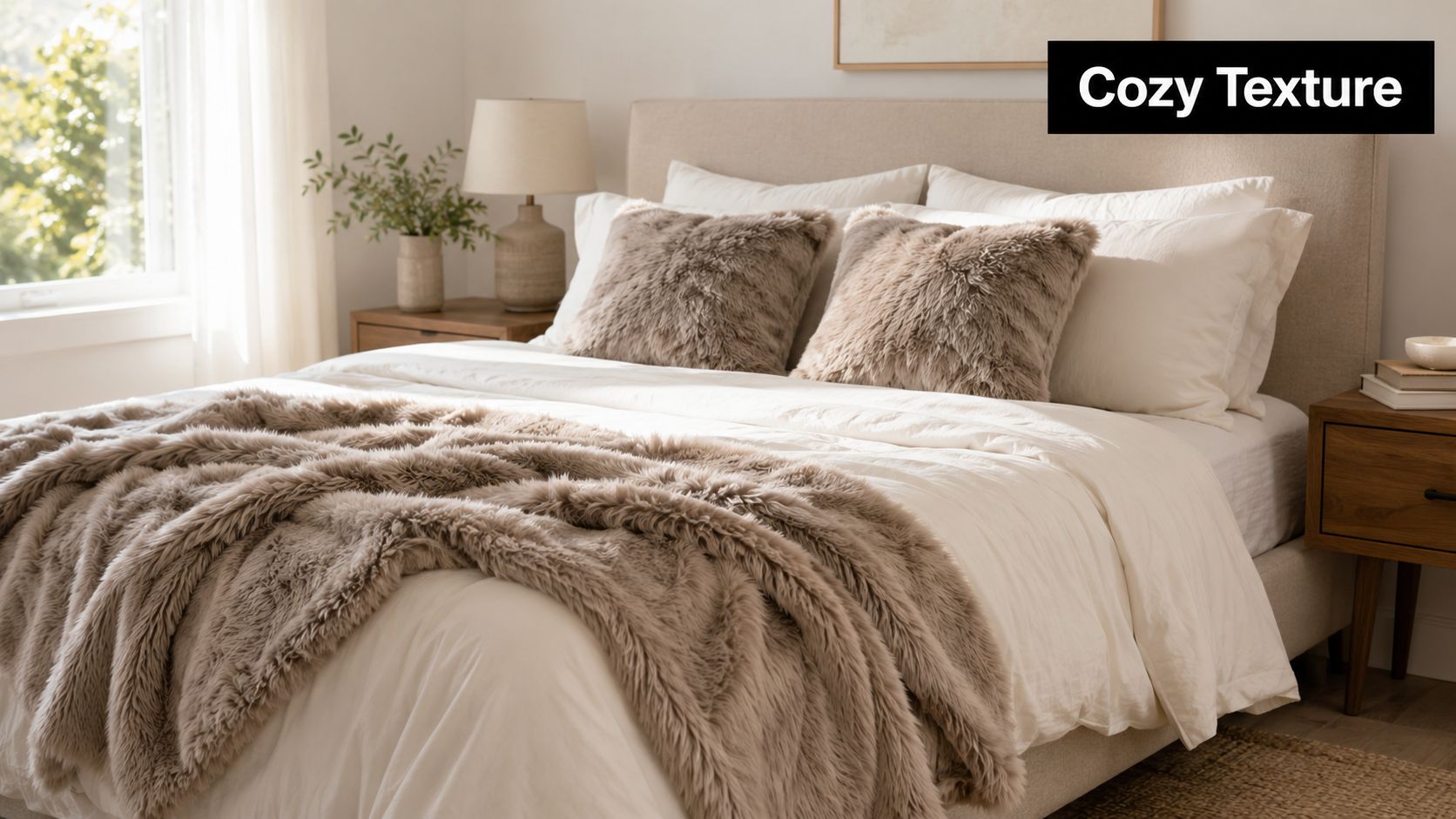
Read the pile before you judge the softness
Pile height describes the visible length of the fibers. A long, loose pile often creates a more luxurious appearance, but it can show compression and tangling more clearly. A shorter, denser pile may look less theatrical while offering a more predictable surface for everyday use.
Run your hand across the fabric in both directions if you can inspect it in person. Look for even coverage, a consistent hand-feel, and a backing that doesn't feel brittle or excessively thin. If shopping online, enlarge close-up photos and look for gaps, uneven rows, or areas where the backing shows through.
Faux fur has been commercially developed for much longer than many shoppers realize. Early versions reached the market in 1929, using alpaca hair rather than modern synthetic fibers, and acrylic polymers had replaced alpaca hair by the 1950s, helping create the soft, colorable, animal-free material used in home products today. The Smithsonian's history of faux fur places those changes within a broader period of textile improvement and material scarcity.
Decide whether the set is functional or visual
A functional set should be comfortable to handle, simple enough to maintain, and constructed for repeated contact. A decorative set can prioritize unusual color, extra-long fibers, or a highly brushed finish. Neither category is automatically superior, but buying a decorative set for nightly use creates frustration when the pile loses its showroom appearance.
Practical rule: Choose the most dramatic texture for the lowest-contact location. Choose the most stable construction for the blanket or pillow that people will actually use.
Historical textile development also supports this distinction. A University of Nebraska textile paper on plush fabrics notes that mohair-based plush materials were valued because they resisted crushing and felting, which made them suitable for upholstery, carpeting, and blankets. Those same performance principles still matter when assessing loft, recovery, and softness in a modern set.
Understanding Materials and Construction Quality
Most faux fur sets use a synthetic construction designed to feel soft while keeping the finished product relatively light and manageable. A typical configuration uses 100% polyester faux fur, a polyester pillow cover, and down-alternative polyester fill. That combination supports loft retention, a soft hand-feel, and low water absorption, according to the construction and care information for a polyester faux fur bundle.
The fiber label gives you a starting point, not a complete quality assessment. Polyester can be woven or knitted into very different surfaces, and the final performance depends on the pile density, fiber length, backing, stitching, and finishing process. Two products can list polyester while behaving very differently under pressure.
Inspect the surface and backing
A dense pile generally hides the backing more effectively and gives the fabric a fuller appearance. Sparse fibers can make a blanket look thin, especially where the surface bends or where a pillow is frequently compressed. A thick pile isn't automatically more durable, however. Long fibers can tangle and flatten if the item receives heavy contact.
The backing should feel flexible rather than papery or excessively stiff. Bend a corner in a product photo or, in a store, gently fold the fabric and check whether the surface separates sharply from the base. A stable backing helps the pile stay attached and makes the blanket feel less flimsy when lifted.
Look at the reverse side of the blanket and the inside of each pillow cover. Even stitching, reinforced corners, and a closure that lies flat matter more than decorative labels. A zipper should move without catching the pile, while an envelope closure should overlap enough to keep the insert contained. Loose threads around corners deserve attention because those areas receive repeated pulling during use.
Match fill to the role of the pillow
A down-alternative polyester insert is a sensible choice for shoppers who want an animal-free, easy-to-shape cushion. It can provide softness and loft, but the cover and fill still need to work together. A pillow that is overfilled may look impressive in a product photo and feel too rigid for lounging. An underfilled pillow may lose its shape quickly when used as a backrest.
For a bed, check whether the included pillows are decorative shams or sleeping pillows. A sham cover can complete the design without being intended for direct nightly use. If the listing is unclear, treat the pillows as accents until the seller confirms their construction and care instructions.
Treat fabric weight as a use clue
A heavier blanket can feel substantial and layer well over bedding, but weight alone doesn't prove durability. It may reflect dense pile, a thick backing, additional lining, or just a larger format. Ask what contributes to the weight and whether the blanket is intended as a top layer, a decorative throw, or a primary sleeping blanket.
The most dependable purchase combines a stable backing, secure seams, an appropriate pile, and clear care instructions. A beautiful surface can't compensate for a closure that catches fibers or a backing that twists after cleaning. For a broader comparison of blanket structures and uses, consult this guide to different types of blankets.
Comparing Everyday Durability Versus Decorative Use
The same faux fur set can perform well in one room and poorly in another. On a carefully styled bed, it may remain smooth because nobody handles it for long periods. On a family sofa, the exact surface can show compression, displaced fibers, and visible wear much sooner. The practical question isn't whether faux fur is durable in the abstract. It's whether the construction matches the contact your household creates.
Daily living
Daily use exposes the pile to body weight, friction, skin oils, pets, snacks, and repeated repositioning. A blanket used as a sofa layer needs more than visual softness. It needs a backing that stays stable, seams that tolerate handling, and a surface that can be restored without aggressive brushing.
Guest rooms create a different challenge. Visitors may use the blanket as warmth, fold it quickly, or place it on the floor while making the bed. A set with a moderate pile and straightforward care instructions is usually a safer choice than one with very long fibers and a finish that requires specialized cleaning.
Short-term rentals demand even more caution. Frequent turnover increases the pressure to clean quickly, but faux fur generally doesn't respond well to rushed laundering or high heat. If a host wants the look, a decorative throw used selectively may be more practical than a full high-pile bedding layer that requires intensive care after every stay.
Decorative accent use
Accent-only styling reduces contact and therefore reduces compression, staining, and agitation. A pillow placed at the head of a bed or a folded blanket at the foot can provide texture without becoming the household's primary lounging surface. This arrangement favors dramatic pile and pale colors, provided the owner accepts that the textile may still need careful spot treatment.
A decorative blanket isn't failing because it requires gentle care. It's doing a different job from a washable everyday throw.
Sustainability and indoor air quality deserve a place in the buying decision. Faux fur is typically made from synthetic fibers, and independent care guidance warns that washing can release tens of thousands of microfibers per wash. The faux fur washing guidance from Alibaba's Life Tips also cautions against aggressive washing, high-heat drying, and fabric softener because those habits can worsen clumping, static, and fiber loss.
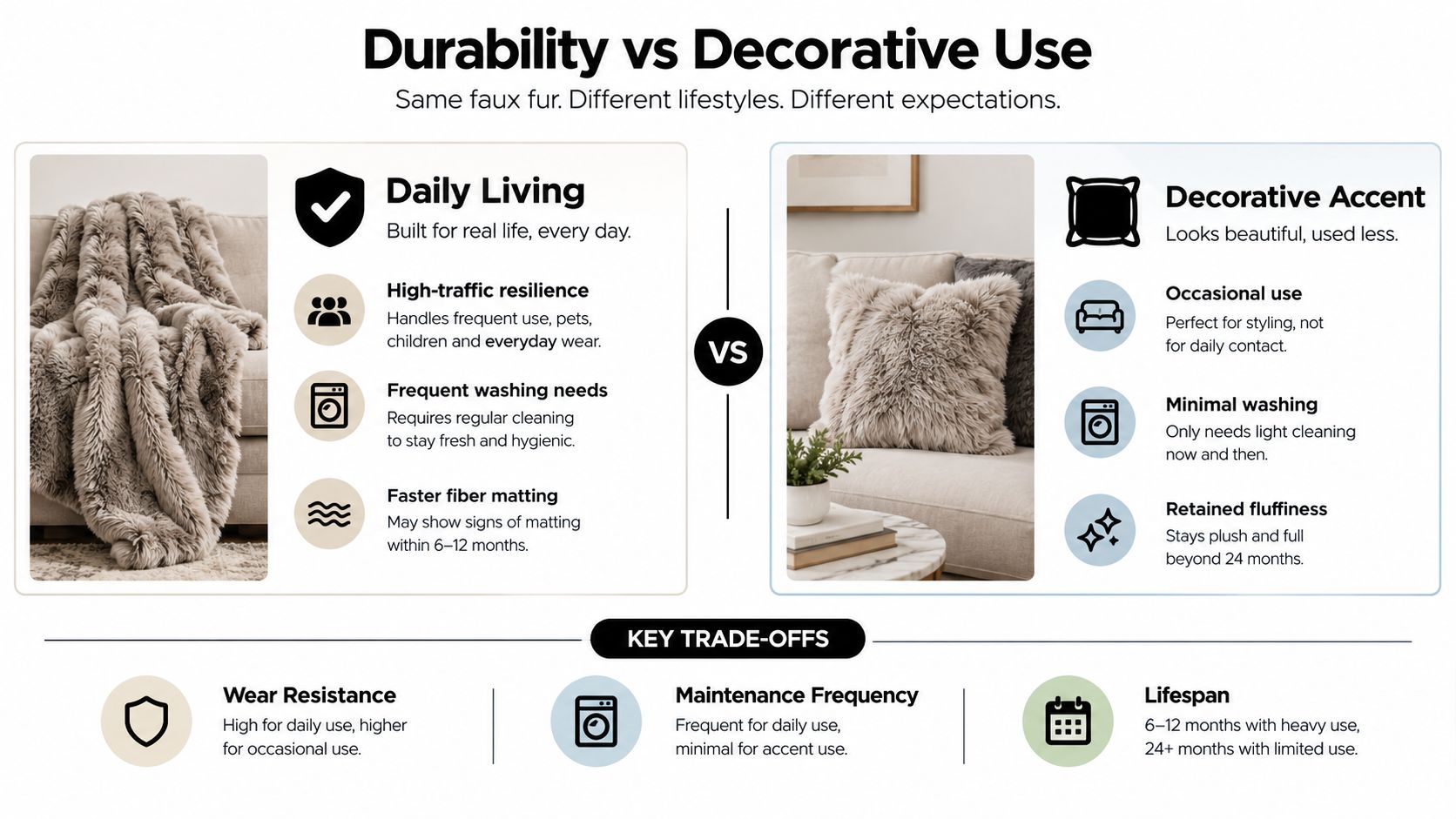
Choose by household conditions
Use the following decision test before buying:
- For nightly bedding: Choose an even, moderate pile, washable inserts, and a seller that states the care method clearly.
- For a sofa: Prioritize a stable backing and a surface that can be brushed without pulling fibers loose.
- For a guest room: Favor neutral colors, secure closures, and a design that still looks orderly after folding.
- For a rental: Use faux fur as a controlled accent unless the cleaning process can support delicate textile care.
- For lower-fuss maintenance: Consider a simpler polyester throw instead of a very high-pile surface.
Faux fur can create warmth without animal fur, but synthetic content still creates a materials and maintenance conversation. Buy it because the tactile and visual effect suits your room, then reduce unnecessary washing and avoid care practices that accelerate fiber loss.
Care and Maintenance Instructions for Longevity
Heat causes most of the serious damage to faux fur. Synthetic fibers can melt, mat, or lose their ability to recover after exposure to a hot dryer, iron, radiator, or other concentrated heat source. The faux fur care guidance from Tissura recommends gentle cleaning, mild detergent, no wringing, full air-drying, and occasional brushing with a soft-bristle brush.
Begin with the care label, not a general internet routine. Manufacturers may approve different methods for the blanket, removable cover, and pillow insert. A set can contain components with different cleaning requirements, so treating every piece as one washable item is a common mistake.
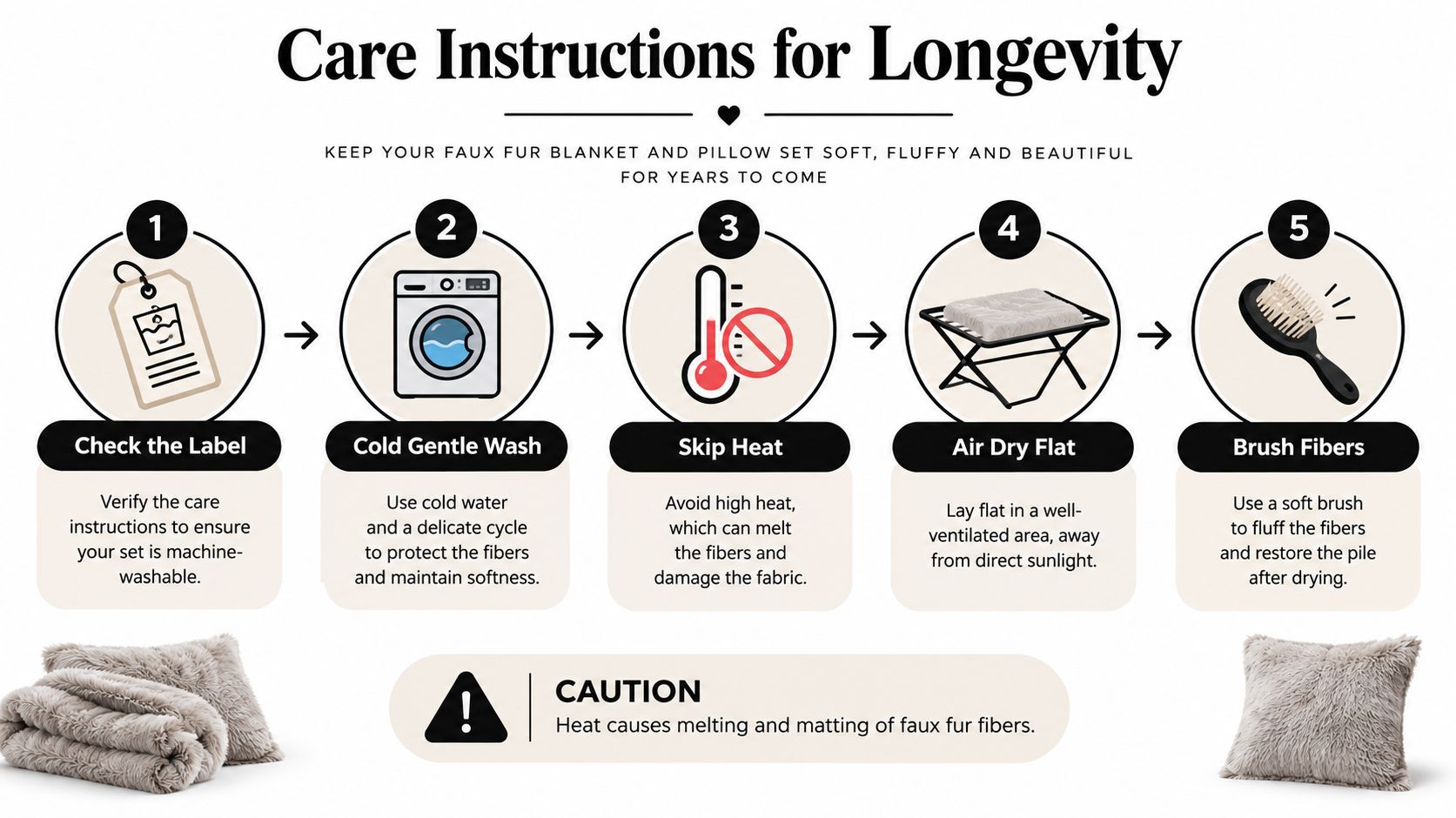
Use a low-aggression cleaning routine
- Remove surface debris first. Shake the blanket outdoors or vacuum it with an upholstery attachment at a gentle setting. This reduces the amount of material that must move through water.
- Spot clean small marks. Use cold water and a mild detergent on a clean cloth. Dab rather than scrub, and test an inconspicuous area before treating a visible section.
- Wash only when the label allows it. If machine washing is approved, use cold water and a gentle cycle. Wash the item alone when possible, and don't overload the machine. Agitation can tangle the pile and place strain on seams.
- Avoid fabric softener and wringing. Softener can contribute to residue, clumping, and static, while twisting the wet fabric can distort the backing. Press water out gently instead.
- Dry without concentrated heat. Lay the item flat or hang it in a way that doesn't stretch the wet backing. Keep it away from radiators and strong direct heat, and allow it to dry fully before use.
A product listing may recommend spot cleaning or dry cleaning for the faux-fur cover while allowing cold-gentle washing for the insert. Follow that separation. The cover and fill don't necessarily tolerate the same process.
Restore the pile after drying
Once the fabric is completely dry, use a soft-bristle brush to realign flattened fibers. Work in small areas and brush lightly in the direction of the pile. Don't attack a matted patch with force. Repeated hard brushing can pull fibers from the backing and make the damaged area more obvious.
If a faux suede item in the same room needs attention, a guide to faux suede nap restoration offers useful background on restoring a flattened surface without treating it like ordinary washable fabric. For faux fur-specific cleaning steps, keep this faux fur blanket cleaning guide nearby.
Store the set loosely folded in a dry, ventilated place. Avoid compressing it under heavy bedding for long periods, and don't place it away while damp. Proper storage won't eliminate wear, but it prevents avoidable flattening and odor.
Styling Tips and Gift Selection Advice
A faux fur set works best when it adds one concentrated layer of softness rather than turning every surface into a competing texture. On a bed, fold the blanket across the lower portion and place the matching pillows in front of simpler sleeping pillows. On a sofa, use the blanket as a controlled drape and keep the pillows positioned where people can move them easily.
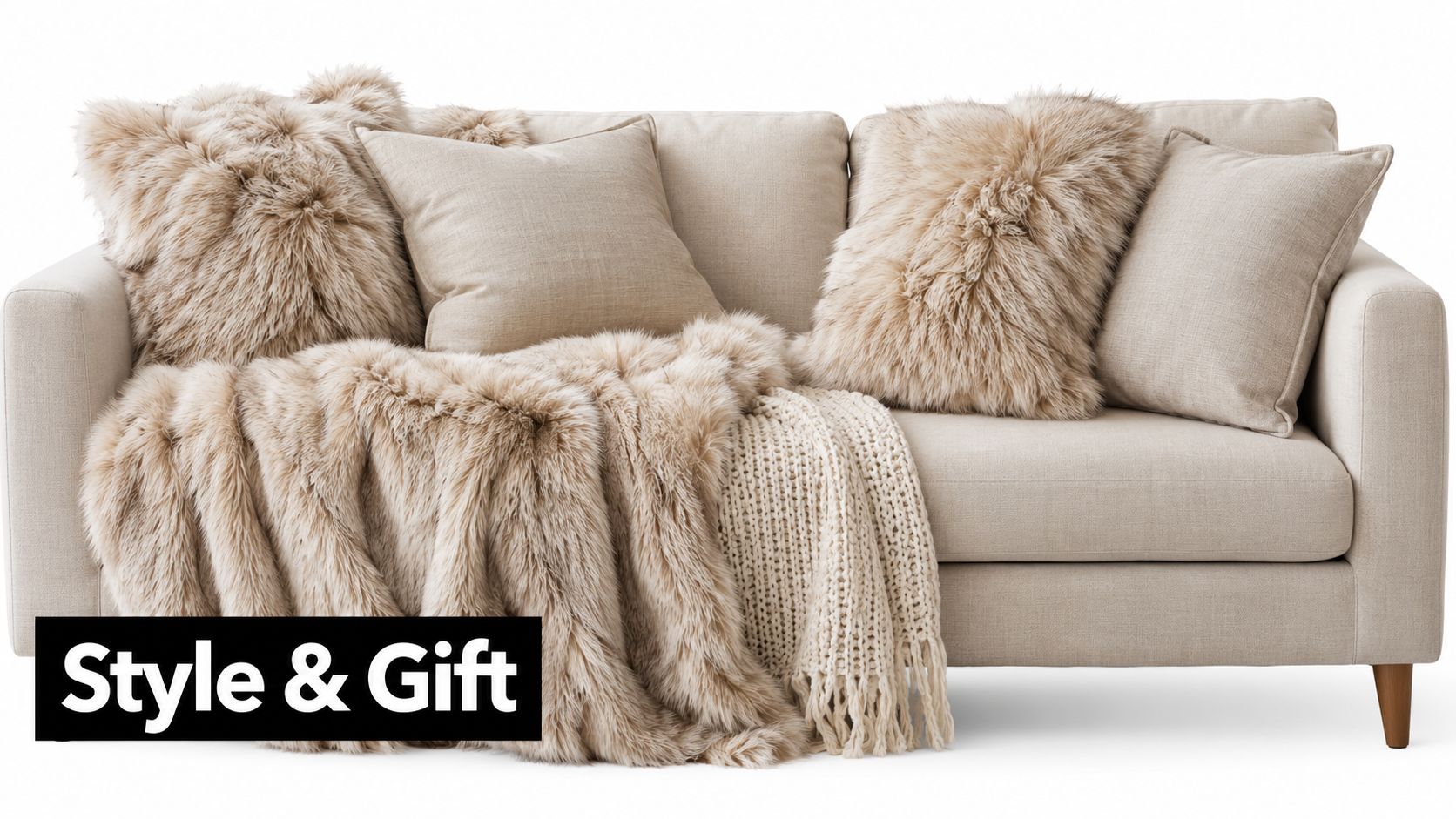
Build contrast with simpler textiles
Faux fur already supplies volume and visual movement. Pairing it with smooth cotton, linen, percale, or a tightly woven quilt gives the room contrast and keeps the pile from looking visually heavy. If the fur is pale and glossy, use a matte textile nearby. If the fur is dark, a lighter sheet, wall, or upholstery color can define its edges.
Color should support the room's existing structure. Cream and taupe tend to blend into neutral interiors, while steel blue or another deeper tone can become an accent. Choose a shade that relates to a rug, wall treatment, artwork, or upholstered chair rather than selecting a color based only on the product photo.
Wall space also affects how the set reads. A small, textural arrangement can feel intentional when the surrounding wall is quiet. If the room needs more vertical balance, these bedroom wall decor ideas can help you coordinate the bedding with the area above the bed instead of letting the faux fur carry the entire design.
A useful styling rule is to leave one surface visually calm. If the blanket has a long pile and the pillows are heavily textured, keep the sheets or sofa upholstery relatively simple. That contrast makes the set feel considered rather than crowded.
Choose gifts by room and routine
A faux fur set can suit a housewarming, wedding, or seasonal gift, but the recipient's habits matter more than the trend. Ask yourself where the set will live and who will touch it.
- For a minimalist bedroom: Select a restrained color and a low-contrast texture.
- For a cozy reading corner: A soft throw and one supportive accent pillow may be more useful than a full matching arrangement.
- For a guest room: Choose a neutral shade and confirm that the care instructions are clear.
- For a style-conscious recipient: Match the color to existing upholstery or bedding instead of guessing from personal preference.
- For a practical household: Avoid very long pile if easy maintenance is a priority.
The gift should also fit the recipient's storage and laundry habits. A person who prefers simple machine washing may appreciate the look but resent a cover that requires specialized cleaning. Explain the care requirements at the time of gifting, especially if the set includes separate pieces with different instructions.
The video below offers another visual reference for creating a warm, layered textile setting without making the room feel overloaded.
For a broader housewarming presentation, pair the set with practical bedding or a neutral textile rather than adding several more decorative items. This housewarming gift guide for new homeowners can help frame the faux fur set as part of a useful home upgrade.
Conclusion and Final Decision Checklist
A faux fur blanket and pillow set earns its place when the material, construction, care routine, and room all agree. The softest-looking option isn't always the most useful one. A high-pile surface may deliver stronger visual impact, while a denser, more stable pile may serve a busy sofa or guest room better.
Consider a household that wants a luxurious bedroom but also expects the blanket to move between the bed and sofa. A dramatic, delicate pile may look excellent when folded at the foot of the bed but become a poor match for frequent lounging. A moderately plush set with secure seams, a stable backing, and clearly separated cover and insert care instructions would make the more sensible purchase.
Use this checklist before you place an order:
- Purpose: Will the set be slept with, lounged on, offered to guests, or displayed mainly as an accent?
- Pile: Does the surface look even, and does its height suit the amount of contact it will receive?
- Backing: Is the reverse side flexible, stable, and free from obvious gaps or weak areas?
- Construction: Are corners, closures, and seams finished securely?
- Components: Are the blanket, pillow cover, and insert covered by the same care instructions?
- Cleaning: Can you realistically follow the recommended low-aggression routine?
- Heat exposure: Do you have a way to dry the item without high heat or concentrated warmth?
- Microfiber concerns: Are you prepared to wash sparingly and avoid practices that increase fiber loss?
- Styling: Does the color work with your existing room, or will it force several additional purchases?
- Gift suitability: Will the recipient value plush texture more than effortless care?
Treat the set as both a textile and a design element. If you want daily comfort, select for recovery, stable construction, and manageable maintenance. If you want atmosphere, choose the texture that gives the room character, then protect it by limiting contact and cleaning only when necessary.
SouthShore Fine Linens offers plush faux-fur bedding alongside oversized sheets, quilts, and other layered essentials designed for real bedrooms. Visit SouthShore Fine Linens to compare bedding options that connect a soft decorative finish with practical fit, care, and everyday use.


