
Comforter Sets Hotel: The Complete Buyer Guide
The most popular advice about comforter sets hotel is also the least useful: buy one thick, white comforter and place it on the bed. Hotels don't create their signature sleep experience with a single oversized blanket. They build a coordinated bedding system, then select each layer according to climate, mattress height, guest expectations, and the demands of repeated laundering.
That distinction matters whether you manage a short-term rental or want a more polished bedroom at home. A comforter can look plush in its packaging and still flatten, shift, leak fibers, or fit poorly after regular washing. The reliable approach is to evaluate the complete setup, including the shell, fill, construction, sizing, washable layers, and the way everything is arranged on the bed.
Rethinking the Standard Hotel Bedding Setup
A hotel bed isn't defined by an impossibly thick white duvet. It's defined by consistency, flexibility, and clean layering. Hospitality properties may use a protector or pad, bottom sheet, optional top sheet, duvet or comforter, blanket or coverlet, and several pillow types. The exact combination changes with the property, room category, climate, mattress height, and replacement cycle, as independent hospitality guidance explains in its overview of the layered bedding systems hotels use.
That modular design solves practical problems. A top sheet can separate the sleeper from the insert, a lightweight quilt can provide warmth without trapping excessive heat, and a blanket can be added or removed without replacing the entire bed covering. For a vacation rental, the same logic gives guests more control while keeping the visible bed neat and neutral.
Why luxury properties are changing the top layer
Recent hospitality trend coverage describes luxury properties moving away from single, heavy duvets in favor of lightweight quilts, breathable layers, and natural-fiber blankets suited to changing climates and varied guest preferences. The shift doesn't mean comforters have disappeared. It means the traditional thick duvet is no longer the only credible route to a hotel-style bed, as this hospitality trend report on layered luxury bedding illustrates.
For warmer rooms, a breathable quilt or coverlet often works better than a dense insert. In cooler environments, a medium insert can sit beneath a coverlet, giving the bed depth without forcing every sleeper under the same heavy layer. This is also easier to manage between stays because covers and top layers can be rotated independently.
Practical rule: Choose the top layer for your climate and laundry routine first, then choose the decorative finish.
Homeowners and hosts should also document the setup. A clear guest guide can explain which layers are available, how to adjust them, and where spare blankets are stored. A resource on creating a vacation rental welcome book can help hosts communicate those details without making guests search through drawers or message the property manager.
The visual lesson is simple. A hotel bed feels luxurious because every layer is proportioned, pressed, and coordinated. Buying a thick comforter without checking the rest of the system often produces bulk rather than comfort.
Evaluating Fill Types and Commercial Construction
The fill determines warmth, weight, recovery, and how the comforter behaves after laundering. Down offers efficient insulation with a light hand, while synthetic microfiber cluster fill can provide an easier-care alternative for allergy-sensitive households, rentals, and properties that need predictable washing.
Fill power applies to down and describes the volume created by a given amount of fill. Higher fill power generally supports more loft with less weight, but it doesn't automatically make a product suitable for commercial use. The shell, stitching, edge finish, and wash testing still decide whether the comforter performs well in service.
For synthetic options, procurement guidance recommends microfiber cluster fill in baffle-box construction at about 300–400 g/m² for four-season use. Warmer climates may use 150–200 GSM, while winter programs may specify 400–600 g/m². For down, common hospitality quality bands range from 450–550 fill power for standard hotels, 550–750 FP for upscale properties, and 750+ FP for ultra-luxury settings, according to hospitality bedding fill guidance.
Comparing practical specifications
| Fill Type | Weight / Fill Power | Best Use Case |
|---|---|---|
| Synthetic microfiber cluster | 150–200 GSM | Warm climates and lighter seasonal layers |
| Synthetic microfiber cluster | 300–400 g/m² | Four-season hospitality and guest-room use |
| Synthetic microfiber cluster | 400–600 g/m² | Colder rooms and winter bedding programs |
| Down | 450–550 FP | Standard hotel comfort and controlled climates |
| Down | 550–750 FP | Upscale rooms seeking lighter, loftier warmth |
| Down | 750+ FP | Ultra-luxury applications where loft and lightness matter |
Baffle-box construction uses internal fabric walls to keep the fill distributed in three-dimensional chambers. That helps preserve loft and reduce cold spots, although larger chambers can allow down to move if the insert isn't shaken and maintained. Sewn-through construction is simpler and can make home laundering more manageable, but the stitched-through seams can compress the insulation at each line.
A tight shell weave is more important than a headline thread-count claim. Dense construction helps prevent down or microfiber from escaping, while weak seams and a loose shell can turn a visually impressive comforter into a housekeeping problem. Buyers comparing natural and synthetic options can also review this practical down versus down-alternative comforter comparison.
What a serious specification sheet should show
Ask for the fill type, fill weight or fill power, shell fiber, construction method, corner ties, laundering instructions, and post-wash test results. Hospitality procurement guidance recommends defining the expected wash temperature and cycle count, confirming industrial-laundry compatibility, and checking shrinkage, leakage, and loft recovery after testing.
A documented 60°C wash test, supported by loft-retention data, is more useful than the word “hotel” on a label. If the supplier can't explain how the product behaves after repeated washing, treat its plush appearance as unverified.
Sizing and Layering for Modern Mattress Depths
A bed can have excellent textiles and still look wrong if the dimensions are undersized. Modern pillow-top, hybrid, and adjustable-base mattresses often need more coverage than a basic retail comforter set provides. The result is familiar: the fitted sheet pulls loose, the top layer exposes the sides, and the bed loses the relaxed drape associated with a well-made hotel room.
Start with the mattress, not the bedding package. Measure from the top sleeping surface to the bottom edge of the mattress, including any topper that will remain on the bed. If the mattress sits on a foundation, note the overall height separately. A useful mattress-depth measuring guide can help avoid confusing mattress thickness with the fitted sheet's required corner depth.
Build the layers in order
- Protection comes first. Use a mattress protector or pad that fits the mattress and any topper without creating loose folds.
- Add the fitted sheet. Select corner depth based on the complete mattress stack, not the mattress alone. Excess fabric can bunch, while insufficient depth makes the elastic fight the mattress.
- Place the flat sheet if your setup uses one. This creates a washable barrier beneath the duvet or comforter and supports the crisp, tucked appearance many guests associate with hospitality bedding.
- Choose the top layer by proportion. A duvet cover and insert offer flexibility, while a quilt or coverlet creates a lighter, flatter finish. Oversized dimensions can improve side drape, but the insert must still sit evenly inside its cover.
- Finish with pillows and shams. Pillow quantity and arrangement should support the bed rather than crowd it.
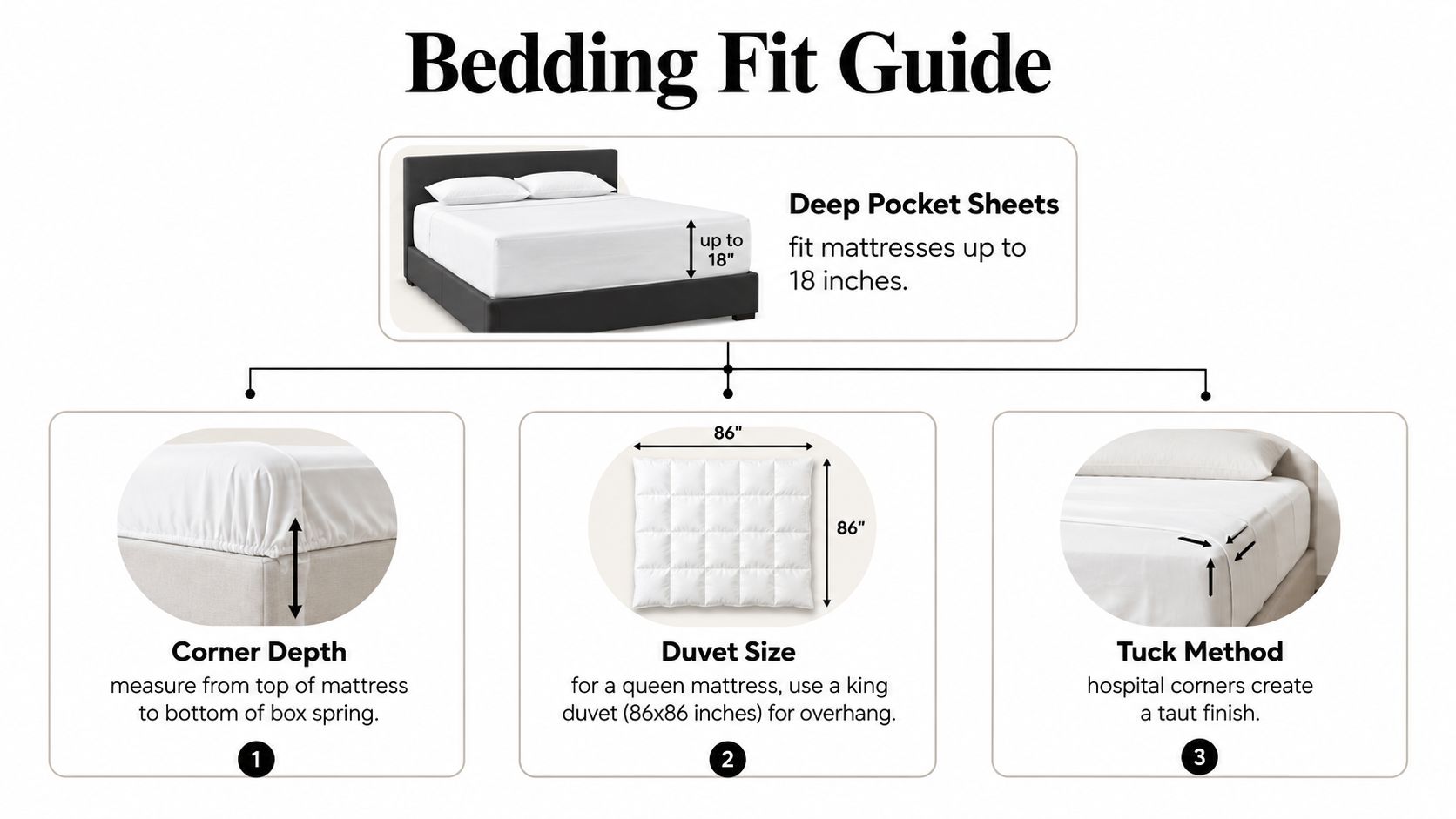
For a queen mattress, some buyers choose a king-size duvet to create additional overhang, particularly when the mattress is deep or the bed frame is wide. Don't treat that as a universal rule, though. Check the insert and cover dimensions, the mattress height, and the desired drop at each side before purchasing.
Fit matters more than the label
“Hotel quality” doesn't tell you whether a fitted sheet will stay on an adjustable base or whether a comforter will cover a thick mattress. Compare fiber, weave, weight, finish, laundering instructions, and actual measurements. A coordinated set is useful only when every piece works with the dimensions of the bed.
The video below demonstrates the visual difference that careful bed making and proportion can create.
For short-term rentals, keep a spare fitted sheet and at least one alternate top layer in the correct size. A replacement that is technically the same bed size but has a different corner depth can create more work during a fast turnover.
Durability Standards and High-Turnover Care
Hotel bedding evolved around rotation, sanitation, and replacement, not decorative presentation alone. A hospitality linen standard identifies three as the universally accepted minimum par for a bed, allowing one set to be in use, one to be laundered, and one to remain in reserve, as documented in this hotel linen quantity paper.
The scale of turnover explains why construction matters. A Solenis hospitality whitepaper states that a typical 400-room hotel generates 2 to 3 metric tons of used linens every year, a volume that shows how frequently commercial bedding enters the laundry stream. Comforter sets hotel buyers select must therefore balance softness with fast rotation, sanitation, dimensional stability, and predictable replacement.
The commercial benchmark
Hotel-grade comforters are commonly specified to withstand roughly 200–300 wash cycles, with procurement guidance calling for dimensional shrinkage of ≤3% in warp and weft after repeated laundering. The same guidance emphasizes testing at 60°C, checking whether the fill leaks, the insert recovers its loft, and the finished dimensions remain usable. These requirements are outlined in this hotel comforter sizing and buying guide.
A home user doesn't need to reproduce an industrial laundry room, but should copy the decision-making discipline:
- Read the care label: Don't assume a down insert or oversized comforter belongs in a household machine.
- Use a washable cover: A duvet cover or top sheet reduces direct exposure to body oils, spills, and skin products.
- Avoid fabric softener: Residue can coat fibers and alter the hand of cotton and synthetic shells.
- Dry thoroughly: Incomplete drying can leave dampness inside the fill, while excessive heat can damage fibers or finishes.
- Inspect after washing: Check seams, corner ties, shell leakage, clumping, and dimensional change before returning the item to service.
Hosts should establish a handling routine, not rely on visual inspection alone. The WipesBlog.com linen handling guide offers useful context for sorting, transporting, and storing linens so clean bedding doesn't become contaminated during turnover.
For households, machine-washable bedding guidance is a better starting point than choosing a comforter solely for its loft. A slightly less dramatic insert that fits the machine and dries completely may deliver lower lifecycle friction than a bulky product that requires repeated trips to a commercial laundry.
Styling Techniques for a Luxury Suite Aesthetic
The luxury-suite look comes from controlled layers and clean lines, not from adding every decorative pillow available. Begin with a calm foundation, then create contrast through texture and height. White, cream, and light gray bedding keep the room visually quiet, while a folded coverlet or seasonal accent introduces dimension without making the bed feel busy.

Make the bed with purpose
Start by smoothing the fitted sheet from the center outward. If you're using a flat sheet, align the top edge before tucking so the fold remains even on both sides. Hospital corners at the foot can create a finish, but don't pull the sheet so tightly that guests can't move comfortably.
Place the comforter or duvet insert so the side drops are balanced. If the insert has shifted inside its cover, secure the corner ties and shake it out before making the bed. A flat, evenly filled top layer looks more expensive than an overstuffed insert that bunches at the foot.
A practical sequence works well:
- Foundation: Crisp fitted and flat sheets, with the top sheet folded cleanly over the duvet edge when appropriate.
- Primary top layer: A duvet cover and insert, or a quilted coverlet for lighter warmth.
- Foot accent: Fold a blanket or coverlet across the lower portion of the bed. It should look intentional and remain easy to remove for washing.
- Pillow architecture: Place sleeping pillows behind the shams, then use Euro shams or larger decorative pillows to add height.
- Final restraint: Keep only the pieces that support comfort, proportion, and the room's palette.
The difference between a rental bed and a suite-style bed often appears in the final two minutes of making. Center the cover, remove visible creases, square the shams, and check the bed from the doorway. Guests see the entire composition before they notice the fill power.
For broader room details, hosts can also consult expert Craster equipment advice, especially when coordinating practical hospitality accessories with a refined guest-room presentation.
Seasonal variation should come through removable layers rather than a complete bedding overhaul. A neutral base can accommodate a textured quilt, a natural-fiber blanket, or a restrained pattern while preserving the uncluttered appearance that makes hotel rooms feel restful.
Building Your Ultimate Sleep Sanctuary
A dependable hotel-style bed is an exercise in proportion. The mattress determines the sheet depth, the climate determines the top-layer weight, the laundry routine determines the shell and fill, and the room's design determines how much texture the bed can carry. Ignore any one of those factors and the result may look attractive at first while performing poorly in daily use.
The strongest setup isn't necessarily the thickest or most expensive. It's the one that fits the mattress, separates washable layers from harder-to-clean insulation, and gives sleepers practical control over warmth. For a homeowner, that can mean a breathable coverlet with a seasonal insert. For a host, it may mean a durable synthetic insert, washable duvet covers, and spare layers that simplify turnover.
Use this buying checklist
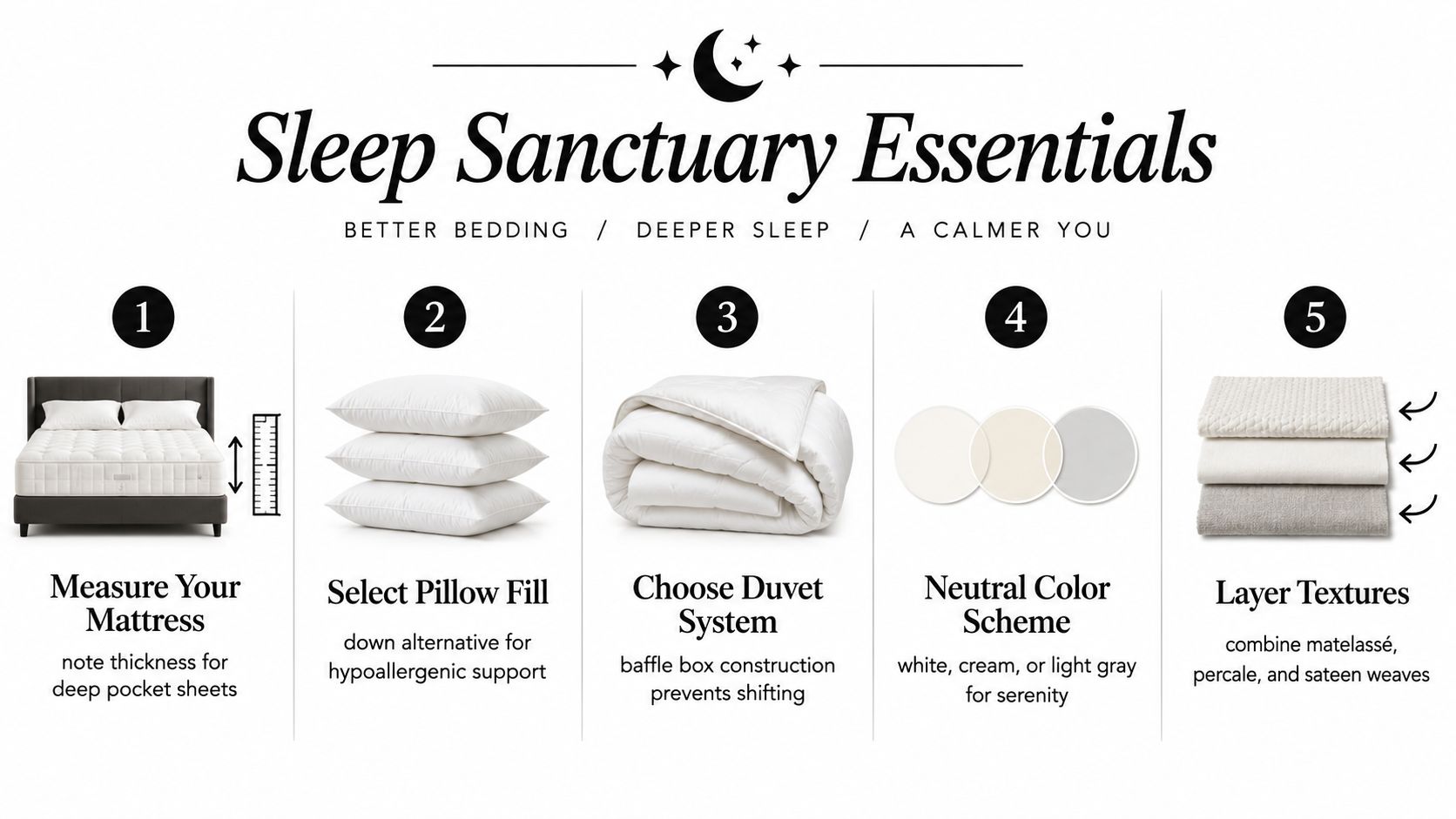
- Measure before ordering: Record mattress height, topper height, foundation dimensions, and desired side drop.
- Select the fill for the operation: Choose down for light loft and a premium hand, or microfiber cluster fill for predictable care and allergy-conscious use.
- Inspect construction: Look for baffle-box design when loft retention is important, and verify shell density, edge binding, and corner ties.
- Ask for wash evidence: A supplier should be able to explain laundering requirements and post-wash behavior, not just describe the product as hotel grade.
- Layer intentionally: Combine sheets, a duvet or comforter, a quilt or blanket, and pillows according to climate and guest needs.
- Keep the palette controlled: Neutrals provide the hotel foundation, while texture and a restrained seasonal accent prevent the room from feeling sterile.
SouthShore Fine Linens offers oversized bedding, extra-deep-pocket sheet sets, comforter sets, duvet covers, and quilt collections designed for modern mattresses and regular home care. Visit SouthShore Fine Linens to compare properly proportioned layers and build a hotel-inspired bed that looks composed without turning laundry into a daily struggle.


