
Best Bed Material by Sleeper: Cotton, Linen, Tencel, Wool
You wake at three in the morning with damp sheets, one foot out from under the duvet, and the familiar question: is the fabric making you too hot? It might be part of the problem, but the sheet is only one layer in a bed that also includes your mattress, protector, blanket, and room climate.
The best bed material isn't the same for every sleeper. Start with how warm you sleep and how much insulation your room needs, then compare the fabric's construction, weight, and finish as well as its fiber.
Quick Picks for Every Bed Material
| Material | Feel | Breathability | Durability | Care | Best for |
|---|---|---|---|---|---|
| Percale cotton (upland) | Crisp, matte, cool to the touch | High | Good, softens slowly | Warm wash, tumble dry | Hot sleepers, warm rooms |
| Sateen cotton | Smooth, slight sheen, warmer feel | Medium | Good, can pill over time | Warm wash, low-heat dry | Cooler bedrooms, classic look |
| Long-staple cotton (Pima, Egyptian) | Soft, fine, supple | High | Very good | Warm wash, tumble dry | Year-round use |
| Linen | Crisp at first, softer with each wash | Very high | Excellent, often lasts for years | Cool or warm wash, line dry | Summer, humid climates |
| Tencel (lyocell) | Smooth, silky, cool to the touch | High, good moisture release | Good | Cold gentle wash, low heat | Night sweaters, humid rooms |
| Microfiber (polyester) | Soft, slightly slick | Low | Very good, resists abrasion | Warm wash, skip fabric softener | Kids, pets, rentals, budgets |
| Bamboo viscose | Silky, soft drape | Medium to high | Fair, weakens with harsh washing | Cold gentle wash, air dry | Soft-feel buyers who read labels |
| Wool (blanket or topper) | Warm, dense, springy | High vapor transfer, warms when cool | Very good | Wool cycle, dry flat | Cold rooms, temperature swings |
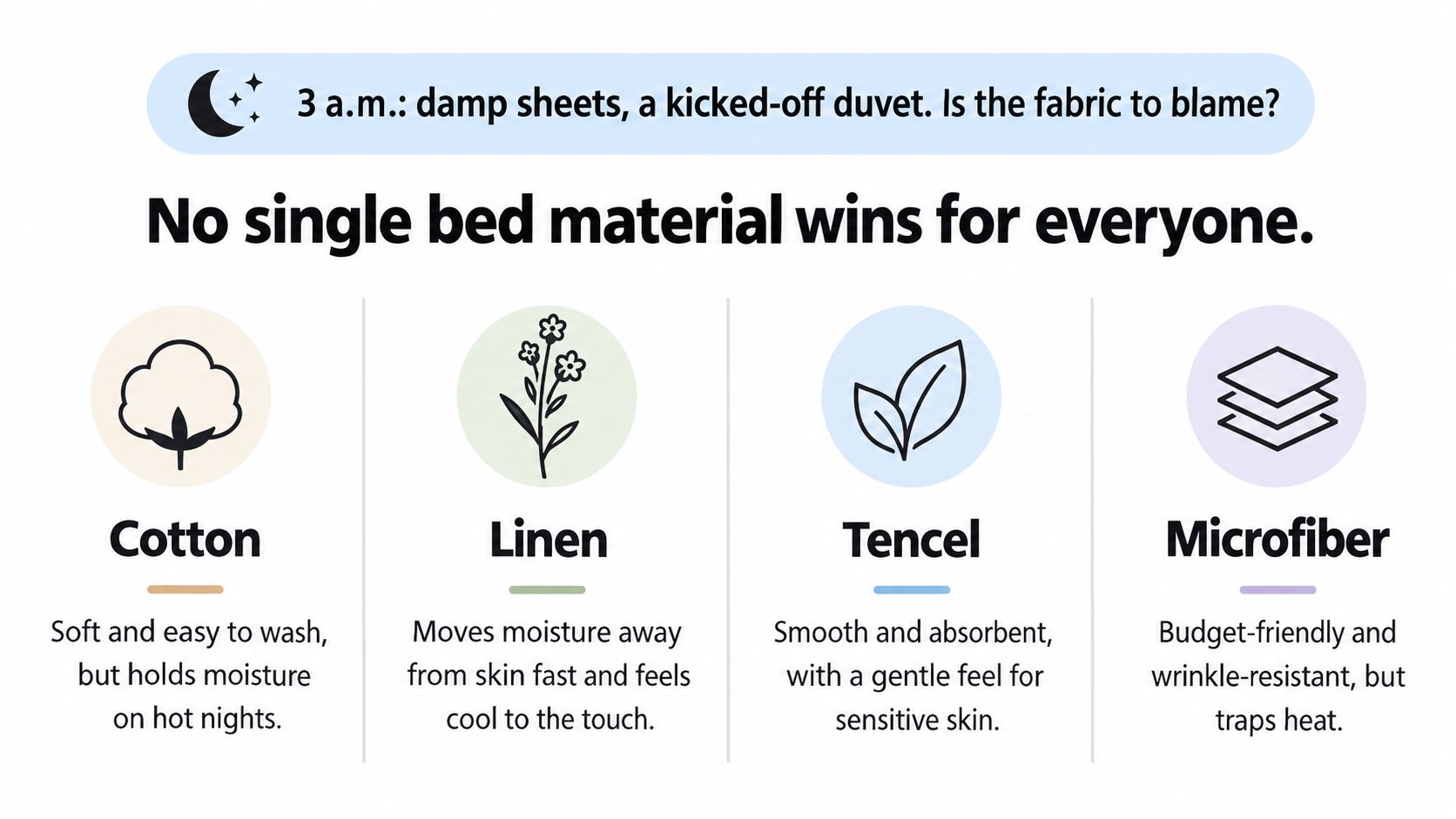
These ratings are relative, not guarantees. Even breathable cotton may feel warmer than linen in a humid room, and a fiber's performance can shift with its weave, weight, and finish. The table is a starting point, not a promise that every product in a category will feel alike.
If you sleep hot, begin with linen, percale, or Tencel. If you're often cold, consider sateen or a wool layer. For pets, children, or frequent laundering, look at microfiber or long-staple cotton. The decision section below matches these options to specific sleeping conditions.
Cotton Varieties and What Their Weaves Feel Like
Cotton isn't one uniform material. Two details shape its feel: fiber length and weave. Think of fiber length as the length of the strands used to make a yarn. Longer strands can form smoother, stronger yarn; shorter ones have more ends that can stick out, contributing to a rougher feel or pilling.
Upland cotton is generally short-staple. Pima and Egyptian cotton are sold as long-staple types, though the name on a package alone doesn't tell you how the finished sheet feels. Weave is the second variable. It's like the pattern in a basket: change how the yarns cross and you change the fabric's surface, airflow, and drape.
| Cotton type | Fiber and weave | Feel | Best for |
|---|---|---|---|
| Upland cotton, percale | Short staple, plain weave; typically 180–300 thread count | Crisp, cool, matte | Hot sleepers |
| Upland cotton, sateen | Short staple, satin weave; typically 300–500 thread count | Smooth, warmer, slight sheen | Cooler bedrooms |
| Pima cotton, percale | Long staple, plain weave | Soft, crisp, durable | Year-round use |
| Egyptian cotton, sateen or percale | Extra-long staple, either weave | Silky, fine | Luxury buyers who verify origin |
| Cotton flannel | Short or long staple, brushed twill | Fuzzy, heavy, warm | Winter use, cold rooms |
Percale uses a plain one-over-one weave, which gives it a crisp, matte surface. Sateen uses longer yarn floats across the surface, creating a smoother finish that often feels warmer. Thread count describes threads in a given area, but it doesn't tell you the staple length or whether the yarn is single-ply. Some manufacturers count the strands in multi-ply yarns separately, making the number look higher without guaranteeing better cotton. For a closer look at what thread count can and can't tell you, see this guide to thread count versus thread quality.
For Egyptian cotton, check for a clear long-staple claim and information about origin rather than relying on the word alone. Then choose the weave for how you sleep: percale for hot sleepers, sateen for cooler bedrooms, and long-staple percale for a breathable, durable year-round option.
Linen and Tencel for Breathable, Cool-Feel Sleep
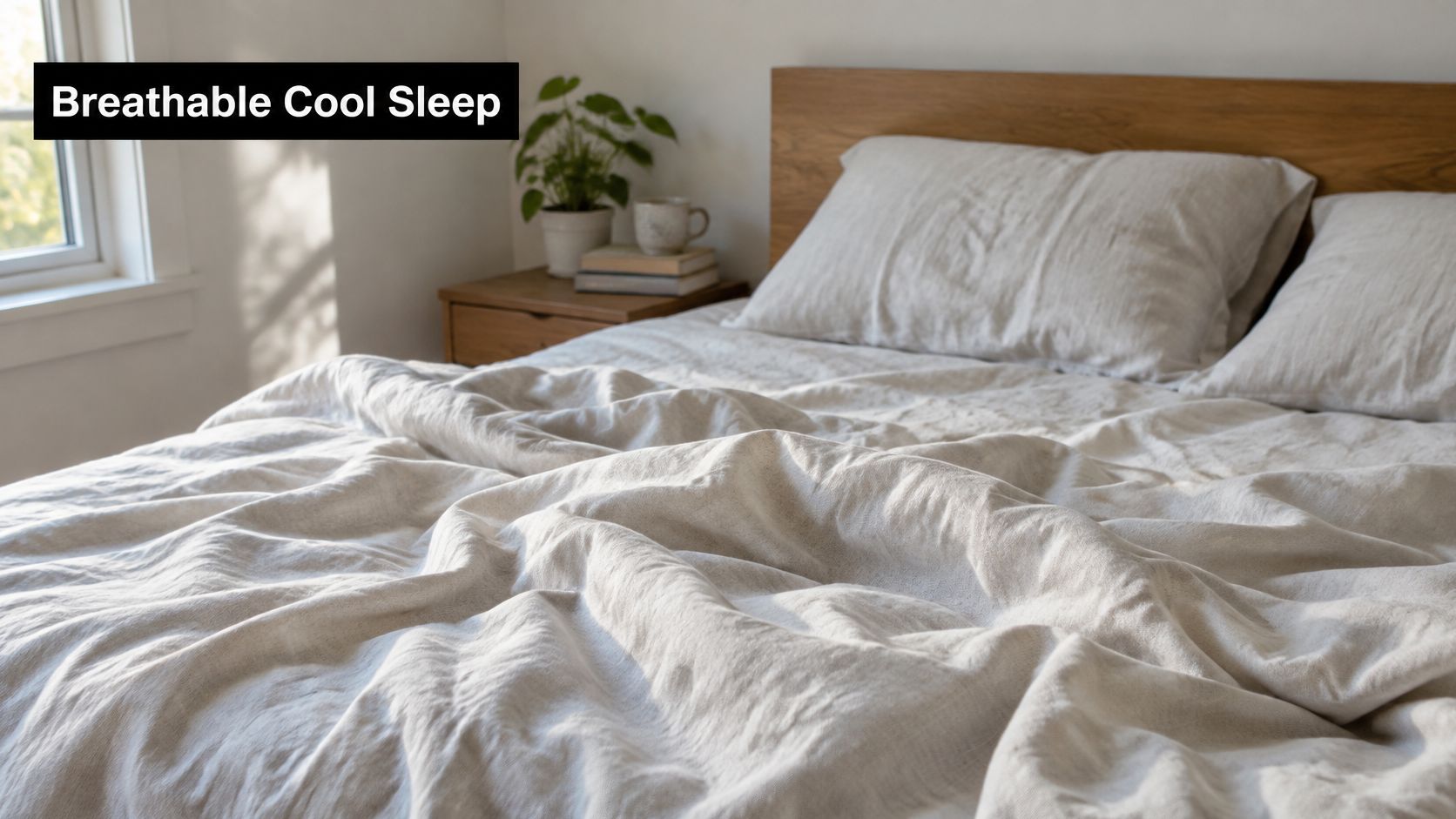
Linen is made from flax. On a hot night, its moisture movement can help keep the fabric from feeling clammy against your skin. New linen may feel crisp or slightly rough, but regular washing usually softens it. It wrinkles readily, so a rumpled appearance is part of the fabric's everyday character rather than a sign that it needs ironing.
Linen can suit sleepers who want a dry, airy feel, especially in warm or humid conditions. Its substantial texture isn't for everyone, and the upfront cost can be higher than for basic cotton or polyester sheets. Follow the care label, use a gentle wash routine, and line dry when practical to help preserve the fabric.
Tencel is a brand name associated with lyocell, a fiber made from wood pulp. Its smooth drape feels different from linen's relaxed texture. People who prefer a silky surface may like it, while others find it slippery. Because dryer heat can be hard on the fabric, use a cold, gentle wash and low heat or air dry according to the product label.
A sleeper who wakes damp might try a Tencel top sheet while keeping a cotton fitted sheet for a familiar feel. That small change tests the layer closest to the body without replacing the whole bed. It also helps separate the question of sheet comfort from the warmth of the duvet or mattress protector.
For another look at how bedding fits into a complete sleep setup, watch this overview.
Microfiber and Bamboo Budget Picks and Their Limits
Microfiber sheets are made from very fine polyester filaments. The fabric is typically soft, resists wrinkles, and is easy to wash, which can make it practical for a child's bed, a pet-friendly room, or a rental that needs frequent turnover. But a soft surface doesn't automatically feel cool. Polyester doesn't absorb sweat like cotton does, and microfiber may leave some sleepers feeling warm or damp.
Bamboo sheets can also confuse shoppers because the label often names the plant, not the way the fabric was made. Most products sold as bamboo sheets are viscose or rayon made from bamboo pulp, which is chemically processed. That's different from mechanically processed bamboo linen. Check the fiber content for terms such as bamboo viscose or bamboo lyocell, and follow the care instructions closely. Harsh washing can weaken the fabric.
Cooling claims deserve the same scrutiny. In a 2025 pilot study, the share of hot sleepers reporting trouble sleeping because of heat fell from 82.5% to 39.7% after they used treated cotton sheets, according to the pilot study on treated cotton sheets. The study was non-randomized and examined one treatment, so its result doesn't establish that all cotton or every cooling finish will work for every sleeper. Bed-climate temperature and humidity can also be affected by the mattress, not only by the sheet.
At the store: Read the fiber label, then check for added finishes and specific care instructions. Judge the material and treatment, not just the word “cooling.”
Microfiber's abrasion resistance and easy care can be useful in a busy home, but frequent washing may expose its limitations, including pilling and fiber release in laundering. Compare the likely lifespan of a set with its price and care demands instead of assuming the cheapest option will cost less over time.
Wool for Cool Rooms and Temperature Swings
Wool's useful trick is handling water vapor. It's hygroscopic, meaning it can absorb moisture vapor from the body. Think of it as a buffer: it can take up some moisture and help it move through the bedding rather than leaving all of it on the skin. A 2024 systematic review found that wool's water-vapor permeability can support sweat evaporation and reduce thermal stress, while cotton generally performs well for healthy young adults in normal or warm conditions (the 2024 review of bedding and thermal comfort).
That doesn't make wool a universal cooling fabric. Dry wool insulates; as it absorbs moisture, its thermal conductivity can rise, changing how quickly heat moves through it. The same review notes that comparisons between textiles are difficult because construction, weight, room conditions, and participants differ. Think in layers: a washable cotton sheet can sit next to your skin, while wool provides adjustable insulation above it.
Many sleepers use wool as a blanket or topper rather than as a sheet. Put a wool topper beneath the fitted sheet for an insulating layer, or use a wool blanket under a duvet cover. If you're sensitive to itch, finer merino may feel gentler than coarser wool, but touch the fabric when possible before choosing.
Care matters. Use a wool-safe cycle or hand wash in cool water, avoid high heat that can felt the fibers, and dry the item flat if its label recommends it. A wool throw can also add an insulating layer in a drafty bedroom or living space. For a complementary easy living room refresh, consider how a throw can bring warmth to a chair or sofa without changing the bedding itself.
Say your bedroom feels chilly at night but warms as spring arrives. A cotton sheet under a wool blanket gives you familiar next-to-skin comfort, and the blanket can be swapped for a lighter cover when the room no longer needs as much insulation.
Matching Bed Materials to Climate and Sleeper
A fiber label tells you less than many shoppers expect. Two sheets woven from the same cotton can sleep differently, because structure does as much work as the fiber itself. Yarn structure, weave, thickness, and loft all change how a bedding fabric traps air and holds warmth, which is why tests on multilayer bedding textiles measure construction alongside fiber type (testing of bedding-textile thermal characteristics). A fabric insulates the way a double-pane window does: the still air it holds matters as much as the material around it.
That means a heavy sateen can run warmer than a light percale even when both are cotton. Higher insulation helps in a cold room, but the same loft adds heat burden on a warm, humid night. Pick the sheet and the cover together, then adjust the insulating layer to suit the person and the room.
| Situation | Base layer | Insulating layer | Why |
|---|---|---|---|
| Hot sleeper, humid climate | Percale cotton or Tencel sheet | Light cotton blanket or none | Promotes moisture release without adding much insulation |
| Cold bedroom, dry air | Sateen cotton sheet | Wool blanket or wool topper | Adds warmth while wool can buffer water vapor |
| Couple with different temperatures | Percale or linen sheet | Two separate covers | Each sleeper can choose their own insulation |
| Kids or pets in the home | Long-staple cotton or microfiber | Washable synthetic-filled duvet | Suits frequent washing and everyday wear |
| Rental or hosted property | Microfiber or long-staple cotton | Easy-care duvet cover | Makes routine care and turnover simpler |
| Night sweats or temperature swings | Tencel or linen sheet | Removable wool layer | Lets you adjust insulation as conditions change |
Use the table as a starting point, not a rule that overrides comfort. A mattress protector can change how warm the bed feels, and a heavy comforter can overwhelm a breathable sheet, so judge the whole stack rather than any single layer. If sensitive skin is part of the decision, compare the fabric surface and the finish, and use this guide to bed sheets for sensitive skin as another selection reference.
Try the full combination for a week before buying multiple sets. Notice whether you wake damp, kick off the cover, or feel chilled when you first get into bed. If the problem changes when you swap only the top layer, you've learned more than a fiber label can tell you.
Safety Labels and a Test-First Bed Plan
A certification label works like a receipt: it shows exactly what was checked, and nothing you might assume beyond that. A "natural" fiber isn't automatically safer than a synthetic one, and an "organic" claim leaves open what happened to the fabric after it left the farm. A 2025 review identified concerns involving PFAS, phthalates, carcinogenic azo dyes, and microfiber exposure in textiles, while stressing that risk depends on the substance, concentration, finish, exposure, certification scope, and washing behavior (the review of chemicals in conventional bedding and towels). The practical question is what was tested and whether that test applies to the item you're buying.
OEKO-TEX STANDARD 100 tests for harmful substances across textile components, including thread and linings, and its criteria are updated at least annually. That scope differs from verifying organic fiber content or farming practices, which is the ground GOTS covers. An unqualified "eco," "natural," or "bamboo" claim says nothing about what an independent organization has verified.
| Label or claim | What it verifies | What it does not verify |
|---|---|---|
| OEKO-TEX STANDARD 100 | Harmful substances across textile components, including thread and linings | Fiber origin, farming practices, or every future finish |
| GOTS organic | Organic fiber content and processing criteria | Testing of every finished-product chemical in the same way |
| Bamboo, eco, or natural label without a standard | Nothing verified by a third party | Fiber origin, processing method, or cooling performance |
Before buying, ask three questions:
- What was tested? Look for the named certification and its scope rather than a general safety claim.
- Does it cover this finished item? A fabric or component claim may apply to only part of a sheet set, so the scope matters as much as the logo.
- Does it have a special finish? Check for stain-, wrinkle-, water-, or antimicrobial treatments. A finish can change how a sheet feels against skin and how it washes, whatever the fiber underneath.
For practical advice on how the bed works as a system, including protectors and comforters, consult this guide to choosing bedding for better sleep. If you're comparing certification wording, this explanation of OEKO-TEX and MADE IN GREEN certification can clarify what different labels are meant to communicate.
Then test before replacing everything. Start with the sheet and insulating layer that suit your room, check the certification and treatment details, and choose care instructions you can realistically follow. Buy one set first and try it for three to seven nights. A washable, durable fabric is easier to live with in a home with children, pets, or frequent laundry, while a more delicate fabric may ask for gentler care. Labels get you to a shortlist. Your own sleep tells you the rest.
SouthShore Fine Linens makes oversized bedding, including extra-deep pocket sheet sets built to fit modern mattresses, and many of its textiles are OEKO-TEX certified. Compare the fabric, weave, fit, and care instructions, then visit SouthShore Fine Linens to find bedding that suits your sleep habits and home.


