
100 Cotton Filled Comforters: A Complete Buying Guide
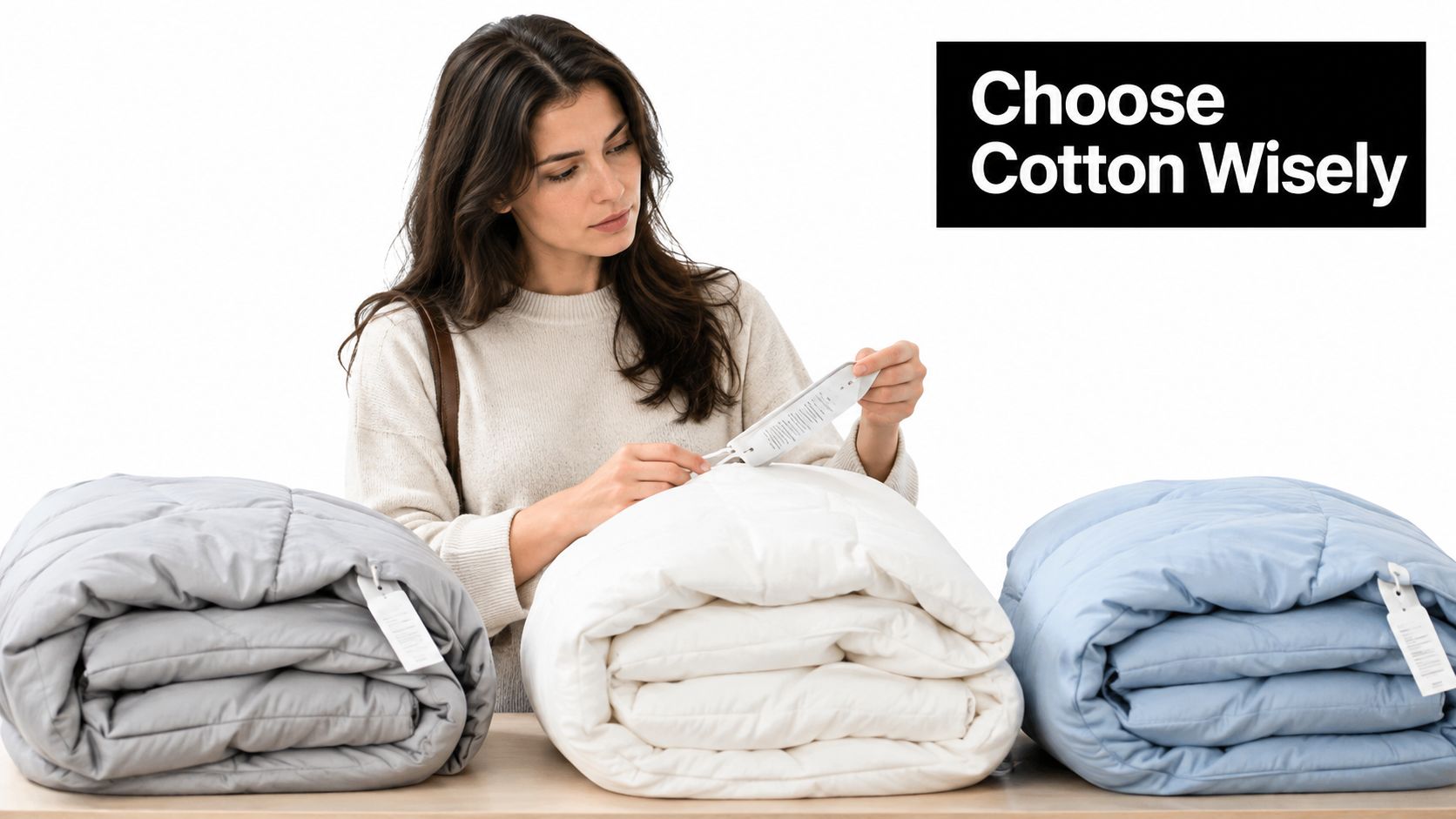
You are standing in the bedding aisle holding your phone in one hand and a comforter tag in the other. One product says 100% cotton, the next says cotton filled, and a third says cotton shell. They feel similar, they look similar, and they cannot all mean the same thing.
Why Cotton Filled Comforters Deserve a Closer Look
That moment of confusion is exactly where good buying decisions start. 100 cotton filled comforters sound simple, but the phrase can describe very different constructions. You need to know what the word cotton refers to, how warm the comforter will sleep in your room, and whether any safety claim applies to the whole product.
Three Decisions Before You Buy
First, identify the layer. Is cotton the outer fabric you touch, the batting inside, or both? Second, judge warmth by fill weight, loft, and bedroom temperature, not by words such as breathable or all-season. Third, separate fiber composition from chemical safety testing. Those are different claims, and one doesn't prove the other.
Cotton also isn't a niche fiber. The U.S. Department of Agriculture projected world cotton production at approximately 119.0 million 480-pound bales for the 2024/25 season, a 5% increase over 2023/24, in figures summarized with global cotton production context from OEKO-TEX background material. That scale explains why cotton is widely available. It doesn't tell you how a specific comforter is made.
Treat cotton fill as an engineering choice, not a guarantee. Fill weight, quilting, shell weave, and finishing decide how it performs on your bed.
Cotton fill appeals to people who want a natural fiber, a flatter profile, and an option that avoids animal-derived fills. It's also popular with warm sleepers who dislike high loft. Allergy-sensitive households often look at it too, although the shell, care routine, and room conditions matter just as much as the fill.
What this guide won't do is blur organic growing claims with chemical-safety certification. Organic describes how fiber was produced. A product-safety standard describes testing of the finished textile. Keeping those ideas separate will help you read every label that follows with much clearer eyes.
What Cotton Fill Really Means in a Comforter
Start with the structure. A comforter is a sandwich. The shell is the outer fabric on the top and bottom, the fill is the insulating middle, and quilting stitches hold that middle in place. In a cotton-filled comforter, that middle layer is cotton batting, a sheet or web of cotton fibers processed into a relatively even layer.
Think of cotton batting as the quilt's marshmallow middle, although it's flatter and less springy than down. Manufacturers lay it between the shell fabrics, then quilt through all layers. Without that stitching, the batting could shift, bunch, and leave thin areas that feel cold.
Three Phrases Buyers Confuse
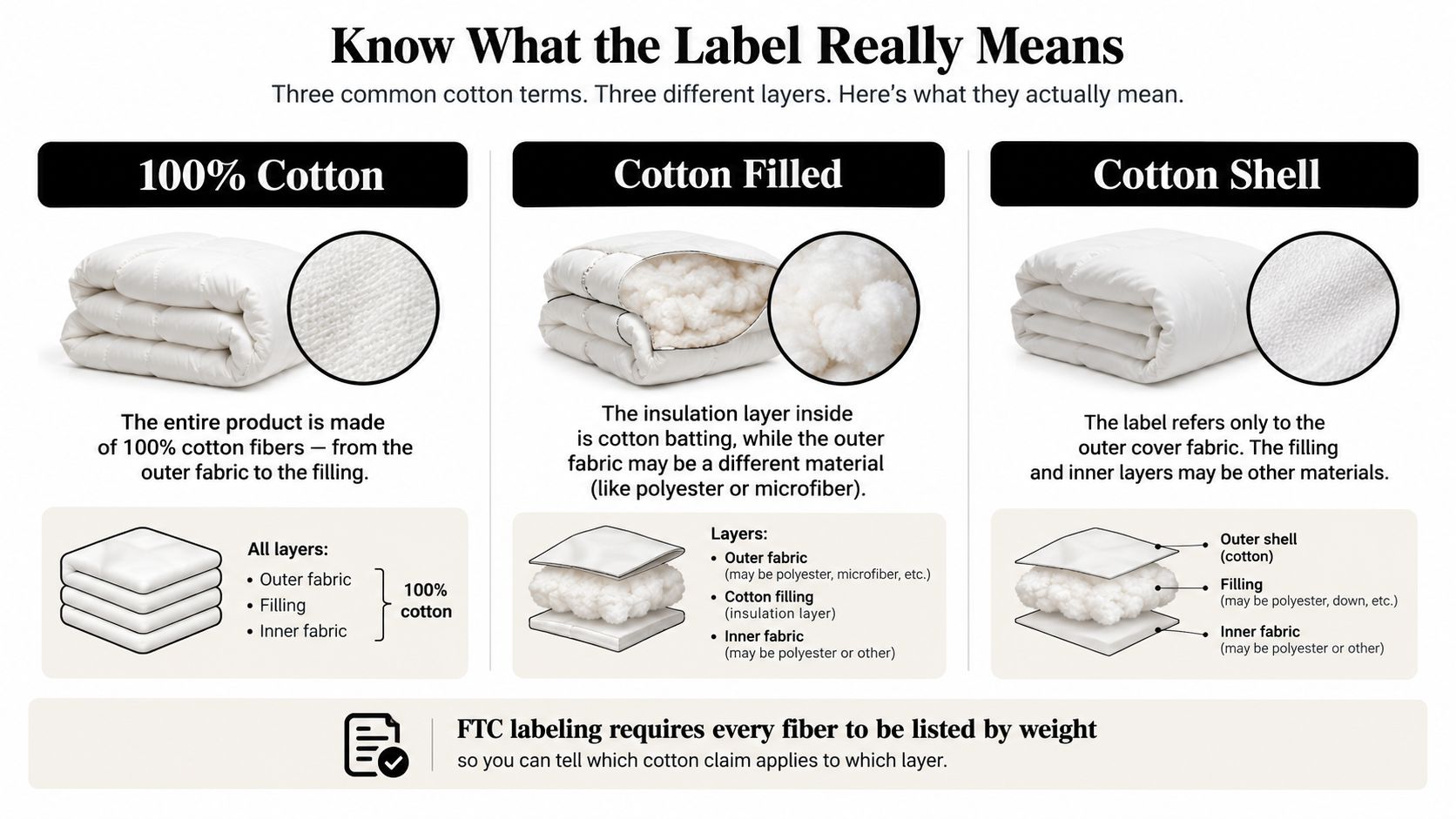
- 100% cotton: This should mean the product contains only cotton, apart from limited non-cotton trim. Check whether the claim covers both shell and fill before you assume it describes everything.
- Cotton filled: This describes the insulation material inside. It does not, by itself, guarantee a cotton shell, cotton thread, or cotton binding.
- Cotton shell: This describes only the outer fabric. The fill inside could be polyester, down, wool, or cotton, so you still need the filling line on the label.
That distinction is where many product titles mislead without technically lying. A comforter can headline its cotton shell while using synthetic fill. Another can use cotton fill under a polyester shell. Neither is automatically bad, but they're not the same purchase.
U.S. labeling gives you a way to check. Federal Trade Commission guidance on cotton labeling requires textile labels to list every fiber representing at least 5% of product weight, in descending order, and says a product shouldn't be labeled “100% Cotton” unless it contains only cotton, apart from limited non-cotton trim. Read shell and filling as separate lines.
Why Cotton Behaves the Way It Does
Cotton fibers are naturally crimped and can absorb and release moisture. In batting form, they create many small spaces that slow heat loss, but they compress more readily than lofty fills. The result is a comforter that usually drapes closer to the body, feels steadier and flatter, and depends heavily on even distribution and secure quilting.
Cotton Fill Compared to Down, Wool, and Polyester
Cotton sits in the middle of the fill range. It's not the warmest option for its weight, and it's not the easiest to dry. Its strengths show up in breathability, drape, and a natural-fiber feel that many sleepers prefer over slick synthetics.
Judge fills by what you feel at night. A lightweight cotton comforter in a cool bedroom may feel calm and close, but it won't trap as much warm air as a mid-weight down comforter. Down clusters expand to create loft, so down gives more insulation without much weight. Cotton gives gentle weight and lower loft.
| Fill type | Warmth for weight | Breathability | Care difficulty |
|---|---|---|---|
| Cotton | Moderate, lower loft | Good, moisture-buffering | Moderate, slow to dry |
| Down | High, very lofty | Good with a suitable shell | Higher, needs careful drying |
| Wool | Moderate to high | Good, moisture-managing | Moderate, check washability |
| Polyester | Varies by design | Usually lower | Lower, generally easy care |
Where Each Fill Wins
Down wins when you want maximum warmth with a light, cloud-like cover. Its weakness is cost, animal origin for some buyers, and more demanding care. Wool competes well on temperature regulation and moisture handling, and it can feel substantial. Its feel, price, and washing limits vary widely by product, so specifications matter.
Polyester wins on price, loft at low cost, and simple laundering. It often feels slicker, can trap heat more readily, and may hold odor differently than cotton. Cotton wins when you want a flatter, breathable, plant-based layer that softens with use and doesn't rely on puffiness for comfort.
If you're comparing construction families before narrowing by fiber, a guide to the different types of comforters helps separate duvets, quilts, and comforters. Then come back to the fill question. Cotton is best understood as the lower-loft natural option for sleepers who value airflow and drape over maximum insulation per ounce.
How Cotton Fill Handles Warmth, Humidity, and Season
Cotton is hygroscopic. It absorbs water vapor from the air and from your body, then releases it again. That exchange changes how warm the fill feels, so the same comforter may not feel identical on a dry night and a humid night.
Research on hygroscopic textile behavior reports that moisture absorption generates heat while moisture release absorbs heat, with the effect strongest when water is tightly bound at low moisture levels. Cotton batting generally shows a lower moisture-induced temperature rise than certain engineered hygroscopic battings. In plain language, cotton buffers humidity, but you shouldn't expect it to act like a high-powered warming fill.
Cotton Is Not Automatically the Coolest Choice
Marketing often turns cotton into a universal cooling claim. The evidence is more mixed. A systematic review summarized in research on bedding fibers and sleep environments found that goose-down duvets were preferred to cotton-filled duvets under cool conditions, and that cotton sleepwear supported deeper sleep at 22°C in one study while cotton sheets produced more awakenings than linen sheets in another. Room temperature, fill weight, and your own physiology still drive the result.
Practical rule: Choose cotton for the climate and layering system you actually have, not for a general promise that natural always sleeps cooler.
A Simple Season Map
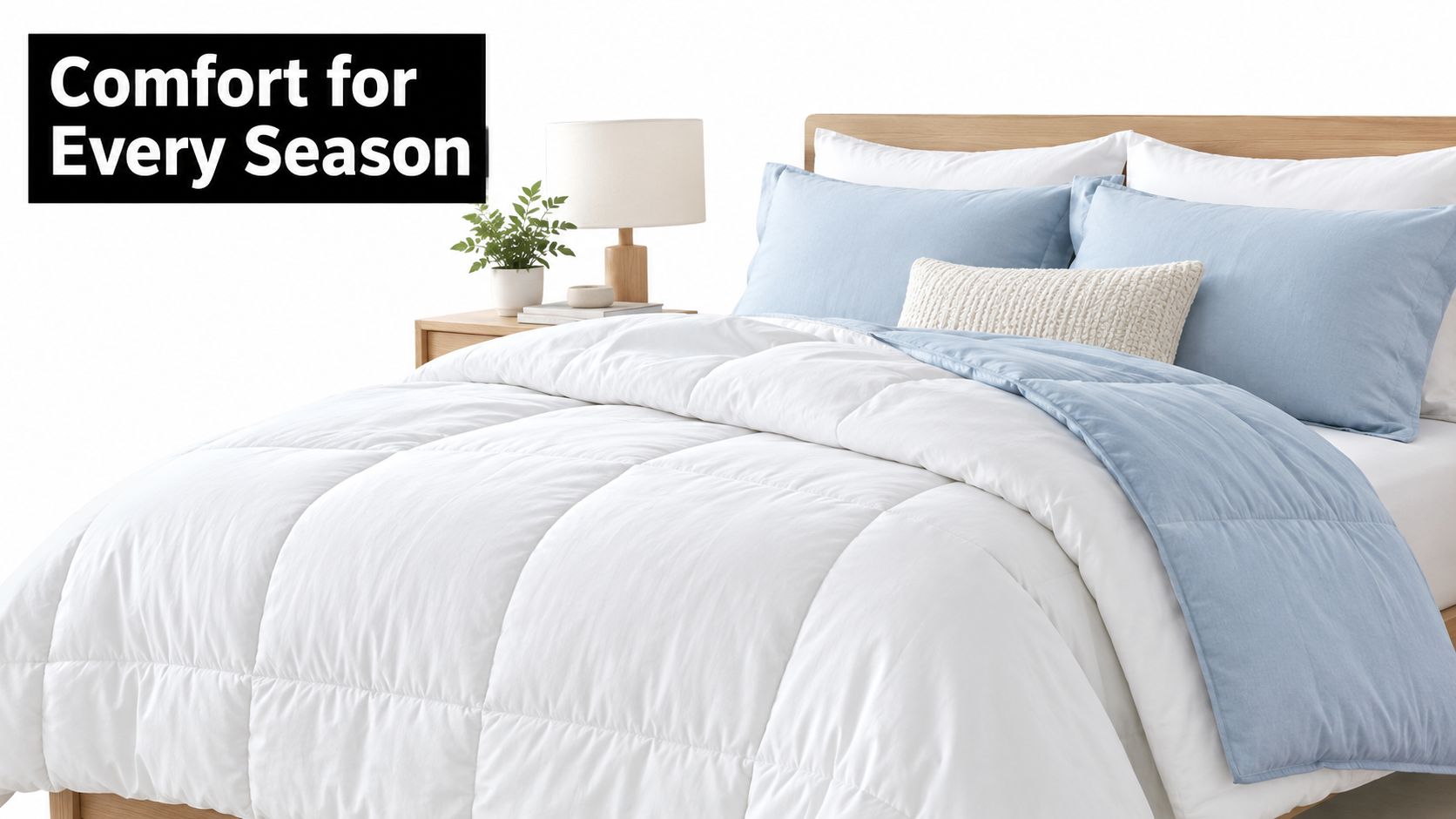
- Summer weight: Lower fill weight, a crisp and open shell weave such as percale, and no extra blanket for warm sleepers in warm rooms.
- All-season weight: A middle fill weight that works alone in mild weather and accepts a throw or quilt when nights turn colder.
- Winter use: A heavier cotton comforter, or a mid-weight cotton layer paired with another blanket. In a cold bedroom, cotton alone may feel insufficient.
That layering approach is cotton's real advantage. You can adjust around it without replacing the whole bed. In humid homes, prioritize ventilation and complete drying, because retained moisture reduces loft and can encourage odor.
Construction Cues That Separate a Good Cotton Comforter From a Great One
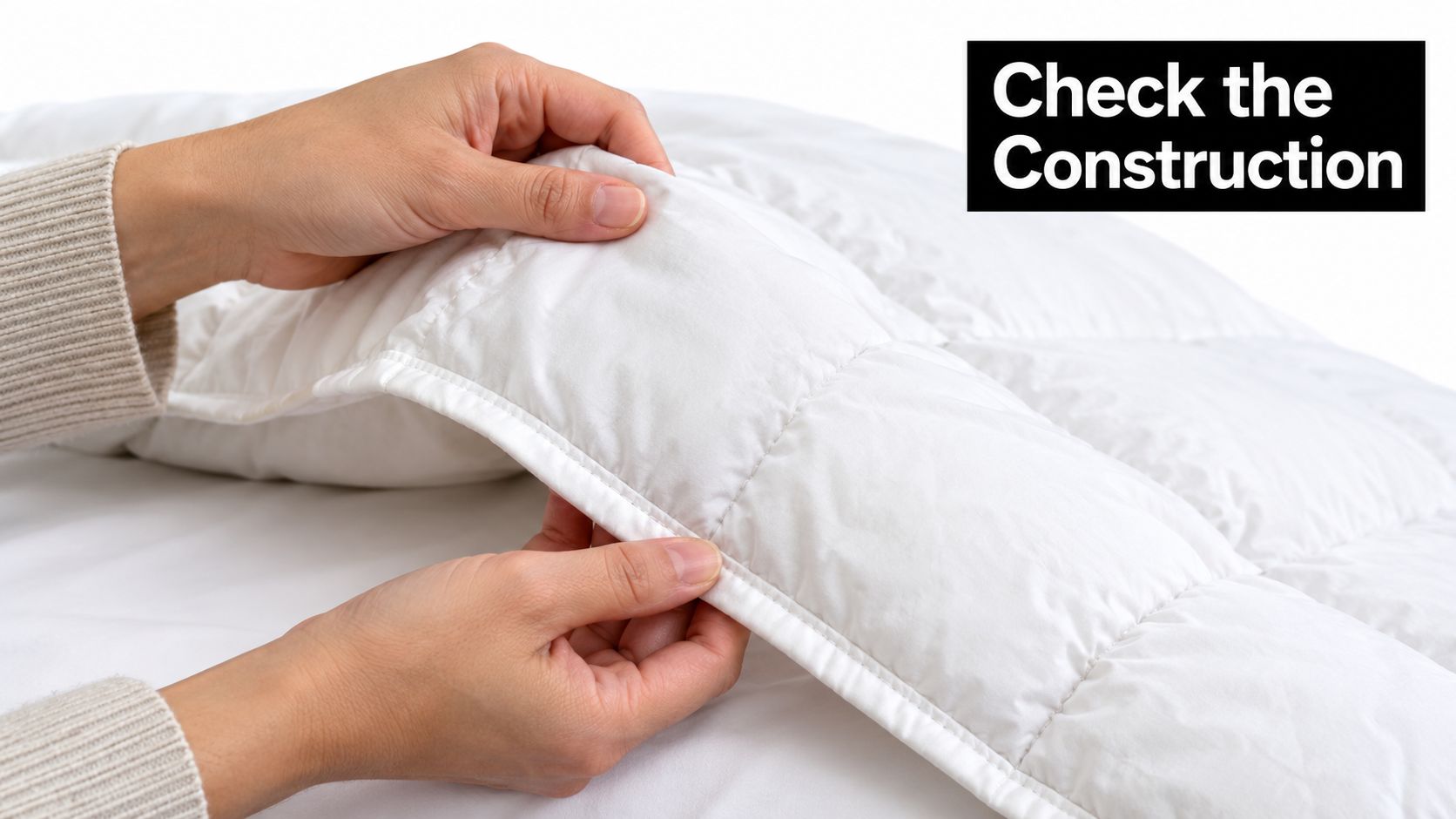
Treat the comforter as a sandwich you can audit. You cannot see the batting directly, but the shell, stitching, edges, and stated fill weight reveal how carefully that hidden layer is controlled. Good construction keeps insulation even after washing, folding, and nightly compression.
Run This Five Point Check
- Shell weave: Percale usually feels crisp and airy. Sateen feels smoother and slightly denser. Choose the surface you want against skin, and remember that a breathable shell helps the fill exchange air.
- Fill weight: Look for a stated weight, often in grams per square meter. Lower means lighter and usually cooler, higher means more material and generally more insulation.
- Quilting pattern: Box, diamond, or channel stitching anchors the batting. Smaller, secure sections reduce shifting. Baffle-box construction is more relevant to lofty fills that need vertical space.
- Edges and stitching: Clean binding, even corners, and firm double stitching suggest better finishing. Loose threads and wavy seams are warning signs, especially on a product you'll wash.
- Duvet compatibility: Corner loops or ties matter if you'll use a cover. Without them, the comforter can slide and bunch inside the cover.
Thread count needs context. A very dense shell may feel smooth and durable, but density can also reduce airflow. A mid-range, well-woven cotton shell often balances softness, strength, and breathability better than a headline number chosen only for marketing.
Check dimensions while you're at it. Queen and king labels aren't a substitute for measurements. Compare width and length with your mattress depth and preferred drape. A comforter that's too narrow will pull toward the stronger sleeper, no matter how good the cotton fill is.
Finally, notice whether a certification mentioned on the product page applies to the shell fabric only or to the finished comforter. Those are different trust signals, and the narrower one shouldn't be presented as whole-product assurance.
Certifications Worth Trusting on a Cotton Filled Comforter
Certification logos look reassuring, but they only help if you know what was tested. For 100 cotton filled comforters, keep two questions separate. What fibers are in the product, and has the finished product been tested for harmful substances?
OEKO-TEX STANDARD 100 addresses the second question. As described in the OEKO-TEX STANDARD 100 criteria for finished textile products, the standard evaluates products from yarn and fabric through finished goods, including components and accessories, against a list exceeding 1,000 harmful substances, with stricter criteria as skin contact increases. For a comforter, that scope can include batting, shell, thread, dyes, and trims.
Why the Finished Article Matters
Cotton fiber alone isn't the whole exposure picture. Dyes, finishes, sewing thread, labels, and bindings also touch your skin or sit close to it for hours. A credible claim should therefore cover the complete finished article, not only a raw material input that later gets dyed and finished.
The system has a long history. The history of the OEKO-TEX Association and STANDARD 100 records that the association was founded in March 1992 and introduced STANDARD 100 in April 1992, originally covering approximately 100 chemicals and now covering several hundred potentially harmful substances. That history adds context, but the current certificate for the exact product still matters most.
How to Verify a Claim
- Ask for the identifier: Request the certificate or label number for the specific comforter configuration you're buying.
- Check the scope: Confirm it covers the finished comforter, not just one fabric component.
- Separate organic from tested: Organic refers to production of the fiber. OEKO-TEX STANDARD 100 refers to chemical-safety testing of the textile.
If you want the terminology explained in bedding-specific terms, guidance on OEKO-TEX certified bedding is a useful companion. Remember the limit, too. Chemical-safety certification doesn't guarantee warmth, loft retention, shrinkage control, or durability. Construction evidence still has to do that work.
Choosing the Right Cotton Filled Comforter for Your Bed
The right choice depends on the sleeper, the room, and how the bed is used. Tune three dials: fill weight, shell weave, and quilting. Then check dimensions and care before you fall for a color or a styled product photo.
Match the Comforter to the Sleeper
The hot sleeper in a warm climate usually needs the lightest cotton fill, a percale or similarly airy shell, and secure box or diamond quilting. Skip extra blankets at first. If the room cools overnight, keep a thin layer folded at the foot rather than buying a heavy comforter you'll push off by midnight.
The cold-room sleeper in an older home needs honesty about insulation. Choose a heavier cotton fill and plan a second layer, or choose a different fill if maximum warmth is the priority. Cotton's closer drape can feel comforting, but drape isn't the same as high loft insulation.
The guest-room or short-term-rental host needs repeatability. Pick a mid-weight comforter, a durable shell, and care instructions your laundry routine can handle. Neutral styling helps across guests. If you're coordinating a full queen bed rather than buying an insert alone, it can help to style queen bedding with Stahl Home Center as a visual reference for how shams and layers change the finished look.
The family with allergy concerns or a duvet-cover habit should prioritize washable construction, complete drying, and corner loops. A removable cover reduces how often the whole comforter needs washing. It also protects the shell from spills, pets, and everyday abrasion.
Measure before ordering. Mattress depth, bed height, and whether you share with a blanket puller all affect the size you need. Oversized options can improve side drape on deep mattresses. A precise fit won't fix the wrong fill weight, but the right fill in the wrong size still leads to nightly tug-of-war.
Care, Cleaning, and Making a Cotton Filled Comforter Last
Cotton fill is generally more forgiving in the wash than delicate high-loft fills, but it's slower to dry. That single fact should shape your routine. Plan for capacity, rinse room, and enough drying time before the comforter goes back on the bed.
A Care Routine That Protects Loft
- Inspect first: Check seams, binding, and quilting before washing. Repair a small opening early so batting can't escape or shift during agitation.
- Wash gently: Follow the product label first. When machine washing is allowed, use a gentle cycle, mild detergent, and a machine large enough for the comforter to move and rinse properly.
- Dry completely: Dry thoroughly on the recommended setting, pausing to redistribute the comforter if needed. The center should feel dry, not merely warm at the surface.
- Air between washes: Shake and air the comforter regularly. Use a duvet cover if you want to reduce full washes.
For a broader laundry framework that covers sheets and other layers, step-by-step guidance on how to wash bedding helps you coordinate wash day. Don't overload the machine to save time. Crowding leaves detergent behind and makes drying less even.
Storage deserves the same discipline. Clean the comforter, dry it completely, then store it in a breathable cotton bag in a dry place. Avoid sealing damp cotton in plastic or compressing it tightly for long periods. When you bring it back out, air it, shake it, and let the fill relax before judging its loft.
What's filled, what's covering it, and what's it been tested for? Ask those three questions before you buy, and ask whether it's fully dry before you store it.
Used that way, a cotton-filled comforter isn't a disposable seasonal layer. It's a durable centerpiece you can adapt with covers and blankets. The label literacy comes first, the climate match comes second, and careful drying protects the investment afterward.
If you're ready to put label literacy into practice, explore thoughtfully sized comforters, quilts, and layered bedding designed for real mattresses and everyday washing at SouthShore Fine Linens. Compare shell, fill, dimensions, and care details side by side, then choose the cotton layer that fits your room, your climate, and the way you sleep.


